If you’ve ever spent time in mining operations – whether as a field engineer, a maintenance supervisor, or someone who’s only visited a mine site for a short audit – you know that environment doesn’t operate like any other industrial space. The ground is often uneven, humidity can be extreme, dust is omnipresent, and electrical systems have to work non-stop to power everything from drill rigs to conveyor belts, ventilation systems, and worker lighting. For years, one question has come up in almost every pre-project consultation I’ve had as a cable branch box supplier: Can these standard distribution solutions actually hold up in a mining area? Today, I’m breaking this down with real-world context, the science of our products, and the on-the-ground data that answers this question clearly. Cable Branch Box

First, let’s get one thing straight: a cable branch box isn’t a one-size-fits-all product, and mining isn’t a space for off-the-shelf solutions. But that doesn’t mean they’re incompatible. It means that mining-specific operations demand cable branch boxes engineered to match the site’s unique conditions, rather than the boxes made for office parks or suburban neighborhoods. Let’s start with the core challenges of a mining site that any electrical component has to survive.
The biggest hurdle in mining is environmental stress. Underground mines pull in rock dust, coal dust, and moisture that clogs every open space, while surface mines face constant exposure to extreme temperatures – from sweltering summer heat that can warp plastic components to frigid winter cold that makes metal brittle. Abrasion is another constant: heavy machinery moves across unlined paths, and dust particles act like tiny sandpaper, wearing away at surfaces over time. Then there’s vibration: conveyor belts running 24/7, drill rigs that shake the ground, and heavy trucks navigating rough terrain all create constant, low-level vibration that can loosen connections if a box isn’t built to resist it.
For most non-mining applications, standard cable branch boxes don’t address these stresses. They’re often made with lightweight plastic housings that crack under temperature fluctuations, or metal housings without proper sealing that let dust and moisture seep in, causing corrosion and electrical shorts. That’s why, as a supplier, we don’t offer our standard residential and commercial boxes for mining sites. But our mining-rated cable branch boxes are designed from the ground up to counter every one of these challenges.
Let’s talk about the engineering that makes this possible. First, the housing: our mining-specific boxes use either high-grade, impact-resistant polymer or galvanized steel with a powder coat finish that’s tested to resist abrasion from coal and rock dust. The polymer we use is rated for temperatures ranging from -40°C to 85°C, which covers almost every mining site climate on the planet – from subarctic open-pit mines in Canada to desert surface mines in Australia. The galvanized steel option goes through a double zinc coating process before powder coating, which adds an extra layer of protection against corrosion from underground mine moisture and chemicals that are sometimes used for rock stabilization.
Next, ingress protection – a term that measures how well a component keeps out dust and water. For mining, we require an IP67 rating at minimum, and many of our heavy-duty models are IP69K, which means they’re completely dust-tight and can withstand high-pressure, high-temperature washdowns. This is non-negotiable in mining, because if dust gets into the connections inside the box, it can build up over months and cause arcing, which is a major safety risk. In underground mines, that arcing could even trigger explosions in methane-rich atmospheres, so the sealing isn’t just about equipment performance – it’s about worker safety.
Then there’s the internal design. Standard cable branch boxes use simple terminal blocks that are secured with small screws, which can work loose over time from the constant vibration of mining operations. Our mining-grade boxes use vibration-damped terminal blocks and torque-locking screws that are tested to stay tight even after years of exposure to constant shaking. We also add a secondary barrier between the live connections and the box housing, in line with mine safety standards from groups like the International Electrotechnical Commission (IEC) and the Mine Safety and Health Administration (MSHA) in the U.S. This barrier prevents accidental contact with live parts even if the box door is accidentally left open, which is a critical safety feature in high-traffic mine areas.
Now, let’s move beyond theory to real-world use cases, because numbers and field reports are what matter most. Last year, I worked with a copper mine in northern Chile that was having repeated issues with electrical distribution before they switched to our mining-rated cable branch boxes. Their previous set of standard boxes would fail every 3 to 6 months – dust would get into the terminals, connections would work loose from vibration, and the plastic housings would crack when a service truck accidentally backed into a box mounted near a haul road. After installing our IP67 galvanized steel boxes 18 months ago, they’ve only had one minor issue: a single box door that wasn’t fully closed during a routine inspection, which triggered a dust alarm. That’s a massive improvement from their previous failure rate, which was costing them over $200,000 a year in downtime, replacement parts, and safety audits.
Another example is a coal mine in West Virginia, U.S., that operates underground with a high methane concentration. They needed electrical components that were also intrinsically safe, meaning they can’t spark even if they develop a fault. Our intrinsically safe cable branch boxes are certified by MSHA, and they’ve been running for 24 months without a single electrical incident related to distribution. The mine’s maintenance manager told me that the boxes have cut their distribution-related maintenance time by 70%, because they no longer have to spend half their shift tightening loose connections or replacing damaged housings.
Of course, this isn’t to say that every cable branch box works for every mining site. There are caveats, and that’s where working with a trusted supplier matters. For example, a small, remote underground mine with limited power might need a compact, low-voltage box, while a large surface mine with multiple conveyor systems will need larger, high-voltage boxes that can handle higher current loads. We also work with mines to mount the boxes in the right locations: not too close to active haul roads where they’re at risk of damage from heavy equipment, but accessible enough for maintenance teams to reach during routine checks. We also offer custom labeling and weatherproof cable entry points, which are important for mines that have to comply with specific site marking standards.
Some people will push back, saying that mining sites should use custom-built, on-site distribution setups instead of off-the-shelf cable branch boxes. But that’s not practical for most operations. Custom setups take months to design and build, they’re more expensive, and they’re harder to repair if a component fails in a remote area. Our mining-rated cable branch boxes are pre-tested, certified, and easy to install, which means mines can get their distribution systems up and running faster, and replacements can be swapped out in a matter of minutes instead of days. That’s a huge difference for operations where every hour of downtime costs thousands of dollars in lost production.
Another point that often gets overlooked is scalability. Mining sites expand over time – adding new conveyor lines, extending underground tunnels, or adding new processing facilities. Our cable branch boxes are designed to be easily daisy-chained or expanded, so mines can add new connections without having to replace their entire distribution network. That saves money over the long term, because you don’t have to invest in a whole new system every time your operation grows.
I also want to address safety head-on, because that’s the biggest concern for anyone in mining. Electrical incidents in mining don’t just cause downtime – they cause injuries, and in the worst cases, fatalities. That’s why all of our mining-grade cable branch boxes go through third-party testing for electrical safety, dust ignition resistance, and vibration tolerance. We don’t cut corners on certifications, because we know that the boxes are as much a part of keeping workers safe as the hard hats and ventilation systems.
If you’re a mine engineer or maintenance manager reading this, you might be wondering: How do I know if a cable branch box is right for my site? The first step is to work with a supplier who understands mining, not just general industrial electrical. We start every consultation with a site assessment – asking about your mine’s location, the type of operations (surface vs. underground), voltage requirements, dust and moisture levels, and any safety certifications you need. We don’t sell a one-size-fits-all box; we tailor our recommendations to your specific site’s needs.
For example, if you have a remote underground mine with low voltage needs, we’ll recommend our compact, intrinsically safe polymer box with IP67 sealing. If you have a high-traffic surface mine with high-voltage conveyor systems, we’ll recommend our heavy-duty galvanized steel box with IP69K washdown capability and vibration-damped terminals. We also offer pre-installed cable glands and custom labeling, so you don’t have to spend time on site modifying the box after it arrives.
I’ve spent years working in mining, visiting sites in every continent, and I’ve seen firsthand how the right component can make a huge difference in efficiency and safety. I’ve also seen mines waste tens of thousands of dollars on cheap, incompatible components that fail repeatedly, putting workers at risk and delaying production. A cable branch box isn’t just a piece of plastic or metal – it’s a critical part of your electrical distribution system, and in a mining area, it has to work harder than it does in almost any other environment.
The answer to “Can a cable branch box be used in a mining area?” is a resounding yes – but only if it’s the right, mining-rated cable branch box. Off-the-shelf residential or commercial boxes won’t cut it, but engineered, certified, field-tested boxes designed for mining conditions solve almost every challenge that mining sites face.
If you’re currently dealing with frequent electrical distribution failures, excessive downtime, or safety concerns related to your current setup, I’m here to help. We can walk you through site requirements, share field data from mines similar to yours, and help you find a solution that fits your budget and your needs. There’s no one-size-fits-all, but there is a cable branch box that’s designed to handle the unique demands of mining, and we’ve engineered ours to deliver.
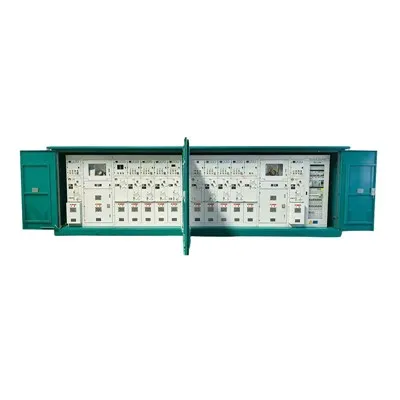
When you’re ready to stop dealing with unreliable distribution components and start investing in a solution that works for your site, reach out to us to connect with our team of mining electrical specialists. We’ll provide customized recommendations, detailed testing data, and support throughout installation and beyond, because we don’t just sell cable branch boxes – we partner with mines to keep their operations running safely and efficiently.
High-Voltage Switchgear References
International Electrotechnical Commission. IEC 60529: Degrees of Protection Provided by Enclosures (IP Code). International Electrotechnical Commission.
Mine Safety and Health Administration. MSHA Electrical Safety Standards for Metal and Non-Metal Mines. U.S. Department of Labor.
Chilean Copper Commission. Mining Equipment Durability Standards for High-Dust, Low-Temperature Operations. Comisión Chilena del Cobre.
National Institute for Occupational Safety and Health. Intrinsically Safe Electrical Components for Underground Coal Mines. Centers for Disease Control and Prevention.
Jiangxi Yihong Electric Power Technology Co., Ltd.
As one of the most experienced cable branch box manufacturers and suppliers in China, we also support customized service. We warmly welcome you to buy high quality cable branch box from our factory. If you have any enquiry about pricelist, please feel free to email us.
Address: Chating Industrial Park, Guangxin District, Shangrao City, Jiangxi Province
E-mail: 15779933057@163.com
WebSite: https://www.yihcn.com/
