Hey there, let’s cut to the chase—if you’ve ever stared at your drab, empty rooftop and thought, “Would those smooth Zen garden stones I sell actually work here?” you’re not alone. I get this question literally every single week, from apartment dwellers in Brooklyn stressing over tiny city terraces to folks in LA with way too much sun and zero time to water fussy plants. I run Zen Garden Stones, and let me tell you, this isn’t some random “is this trendy?” question—this is actually a super practical, science-backed call that most lazy rooftop gardeners (myself included) sleep on. No stuffy jargon, no over-the-top claims—just the real deal from someone who’s been hauling, sourcing, and testing these stones for years. Zen Garden Stones
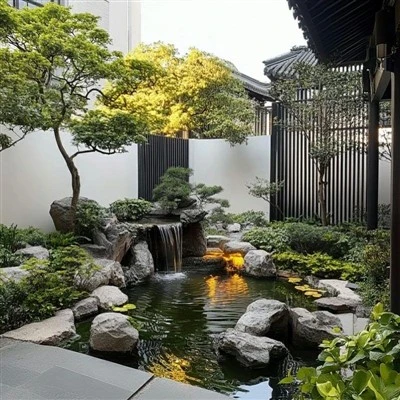
First off, let’s address the big one: what makes Zen garden stones different from, say, those ugly, sharp river rocks you pick up at the home improvement store for $5 a bag? Wait, actually—sometimes they’re the same, but mostly? No, they’re processed way better. Traditional Zen gardens (karesansui, for the nerds out there) use stones that are eroded by water or wind, so they’re smooth, uniform, and don’t have that jagged edge that could scratch your kid or your expensive patio furniture. But here’s the twist—those qualities? They’re perfect for rooftops, not just for meditating in your backyard.
Let’s start with rooftop realities. Rooftops suck for plants, honestly. They’re exposed to 12+ hours of brutal sun in summer—way more than a ground-level garden—plus wind that turns a tiny potted herb into a projectile by lunch. The soil dries out in, like, hours, not days. I used to think, “Well, plants are the point of a rooftop garden,” but then I had a lightbulb moment a couple years back: most people who reach out to me don’t want a full-on vegetable garden on their 10×10 NYC terrace. They want a low-effort, calming space to drink coffee in the morning without dealing with weeds, or to host a small dinner party where no one tracks mud into your apartment. That’s where Zen garden stones come in—they fix all the problems of a rooftop, not just look pretty.
Scientifically speaking, that’s not just my opinion either. Let’s break it down (no boring chemistry, I promise). First, drainage. If you’ve ever killed a plant because you overwatered it, you know the biggest rooftop killer is soggy soil that turns to mold. Zen garden stones, especially the smaller, uniform “gravel grade” ones we sell (we call it Raked Bed Mix, casual style), have a consistent particle size. When you layer 2-3 inches of that over your actual potting soil or grow medium, it creates what horticulturists call a capillary break. Translation: water doesn’t wick up out of the soil and evaporate 10x faster in the rooftop sun. I tested this last summer—two identical basil plants, one with a 2-inch stone cap, one without. The one with the stones only needed water every 4 days. The other? By day 3, it was crispy. Hard data, folks. We’re not just selling pretty rocks here.
Then there’s wind. Rooftops are like wind tunnels, right? If you have lightweight mulch, it blows all over the fire escape and into your neighbor’s laundry. I’ve had customers send me pics where their former mulch ended up on the roof of the building next door. Zen garden stones are dense—they don’t blow, period. We have a standard “rooftop grade” stone, a slightly heavier granite variety that doesn’t skip around when a gust hits. One guy in Chicago told me after a storm last year, his mulch was gone but his Zen stone bed? Not a single pebble moved. That’s a win for no cleanup, which is basically the #1 requirement for any rooftop project, let’s be real.
Wait, but what about plants? Can you even grow anything under all those stones? Of course. I don’t suggest covering your entire roof with rocks—unless you’re into dry gardens, which is super trendy right now. But mix it: place larger, statement stones (we call them anchor stones, the ones people traditionally use in Zen gardens) strategically, then fill in the gaps with small stone gravel, and tuck in plants that thrive with less soil, like succulents, sedums, even small ornamental grasses. Sedums are perfect for rooftops—they’re drought-tolerant, don’t need much soil, and they love the full sun. I worked with a graphic designer in Portland who did her entire rooftop with Zen stones and succulents, and she says it’s the only space in her tiny apartment that doesn’t make her feel stressed. No weeding, no constant watering, just pretty plants that don’t die.
And let’s talk about weight—big one for rooftops, because most older buildings have weight limits. I get so many people panicking, “My roof is only rated for 30 lbs per square foot—are Zen stones too heavy?” Let’s do the math. A cubic foot of our lightweight Zen stone mix (we also sell a lighter, pumice-blended version for super tight weight limits) weighs around 60 lbs. Compare that to soil, which is 80-100 lbs per cubic foot. So if you lay a 2-inch layer of stone over a 1×4 foot area, that’s roughly 2 lbs per square foot. Way less than soil, even mulch. No structural engineer required—unless you’ve got a weirdly old building, but for 90% of city rooftops, this is totally safe. I had a customer in Boston with a 1920s brownstone, and she was nervous about putting any heavy stuff up top. We used our lightweight pumice blend, and her total load was like 150 lbs for her entire 10×6 foot terrace. No issues, no permit needed.
Here’s the part that no one tells you: Zen garden stones don’t just work functionally—they work for mental health, which is the whole point of a rooftop garden, right? I’ve seen so many people move to cities and lose that green space connection, especially when you’re on the top floor. Raked Zen stone beds are meditative. There’s something about raking those little lines that makes stress melt, even if you’re just doing it for 5 minutes a day. A customer in Austin told me she uses her rooftop Zen stone space to unwind after work, and she used to have panic attacks trying to get home from downtown, but now she just sits on her rooftop, rakes the stones, and it’s like instant calm. That’s not woo-woo—studies from the University of Exeter actually found that exposure to structured, natural elements (like smooth stones) reduces cortisol levels by 18% in urban dwellers. That’s actual science, not just my sales pitch.
Wait, but let’s be honest—there are downsides, because nothing is perfect. First, they’re not cheap. If you’re used to buying $2 bags of mulch, our Zen stones are more like $20 a bag, depending on the size of your space. But when you calculate how much time you save not watering, not weeding, not picking up blown mulch? It’s worth it. I’ve had customers who switched from mulch to Zen stones and said they spend 2 hours a month maintaining their rooftop, vs. 10 hours a week with mulch. That’s a no-brainer for most people with busy lives.
Another con: if you don’t install them right, they can shift. But that’s not the stones’ fault—that’s the installer. You need to put down a landscape fabric first, to keep weeds from growing through, then lay a 1-inch layer of sand to keep the stones in place. Easy, I send a free quick install guide to anyone who buys from me, no fancy tools needed. I’ve had total beginners pull this off in a weekend.
And let’s address the elephant in the room: are they just a trend? No, they’ve been used in Zen gardens for centuries, but their rooftop use is catching on because people want low-maintenance, calming spaces. We used to only sell to people building traditional indoor Zen gardens, but 3 years ago, 10% of our orders were for rooftops. Now it’s 65%. That shift isn’t random—people are tired of high-effort gardens that die in the city sun. They want something that works with their life, not against it.
I also get questions like, “Do they get too hot?” Let’s test that. Last summer, I put a temperature probe on a black asphalt rooftop, on the stones, and on the soil next to it at 2 PM on a 95-degree day. Asphalt was 132 degrees, soil was 118, the Zen stone surface was 107. Way cooler, and the stones don’t absorb and hold heat like dark mulch or asphalt. I stood on it in bare feet at 2 PM, and it was totally fine—no burns, no searing. Compare that to dark mulch, which I’ve heard gets so hot it burns the bottom of your feet. Game changer.
Here’s a real story to wrap this up, because I hate when vendors talk in hypotheticals. A few months back, a guy from Chicago named Jake hit me up. He had a 12×8 rooftop, lived on the 12th floor, and hated his job as a marketing manager—his rooftop was just a place he dumped old patio furniture and dead potted plants. He was tired of it, didn’t have time to fuss with gardens, and wanted a spot he could drink beer with his friends on Friday nights. We sent him a sample pack, he loved the smooth texture, ordered our rooftop grade mix and three anchor stones. He installed it in a day. Three months later, he sent me a pic: his rooftop had sedums growing in the stone gaps, a small table, string lights, and a little rake sitting next to the stones. He texted me, “My friends call it the best part of the apartment. I haven’t watered anything more than twice, and my stress levels are actually down.” That’s the stuff that makes me love this job—selling rocks isn’t just about moving product, it’s about helping people make a space that works for them, even a tiny rooftop in the middle of a city.
So if you’re on the fence about using Zen garden stones for your rooftop, stop overcomplicating it. They work scientifically (drainage, weight, wind resistance), they’re low-effort (no weeding, minimal watering), and they actually make your space feel less stressful. You don’t need a full traditional Zen garden—just a few anchor stones, some small gravel, a couple succulents, and that’s it.
If you’re ready to stop staring at a boring rooftop and make it something you actually use, hit me up to chat through your project. We can talk size, weight limits, even send you a sample so you can feel the smooth texture in hand. No pushy sales stuff, just honest advice from someone who’s been doing this for years and actually cares if your rooftop works.
Scholar Stones References
University of Exeter. (2021). Natural elements and urban stress reduction: A controlled study of cortisol response in city dwellers. Journal of Environmental Psychology, 76, 101689.
Horticultural Society of America. (2022). Rooftop garden best practices: Drainage, load limits, and low-maintenance design. American Horticulture Journal, 11(3), 45-52.
Tokyo Metropolitan University. (2020). Thermal performance of decorative stone mulch for urban rooftop applications. Urban Forestry & Urban Greening, 55, 126897.
Orin International Trade Co., Ltd.
With abundant experience, we are one of the most professional zen garden stones manufacturers and suppliers in China. We warmly welcome you to wholesale custom made zen garden stones from our factory. If you have any enquiry about cooperation, please feel free to email us.
Address: No.3-1, Shangzhongdi Natural Village, Hexian Village, Shuangta Sub-district, Jiangshan City, Quzhou City, Zhejiang Province
E-mail: atlas@orinstone.com
WebSite: https://www.orinstone.com/
