Hey there, if you’ve ever cranked your AC on a sweltering highway ride and felt that immediate blast of cool air, you’ve got an automotive compressor to thank. As someone who’s spent the last decade working in this game—first grinding on the production line, now running our small but tight-knit compressor supply team—I’ve seen firsthand how a tiny seal can make or break an entire system. Most folks don’t realize it, but seals aren’t just rubber rings we slap on parts; they’re the unsung heroes that keep compressors running smooth, leak-free, and reliable. Today, I’m breaking down exactly what goes into getting seals right for automotive compressors, from the stuff we deal with in our factory every single day. Automotive Compressor
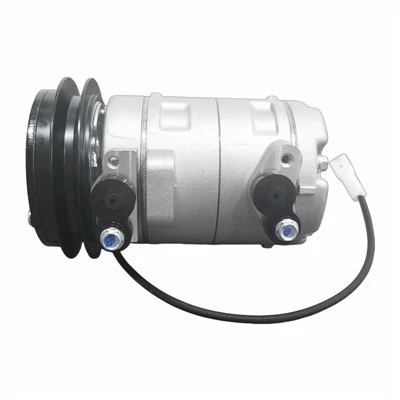
First off, let’s talk about the core job of a compressor seal, because context matters. Your car’s AC compressor isn’t just pumping air—it’s compressing refrigerant (old-school R12, newer R134a, or the fancy HFO-1234yf stuff now) and sometimes oil too, right? That system runs at all sorts of pressures: low when you’re idling at a stop light, sky-high when you’re flooring it up a mountain or cranking the AC on max in 100-degree heat. Add in the fact that compressors have moving parts—pistons swinging, rotors spinning, shafts turning—and you’ve got a recipe for disaster if the seals are garbage. The #1 non-negotiable here is zero refrigerant leakage. I’ve seen a compressor pass every performance test on the line, only to fail a 24-hour leak check because a seal was just a hair too thin. That’s not just a small problem—leaking refrigerant kills AC efficiency, makes you spend more at the gas pump, and can even land you with a failed emissions test. On top of that, if refrigerant leaks out, there’s nothing lubricating the compressor’s internal parts, and next thing you know, you’re towing your car to a shop for a $2,000 repair. Seals have to hold tight to both high and low pressures, no exceptions.
Next up, compatibility is huge, and I don’t just mean “will this rubber touch refrigerant?” Let’s get specific. Modern automotive compressors run on all kinds of coolants and oils, and that’s changed a lot in the last 10 years. Back in the day, most systems used mineral oil with R134a, but now the new refrigerant HFO blends need polyol ester (POE) oil, and that stuff eats through cheap rubber faster than soda eats through a plastic cup. I remember a few years ago, we tried to switch a cheaper seal material to cut costs, and within 6 months, a major client had a batch of compressors coming back with cracked seals—turns out the cheap nitrile rubber we used didn’t play nice with POE oil. We had to redo every batch and ate the cost, which taught me a valuable lesson: you can’t cut corners on seal material because one bad batch can tank a client’s reputation (and yours). Also, seals have to handle temperature swings like a champ. A car sitting in the Arizona desert can get up to 180 degrees under the hood, and then drop to 30 degrees in a Minnesota winter. Seals can’t harden up and crack when it’s cold, or soften and swell when it’s hot. We test every seal we make by freezing them to -40°F and baking them to 300°F for 72 hours straight, then run pressure checks—no exceptions. That’s the kind of stuff that keeps our clients coming back.
Then there’s the dynamic side of things, because most compressor seals aren’t sitting still—they’re moving with the shaft, right? The seal around the compressor’s drive shaft (the part that connects to the engine’s belt) has to slide and rotate with the shaft thousands of times per minute, and it can’t wear out too fast. If the seal wears down just a little bit every time the shaft turns, over 50,000 miles that wear adds up to a leak. We work with our seal manufacturers to tweak the seal’s lip material and spring tension—too much tension and it rubs too hard, wears out fast; too little tension and it doesn’t seal tight enough. It’s a fine line, and we spend weeks testing different tension levels on our in-house dynamometers to get it right. Also, there’s vibration to think about. When you’re driving on a gravel road or bouncing through potholes, the whole car shakes, and the compressor vibrates right along with it. Seals can’t vibrate loose or get damaged from all that movement. We mount test compressors on our vibration tables and shake them for 100+ hours at different frequencies to make sure the seals hold up. I’ve had guys ask me why we don’t just use the same seals as old refrigerators—those are static, right? Automotive compressors are moving parts, so seals have to be able to flex without failing. That’s a big difference most people don’t get.
Wait, I also have to talk about durability and lifespan. Automotive compressors have to last the life of a car these days, right? Most new cars are built to go 150,000 miles or more, and the AC compressor is a wear part, but we need it to last as long as possible. Seals are a big part of that. We test our seals for abrasion resistance, too—dirt and dust can get into the compressor over time, and that stuff is like sandpaper on the seal. If a seal can’t handle a little grit, it’ll wear out in 20,000 miles. We add tiny amounts of anti-wear compounds to the seal material, or surface-treat the seal lip to make it smoother but still grippy enough to seal. I remember a client once told us their old compressor seals were failing after 30,000 miles in off-road vehicles—turns out the seals they were using didn’t have enough abrasion resistance, so we adjusted our formula and now those off-road compressors are going 100,000+ miles without seal issues. That’s the kind of problem-solving we do every day.
Another thing that’s been popping up more lately: electric vehicle (EV) compressors. Oh man, that’s a whole different ballgame. EV compressors don’t run off the engine belt—they’re driven by an electric motor, so they operate at different speeds and pressures than gas-powered compressors. Also, EVs are all about weight and efficiency, so every part has to be as light and small as possible, which means seals have to be even more precise. We’ve had to redesign our entire seal line for EV compressors because the temperature ranges are even wider, and the pressure fluctuations are sharper when the compressor ramps up and down fast. It’s been a steep learning curve, but honestly, it’s exciting—working on the next generation of automotive tech, not just the same old gas engine stuff. And on top of that, EVs have stricter emissions rules, so zero leaks are non-negotiable. There’s no room for error here, because EV AC systems are designed to be ultra-efficient, so even a tiny leak kills range.
Now, let’s get real about real-world applications, because lab testing is great, but nothing beats actual road use. We work with a bunch of local mechanics who test our compressors in all kinds of conditions: city stop-and-go, highway cruising, off-roading, even snow plowing in the winter. One mechanic we partner with runs a fleet of delivery vans in Chicago, and he told us our seals held up way better than the ones from the big name supplier because our seals didn’t leak when the van was idling all day in the cold. Big name suppliers often cut corners on testing for regional conditions, but we tailor our seals based on where the compressor is going. For example, for compressors going to the Southeast US, we use seal materials that handle higher humidity and heat better, while for Northern climates, we use materials that stay flexible in super cold temperatures. That’s the kind of personalized approach you don’t get from a mass-produced supplier.
I also have to mention regulatory stuff, because automotive parts have to meet strict standards. The EPA has rules for refrigerant leakage, right? And in Europe, they have even stricter standards under the Euro 7 regulations. Our seals have to pass all of these, because if a compressor leaks, it’s not just a customer problem—it’s a compliance problem. We don’t cut corners on testing to meet these standards, either. We send every batch of seals to third-party labs to test for refrigerant compatibility, pressure holding, and emissions, so our clients don’t have to worry about failing inspections. That’s part of our job as a supplier—making sure the parts we sell are not just good, but legal.
So, putting it all together: the sealing requirements for automotive compressors aren’t just “hold fluid and pressure.” They’re a mix of chemical compatibility with refrigerants and oils, resistance to temperature swings, ability to handle dynamic movement and vibration, durability against wear and abrasion, compliance with strict emissions rules, and even tailored to specific use cases like EVs or off-road vehicles. As a compressor supplier, we don’t just ship parts—we work with our clients to figure out exactly what kind of compressor they’re building, what conditions it’ll run in, and design seals that check every single box.

If you’re a car manufacturer, mechanic, or someone who sources compressors for your business and you’ve had issues with seal leaks, durability, or just parts that don’t hold up, I’d love to chat. We build our seals to solve real problems, not just meet specs on a sheet of paper. Hit us up to connect, and let’s talk about how we can make your compressors work better, last longer, and save you money on repairs and replacements.
Agricultural AC Compressor References
Automotive Seal Technology. (2021). Material Compatibility Guide for Mobile Air Conditioning Systems. SAE International.
EPA Mobile Air Conditioning Leakage Standards. (2022). Federal Regulations for Automotive Refrigerant Systems. U.S. Environmental Protection Agency.
Kang, J., & Lee, S. (2020). Seal Performance in Electric Vehicle Scroll Compressors. International Journal of Automotive Technology.
Mobile Air Conditioning Society (MACS). (2019). Advanced Seal Testing Protocols for Automotive Compressors. MACS International Training Manual.
Jiangsu Nuoyan New Energy Vehicle Air Conditioning Co., Ltd.
With abundant experience, we are one of the most professional automotive compressor manufacturers and suppliers in China. We warmly welcome you to buy customized automotive compressor at competitive price from our factory. Also, quotation is available.
Address: No. 7 Xingyuan Road, Huangqiao Economic Development Zone, Taixing City, Jiangsu
E-mail: nuyantech2026@163.com
WebSite: https://www.nuyantech.com/
