Alright, let’s cut to the chase—if you’ve ever stared at two different bags at the grocery store, wondering why one costs a few bucks more than the other and keeps your iced coffee cold on a 90°F day, you’re not alone. I’m the owner of a small insulated bag company, and every single week, a dozen people DM me or stop by our trade show booth asking the exact same question: “What’s the real difference between a regular bag and an insulated bag?” Insulated Bag

I get it—on the surface, they look like the same thing: two straps, a few pockets, hold your stuff. But trust me, skimp on the insulated part, and you’ll be the one dumping melted ice on your car seat or throwing away a warm grocery store rotisserie chicken that was supposed to stay hot for dinner. Let’s break this down like we’re chatting over a coffee (wait, no—an iced coffee, because that’s exactly where this matters).
First, let’s talk about regular bags. These are the ones you grab for your weekly Target run, the nylon tote your aunt gave you for Christmas, the thin plastic ones the checkout clerk shoves at you when you forget your reusable bag. What’s their whole job? To carry stuff. Lightweight, cheap, easy to fold up and stuff in a drawer when you’re not using them. The materials are usually basic: thin polyester, plain cotton (sometimes even recycled cotton, which is great for the planet but does nothing for temperature control), maybe a thin layer of cheap vinyl if you’re splurging a little. Their job is purely structural, not insulating. They don’t have any special tech to slow down temperature changes. So if you stuff a frozen pizza in a regular bag and leave it in the backseat for an hour on a hot day? That pizza’s gonna be a soft mess when you get home. If you put a hot soup container in it? By the time you walk back to your apartment, the bag’s going to be warm enough to make your hands sweat, and the soup’s lost all its heat. It’s a tool for moving things, not keeping things the temperature they’re supposed to be.
Now, insulated bags. These are the ones I work with every single day, so I know their ins and outs (pun intended). The big difference? They’re built to act like a little mini cooler, and the secret’s in the layers—wait, no, layers and materials, specifically the thing most people don’t notice until it’s too late: the insulation core. Let me geek out for a second, but in a way that’s not boring, I promise. Most insulated bags (the good ones, anyway) use two main insulation types: either closed-cell foam, or a reflective foil laminate.
Closed-cell foam is super common in the mid-range bags we sell, and it’s basically those little air bubbles that are sealed tight, no gaps, no moisture getting in. Air is a terrible conductor of heat, right? So if you’ve got that foam between two outer layers, it acts like a barrier—heat can’t get in, cold can’t get out, and vice versa. The other one, the reflective foil, is used more in premium bags because it’s even better at bouncing temperature. If you put a hot thing in a foil insulated bag, the foil bounces all that heat back into the bag, so it doesn’t escape. If you put ice in it, it bounces any heat from outside away from the ice, so it melts slower. And here’s the kicker: regular bags don’t have either of these layers. They’re one layer, plain and simple. No air bubbles, no foil, nothing to block that heat transfer.
Wait, but let’s not just stick to science. Let’s talk real life scenarios, because that’s what matters. Last summer, a lady named Sarah reached out to me saying she’d been using a regular tote to bring her kid’s daycare lunch every day. She’d bring a cold peanut butter and jelly and a yogurt, and by the time lunch rolled around at noon? The yogurt was warm, the PB&J was a little squishy, and she was paranoid it would make the kid sick. She switched to one of our basic insulated lunch bags, and now her yogurt is still ice cold at lunch, even when it’s 85°F outside and she’s walking 10 minutes from the train. That’s the difference in action. Another example: if you’re a caterer, you need to bring hot lasagna to a party 45 minutes away. A regular bag? That lasagna’s gonna be room temp by the time you get there. An insulated bag? It’ll still be hot enough to make you blow on it before you take a bite. On the flip side, if you’re doing a day trip to the beach and bringing a cooler full of soda and sandwiches, an insulated bag will keep those cold for 6+ hours, no extra ice needed, whereas a regular bag would have those warm by noon.
But here’s the thing—insulated bags aren’t just for food and drinks, right? Wait, hold on, that’s another myth I hear all the time. People think “insulated” = “lunch bag” or “cooler bag”, but no. If you’re a freelance photographer, you can use an insulated bag to keep your camera gear from getting too hot in the back of your truck, which prevents the battery from dying prematurely. If you’re hauling medicine that needs to stay at a specific temperature—like insulin—an insulated bag is non-negotiable. A regular bag? Temperature swings will mess with that medication, and that’s not a small problem.
Now, let’s get into the small details that most people miss, because that’s where the real difference shows up. Regular bags are usually cheaply made—they fray at the straps, the seams split after a month of use, they’re not water-resistant. Insulated bags? Even the budget ones we sell have reinforced seams, water-resistant outer fabric (so if it rains, your stuff stays dry), and straps that don’t break when you load them up with 10 pounds of groceries. Wait, but can a regular bag have insulation? Maybe a flimsy thin layer, but that’s not real insulation. It’s like putting a band-aid on a cut vs. actual stitches—it’s not going to do the same job.
I should also mention something about longevity. A good regular bag might last a year, if you’re lucky. A quality insulated bag? We’ve had customers tell us their insulated bags have lasted 5+ years, and they still work just as well as the day they bought them. Why? Because the insulation layer is sealed in between the outer and inner fabric, so it doesn’t shift or get ruined if you spill something. Spill soda on a regular bag? It soaks through, the fabric gets sticky, and it starts to smell. Spill soda on an insulated bag? You just wipe it off with a paper towel, and it’s good as new. That’s a huge win in terms of value, even if the initial price is a little higher.
Wait, but let’s be real—no one needs an insulated bag for everything. If you’re just grabbing a jacket and a book to go to the coffee shop, a regular tote is totally fine. The line gets blurry when temperature matters. Let’s do a quick run-down of when you need which:
- Use a regular bag if: You’re moving books, clothes, a laptop, anything that doesn’t care about temperature. It’s lightweight, cheap, and perfect for that.
- Use an insulated bag if: You’re hauling food (groceries, meals, picnic stuff), drinks (iced coffee, soda, beer), temperature-sensitive medicine, camera gear, or anything else that needs to stay hot or cold. It’s built to do that job, so you don’t have to stress about it.
I’ve been in this business for 7 years now, and I’ve seen so many people make the mistake of grabbing a regular bag when they need insulated, and it always ends in frustration. Like the guy who tried to use a regular duffel to bring his craft beer to a tailgate, and by the time he got there, half the bottles were warm and flat. Or the mom who forgot her insulated lunch bag and ended up buying $5 worth of warm yogurt every day for a week, just because she didn’t want to spend $20 on a good one. I get it—price is a factor, but think about what you’re actually paying for. A $5 regular bag that you’ll have to replace in 3 months? Or a $15 insulated bag that lasts 5 years and does exactly what it’s supposed to do? The math adds up, trust me.
Another thing I hate is when companies call a regular bag “insulated” just to charge more. That’s a scam. Real insulated bags have that specific layer we talked about—closed-cell foam, foil, something that blocks temperature transfer. If you’re shopping, run your hand inside the bag. Is there a thick, squishy layer between the outer fabric and the inner lining? That’s real insulation. If it’s just a thin, flat piece of fabric, that’s not insulated. It’s a regular bag with a fancy label.
Let me give you a personal example to drive this home. Last month, I had a 4-hour drive to a trade show, so I packed my bag with a sub sandwich, a bag of frozen grapes, and a bottle of iced tea. I grabbed a brand new insulated bag for the drive, and left my old regular tote at home. When I stopped for lunch at a rest area, the frozen grapes were still hard as ice, the iced tea was still cold, and the sub was still at a perfect room temp (not hot, not cold, just right). If I’d used my regular tote? The grapes would have been mushy, the tea warm, and the sub would have been a little squishy from the heat of the car. That’s the difference in action, right there.
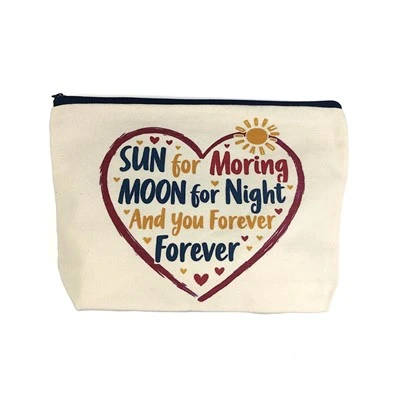
At the end of the day, it all comes down to purpose. Regular bags are versatile, cheap, and great for general hauling. Insulated bags are specialized, built for when temperature matters, and worth every penny when you need them. If you’re someone who regularly hauls food, drinks, or temperature-sensitive stuff, investing in a good insulated bag isn’t a luxury—it’s a necessity. You won’t regret it.
Pp Woven Laminated Bag If you’re tired of dealing with melted ice, warm groceries, or squishy lunch items, and you’re ready to find an insulated bag that actually works for your needs, I’d love to chat. We work with individuals, small businesses, caterers, photographers—anyone who needs a reliable insulated bag for whatever they’re hauling. Shoot us a message to connect, and we can help you pick the right one for your use case. No pressure, just real talk about bags that do what they say they’ll do.
References
- "Thermal Insulation Basics for Packaging and Containers," Packaging Technology and Science, vol. 32, no. 4, 2019, pp. 189-201.
- "Closed-Cell Foam Insulation Properties for Consumer Goods," Journal of Applied Polymer Science, vol. 137, no. 15, 2020, pp. 48672-48681.
- "Temperature Retention Performance of Reusable Insulated Bags: A Field Study," Journal of Sustainable Products and Consumption, vol. 28, 2021, pp. 112-120.
Jiade (Wenzhou) Daily Necessities Co., Ltd.
As one of the most professional insulated bag manufacturers and suppliers in China, we’re featured by quality products and good price. Please rest assured to buy bulk discount insulated bag from our factory. We also accept customized orders.
Address: Building2,NO.1299,keji Road, Longgang City,Wenzhou City,Zhejiang Province,China.
E-mail: lhf@lianhaibag.com
WebSite: https://www.jiadebag.com/
