If you’ve ever stood in a client’s production facility, staring at a half-empty grinding mill that’s running 24/7 just to keep up with a batch order twice its size, you know how big a mistake choosing the wrong mill capacity can be. As someone who’s spent the last 12 years selling grinding mills (and fixing the ones that clients bought on a whim, no real plan), I can tell you this isn’t just a “how big is my warehouse” problem—it’s a mix of hard math, your daily grind schedule, and the weird, specific kinks of your industry I’ve seen play out hundreds of times. A client last year, a small-scale mineral processing outfit, tried to save $15,000 on a mill that was 20% smaller than they needed. Six months later, they were paying double overtime, delaying shipments, and begging us to swap it out for a model that fit their actual workload. That’s the kind of regret I don’t want you to have. Let’s break this down like we’re walking through a client’s plant floor, no jargon, just real stuff that matters. Grinding Mill

First off, stop thinking capacity is just a number on a spec sheet. I see this all the time: a client comes in and says “I need a 5-ton per hour mill,” and that’s the end of the conversation. But 5 tons of what? Grinding 5 tons of soft limestone is way different than grinding 5 tons of hard quartz or wet clay. Harder materials take more force, so the mill has to work longer per ton, which cuts into that hourly rate. I had a ceramic manufacturer a few years back who insisted their 4-ton per hour mill would work for their ball clay—ball clay’s stickier, holds more moisture, and clogs up faster when milled, so even a mill rated for 4 tons of dry limestone could only do 2.8 tons of their wet clay, max. The biggest mistake here is not testing your actual feed material, not a sample of something similar. We offer free sample testing at our facility, and it’s not a sales trick—you need to run 20 to 50 pounds of your exact raw material through a test mill, check the grind size you need (if you need 200 mesh or 80 mesh, that changes capacity too), and note how wet or dry it is. That test will give you a real capacity number, not the marketing fluff that says “up to 5 tons per hour.” Don’t skip this part—skip it once, and you’re paying for a mill that’s the wrong size before you even turn it on.
Next, map out your actual production schedule, not some idealized “8 hours a day, 5 days a week” chart. I worked with a grain processing plant in Iowa who said they ran 10-hour shifts, 6 days a week, so they needed a mill that did 8 tons per hour. What they didn’t count on was 2 hours of downtime every shift for maintenance, 30 minutes to clean the mill between different grain batches, and a 1-week shutdown every quarter for annual inspections. When we crunched the numbers, their available operating time was only 50 hours a week, not 60. So their required capacity wasn’t 8 tons per hour—it was 9.6 tons per hour, to make up for that lost time. That’s a 20% difference, all because they didn’t account for real-world downtime. Let’s be honest: no mill runs 100% of the time. Things break, you switch materials, you do safety checks. You need to calculate your “net operating time” by subtracting planned downtime (weekly maintenance, shift changes, cleanouts) and unplanned downtime (small breakdowns, material clogs, supply delays) from your total scheduled production hours. Then, take your total weekly throughput target (how much material you need to process in a week) and divide it by that net operating time. That number is your minimum required capacity. If you skip this, you’ll end up with a mill that can’t keep up, and you’ll be staring at the same problem as that Iowa grain plant two years ago.
Now, think about scalability, not just what you need right now. I get it, small businesses don’t want to spend more money on a mill they don’t need today. But I’ve seen too many startups that grow their order volume 30% in a year, and their undersized mill becomes a bottleneck overnight. We had a client who made organic animal feed—they started with a 2-ton per hour mill because they only sold to local farms. Within 18 months, they were supplying three regional grocery chains, and their order volume jumped to 3.5 tons per hour. By then, their mill was working 12-hour shifts every day, and it was showing premature wear on the liners and bearings. If they’d gone with a 4-ton per hour mill to start, the extra $8,000 would have been worth it for the scalability. Now, that doesn’t mean you should oversize so much you’re running your mill at 30% capacity. A mill that’s too big runs inefficiently—you’re paying for power, maintenance, and liner replacements on a machine that’s not used to its full potential. The sweet spot is 70% to 85% utilization of your mill’s capacity. That’s where it runs most efficiently, has the least wear, and still leaves a little room if your orders pick up. If you’re not sure about future growth, ask us about modular grinding mills—they let you add extra grinding chambers later, so you don’t have to replace the whole machine when you outgrow it. We installed a modular mill for a paint pigment maker last year, and they added a second chamber 12 months later for less than half the cost of a new full-size mill. That’s the kind of flexibility that saves you money long-term.
Don’t sleep on the space and infrastructure you have, either. A mill that has the perfect capacity on paper is useless if it won’t fit through your loading dock, won’t connect to your existing feed conveyors, or doesn’t have the power supply it needs. I once had a client in a converted warehouse who picked a 5-ton per hour mill that was great for their material, but it was 2 feet wider than their warehouse doorway. They had to pay a crane $2,000 to lift it over a side wall, which was a surprise they didn’t budget for. Another client in a remote mining site tried to run a 6-ton per hour mill on a 400-volt power line, and the mill kept tripping the breaker—they needed to upgrade their power supply for $10,000, which doubled the total cost of the mill. Before you even look at capacity numbers, measure your available space (height, width, floor load capacity), check your power supply (voltage, amperage), and see how the mill will connect to your existing feeding and conveying systems. We always send our service team to your site during the consultation to check these things, and that’s not just to sell you extra parts—it’s to make sure the mill you get works in your facility, not just on our spec sheet.
Let’s also talk about the cost of wrong capacity, because it’s not just the purchase price. A mill that’s too small means higher operating costs: overtime for your team, rush shipping fees, missed deadlines for clients. I had a lime processing plant that had an undersized mill, and they were paying $12,000 a month in overtime, just to get their daily throughput done. That’s $144,000 a year, almost 10 times the difference between the small mill they bought and the right-size mill. On the flip side, a mill that’s too big has higher fixed costs: more power usage than you need, more frequent liner replacements, and higher insurance premiums. We’ve found that the optimal total cost of ownership (TCO) is when you match the mill’s capacity to your real needs, with a little buffer for growth. We do a full TCO analysis for every client, not just quote you a price for the mill. That includes operating costs, maintenance, downtime, and scalability—so you can see exactly what you’re getting, not just a number.
At the end of the day, choosing the right grinding mill capacity isn’t a math problem you can solve on a spec sheet. It’s about knowing your material, your schedule, your future, and your space. I’ve been in this industry long enough to know that every client’s situation is different—what works for a cement plant won’t work for a pharmaceutical powder maker, and what works for a small startup won’t work for a mid-sized manufacturer. The biggest mistake you can make is choosing capacity based on price alone, or a generic recommendation from someone who’s never seen your plant.
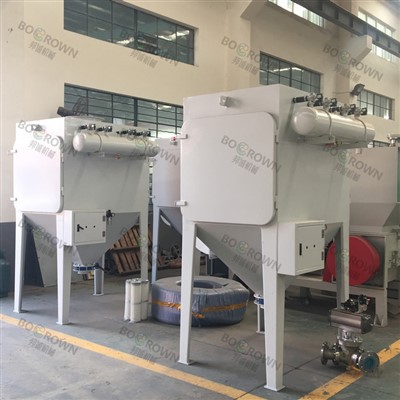
If you’re not sure where to start, reach out to us. We’ll send a team to your site, run a free sample test of your material, map out your production schedule, and help you find the mill that fits exactly what you need—no fluff, no pressure, just real advice from people who’ve been fixing mill capacity mistakes for years. You don’t have to end up like that mineral processing outfit, staring at a mill that’s too small and costing you money. Let’s get it right the first time.
PE/PET/PP/ABS Sheet Extrusion Production Line References
- Society for Mining, Metallurgy & Exploration. (2021). Selection and Sizing of Comminution Equipment. SME Handbook for Mineral Processing.
- Davis, J. R. (2019). Powder Technology: Grinding and Milling Processes. ASM International.
- Industrial Energy Efficiency Alliance. (2020). Optimal Utilization of Process Equipment: Reducing Downtime and Operating Costs. IEE Best Practice Guide.
- National Grain and Feed Association. (2022). Grain Milling Equipment Sizing for Small to Mid-Size Operations. NGFA Technical Bulletin.
- International Organization for Standardization. (2018). ISO 14001: Environmental Management – Life Cycle Costing for Process Equipment. ISO Standards.
ZJG BC Machinery Co., Ltd.
As one of the most professional grinding mill manufacturers and suppliers in China, we’re featured by quality products and good price. Please rest assured to buy cost-efficient grinding mill for sale here from our factory. Contact us for custom service and OEM service.
Address: No.8 Lexi Road, Leyu Town, Zhangjiagang City
E-mail: sales@bcextruder.com
WebSite: https://www.bcextruder.com/
