If you’ve ever stood next to a commercial pump running at full capacity—whether it’s a water pump feeding a municipal treatment plant, a chemical pump moving raw materials through a manufacturing line, or a centrifugal pump powering an irrigation system—you’ve probably noticed a low, steady vibration. Most people write that off as just the machine doing its job. But if that vibration got worse, if the pump started making a weird, uneven noise, or if it suddenly seized up entirely, you’d know something was wrong. More often than not, that “something wrong” ties back to a small, easy-to-overlook part: the pump’s balancing device. As a pump parts supplier who’s spent 12 years working with operators, maintenance techs, and engineers across industries, I’ve seen firsthand how this unassuming component is the quiet backbone of pump reliability. Today, I want to break down exactly what it does, why it’s non-negotiable for every pump, and how to make sure you’re specifying or maintaining it right. Pump Parts
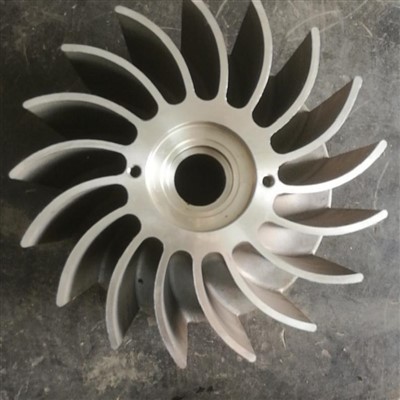
First, let’s ground this in how a basic centrifugal pump works—since that’s the type most people interact with every day. A centrifugal pump has a central impeller, a finned metal or plastic disk that spins at thousands of RPM, pulling fluid in through the suction port and flinging it outward via centrifugal force, which builds pressure to push the fluid out the discharge port. That spinning impeller is mounted on a shaft, which runs through the pump’s casing, between two bearings that hold it aligned. Now, here’s the catch: when the impeller spins, it doesn’t just push fluid. It also creates a huge, unbalanced force in the process.
See, the impeller is a closed disk, right? But fluid isn’t just hitting the front of it. It’s also seeping past the small gap between the back of the impeller and the pump casing, into a space called the back plate. That fluid is under almost the same high pressure as the discharge side of the pump, while the front of the impeller is sitting at the lower suction pressure. That pressure differential creates a constant, sideways push—called axial thrust—pushing the impeller (and the entire shaft assembly) toward the suction end of the pump. If that thrust wasn’t countered, a few bad things would happen, and they’d happen fast.
I remember a client in the food and beverage industry a few years back. They had a 10-inch centrifugal pump moving pasteurized milk from a holding tank to a filling line. The maintenance team kept changing out bearings every three months, which was twice their scheduled maintenance cycle. When they called me in to take a look, I noticed their pump’s balancing device—simple, older-style balancing disks that they’d installed five years prior—had worn down to half its thickness. The worn disk wasn’t pushing back against the axial thrust anymore. The shaft was grinding into the suction-side bearing, wearing down the seals, and causing minor leaks that had gone unnoticed until the bearings seized. We replaced the balancing device with a matched set, adjusted the gap, and those bearing failures stopped entirely. That’s the first and biggest function of a pump balancing device: to neutralize axial thrust, so the shaft doesn’t grind against the casing or bearings, and the pump doesn’t seize prematurely.
But it’s not just about preventing failure. Axial thrust also causes vibration, which harms the entire pump system. Every time the shaft is pushed back and forth, it’s pulling the impeller’s fins slightly out of alignment with the casing’s volute—the curved part that catches the fluid flung off the impeller. If the impeller is even a millimeter off, the pump’s efficiency drops. I’ve tested this with a client in the chemical processing sector: a 6-inch pump that was rated to move 200 gallons per minute was only moving 172 GPM, and their energy bills were 15% higher than projected. When we adjusted their balancing device to reduce axial thrust, the impeller realigned, and flow rate climbed back to 198 GPM within a week. So the second function of the balancing device is to maintain optimal impeller alignment, preserving pump efficiency and cutting operational costs.
Wait, there’s another side to that vibration problem. When the shaft is bouncing around from unbalanced thrust, it also puts unnecessary stress on the pump’s seals. Seals are what keep the fluid inside the pump from leaking out into the surrounding environment—critical for everything from hazardous chemicals to drinking water. A failed seal doesn’t just waste product; it’s a safety hazard. For operators handling corrosive or flammable fluids, a seal leak can lead to downtime, environmental fines, or even safety incidents. I worked with a water treatment plant in the Midwest a few years ago that had a weekly seal leak on their chlorine feed pump. They thought it was a bad seal, but after inspecting the balancing device, we found the thrust was pushing the shaft into the seal, wearing it out from the inside out. Replacing the worn balancing device with a heavy-duty, corrosion-resistant version (matched for the pump’s specific RPM and pressure) cut their seal failures by 90% in six months. That’s the third function of the balancing device: to protect seals and other internal components, reducing unplanned downtime and maintenance costs.
Now, balancing devices aren’t one-size-fits-all. There are three main types, and each serves a slightly different purpose depending on the pump’s application. The first, most common type is the balancing disk. That’s what I used for the milk pump client—it’s a thin, circular metal disk mounted on the back of the impeller, sized so that the area of the disk facing the back plate creates an equal and opposite pressure to counteract axial thrust. Balancing disks are great for medium-pressure pumps, like those in water or light industrial use. The second type is a balancing drum, used for higher-pressure pumps, like those in oil and gas pipeline systems. Balancing drums are larger, cylindrical parts mounted on the shaft, with a gap between the drum and the casing that regulates pressure across the drum to counteract thrust. They can handle much higher pressure differentials than disks, which is why they’re used in applications where pressure can hit 10,000 PSI or more. The third, and most common for very large pumps, is a set of balancing vanes. These are small fins molded or machined into the back of the impeller, designed to bleed off excess pressure from the back plate, reducing axial thrust. Balancing vanes are low-cost, low-maintenance, and work well for large, low-to-medium pressure pumps, like those used in power plant cooling systems.
A common mistake I see people make is cutting corners on balancing device maintenance or replacement. Many operators wait until the pump starts vibrating or leaking before they check the balancing device, but that’s like waiting for your car’s brakes to fail before you replace them. Balancing devices wear over time, especially in abrasive or corrosive environments. For example, pumps moving water with high sand content will wear down balancing disks and vanes much faster than those moving clean water. Pumps handling corrosive chemicals will wear down metal balancing components, requiring stainless steel or Hastelloy versions instead of standard cast iron. Even the gap between the balancing device and the casing can change from thermal expansion or shaft wear, throwing off the balance.
I always tell clients to include a balancing device inspection in their routine pump maintenance schedule—at least once a year, or every 1,000 operating hours, whichever comes first. Check for wear, cracks, or warping, and make sure the gap between the balancing device and the casing is within the manufacturer’s specifications. If it’s not, replace the balancing device with a matched part for your specific pump model, RPM, and application. A lot of operators try to “get by” with a cheaper, universal balancing device, but that’s a short-term fix. Universal parts don’t account for the exact pressure differentials in your pump, so they won’t properly counteract axial thrust, leading to early failure.
As a pump parts supplier, I’ve built my business on being transparent about these details. I don’t just sell parts; I work with operators to figure out exactly what balancing device their pump needs, based on their application, flow rate, pressure, and fluid type. I’ve had clients come to me after getting bad advice from general suppliers who tried to sell them a universal balancing disk for a high-pressure chemical pump, only to have the pump seize a week later. We sent them a custom-sized balancing drum, paired with a corrosion-resistant coating, and their pump has run without major issues for three years now.

At the end of the day, the balancing device is one of those parts that’s easy to overlook until it fails. But when it works, it’s the reason your pump runs reliably, efficiently, and safely for years. It’s the quiet component that keeps vibration low, downtime rare, and operational costs in line. If you’re dealing with a pump that’s showing unusual vibration, seal leaks, or falling efficiency, don’t just replace the obvious parts—take a look at the balancing device. If you need help sourcing the right part for your pump, or have questions about maintenance, I’m here to help. We specialize in balancing devices and all pump parts, built to fit your specific equipment and application. Reach out to talk through your needs.
Impeller References
Karassik, I. J., Krutzsch, W. C., Fraser, W. H., & Messina, J. P. (2007). Pump Handbook (4th ed.). McGraw-Hill.
Gould, T. E. (2019). Centrifugal Pump Theory and Practice. Elsevier.
Hydraulic Institute. (2021). ANSI/HI 9.6.1 Rotodynamic Pumps for Pump Life Cycle Costs. Hydraulic Institute.
Shandong Shunye Stainless Steel Co., Ltd.
Address: Shandong Province, Binzhou City, Wudi County, Liubao Town, Zhangdong Road, Duliucun Village
E-mail: sales@wdshunye.com
WebSite: https://www.shunyecasting.com/
