If you’ve ever stood near an industrial oven mid-operation, you’ve probably noticed a low, rumbling hum that feels less like background noise and more like a tangible presence. As an industrial oven supplier, I get asked about noise levels all the time – especially by manufacturing, aerospace, food processing, and automotive parts teams, where worker comfort, OSHA compliance, and precision equipment protection aren’t afterthoughts. Noise isn’t just an annoyance here; it’s a data point that tells you how well an oven is engineered, how it will fit into your facility, and what you need to do to keep your team and equipment safe. Let’s break this down with real-world, on-the-job context I’ve picked up working with clients for over a decade. Industrial Oven

First, it’s important to ground this in how industrial ovens generate noise in the first place. Unlike residential ovens, which rely on small, quiet heating elements and minimal airflow, industrial units – whether batch, conveyor, or walk-in types – are built for high-volume, high-temperature processing. The biggest noise drivers fall into three categories that most clients don’t see during a quick tour: combustion systems, moving airflow components, and structural resonance. Combustion (for gas-fired ovens) creates a low-frequency rumble from burners igniting and feeding fuel; a typical industrial burner for a 10-foot-wide conveyor oven can push enough air and gas to produce 85 dB at 3 feet away – that’s roughly as loud as heavy traffic on a busy street. Then there’s the fans: industrial ovens use high-CFM (cubic feet per minute) circulation fans to keep heat uniform across parts, curing batches evenly, and preventing hot spots. These fans range from 1-horsepower units for small batch ovens to 50+ horsepower fans for large conveyor ovens, and their motor and blade vibration is a huge source of mid-to-high frequency noise. Finally, structural resonance happens when noise from burners or fans hits the exact frequency of an oven’s metal panels, shelves, or door seals, amplifying the sound even more – I’ve seen a client’s 12-foot walk-in oven jump 10 dB on its own just from a misaligned fan blade vibrating the side panels.
Now, let’s get to the actual noise levels, because that’s what most of you care about. I’ve taken hundreds of decibel (dB) readings over the years, and I can tell you the numbers vary wildly based on oven type, size, heat setting, and whether it’s well-maintained. The Occupational Safety and Health Administration (OSHA) sets a 8-hour time-weighted average (TWA) limit of 90 dB for industrial workplaces, and any noise above 85 dB requires hearing protection for workers who are within 4 feet of the equipment. Here’s the real-world breakdown of what we see day-to-day:
Small batch ovens (100°F to 500°F processing): These are the go-to for small machine shops or artisan food processing, with capacities from 10 to 50 cubic feet. When operating at their low-to-medium temperatures, they average 68 to 75 dB at 3 feet. That’s quieter than your average vacuum cleaner, right? Even when cranked to their max 500°F curing setting, the noise only climbs to 78 to 82 dB – still well below OSHA’s TWA limit, though we recommend basic earplugs for anyone spending more than an hour near the unit. The main noise here is from the small circulation fan, and most small batch ovens come with insulated paneling that cuts down on structural resonance, so you barely hear them in a production room with 10 other pieces of equipment.
Medium batch and conveyor ovens (500°F to 1,200°F processing): This is our most popular line, used for aerospace part curing, automotive powder coating, and electronic component drying. These range from 50 to 200 cubic feet for batch units, and conveyor ovens can be 20 to 100 feet long, moving parts at 1 to 10 feet per minute. At low processing temps (500°F), they average 76 to 83 dB at 3 feet. When cranked to max temp (1,200°F, common for powder coating cure cycles), the noise jumps to 84 to 91 dB. Here’s where context matters: that 91 dB reading at 3 feet is exactly at OSHA’s TWA threshold. If a worker is standing by the oven door loading parts for an 8-hour shift, they need OSHA-approved ear protection. But if you have the conveyor oven set up with remote loading stations (10 feet away), the noise drops to 78 to 85 dB – still within hearing protection requirements, but manageable for short shifts. We recently installed a 60-foot conveyor oven for a local auto parts manufacturer, and their team told us the only time they noticed the noise was when they were leaning against the oven’s side for extended breaks.
High-temperature industrial ovens (1,200°F to 2,000°F processing): These are the workhorses for metal heat treating, ceramic sintering, and glass tempering, with capacities starting at 100 cubic feet and going up to 1,000 cubic feet for large commercial furnaces. These units use larger burners and high-temp circulation fans, so noise levels are significantly higher. Operating at mid-range processing temps (1,500°F), they average 88 to 95 dB at 3 feet. At max temp (2,000°F for sintering), that jumps to 96 to 105 dB. That’s the level of a chain saw or a loud concert – definitely no one is standing near these for 8 hours without hearing protection, and many facilities require these ovens to be in separate, sound-insulated rooms with remote control panels. A tool and die shop we work with keeps their high-temp oven in a dedicated 12×16 room lined with acoustic foam, and from the main production floor 50 feet away, the noise is barely noticeable at 65 dB.
Now, I know what some of you are thinking: “What about electric vs. gas-fired ovens?” Great question, and it’s a common myth. Most people assume gas ovens are louder, but in my experience, the type of fuel only changes noise levels by 1 to 3 dB. Electric ovens have smaller burners, so they skip that low-frequency rumble, but they have smaller, faster-spinning fans that create slightly more high-pitched whine. Gas ovens have the combustion rumble, but often use larger, slower fans that are quieter. The bigger difference is insulation quality: an oven with double-layer, mineral-wool insulated panels will cut 5 to 10 dB of noise just by containing the sound, regardless of fuel type. We upgraded our standard line a few years ago to use thicker insulated panels, and our clients reported a 7 dB drop in noise levels on average – that’s the difference between a noisy office and a quiet conversation.
I also want to address maintenance, because this is where a lot of clients miss a key point: an oven’s noise level doesn’t stay static. A new conveyor oven might run at 82 dB at 3 feet, but after 2 years of operation, that can climb to 89 dB if you don’t do regular checks. The most common cause of noise creep is dirty fan blades: dust, metal shavings, or curing residue building up on fan blades throws them out of balance, increasing vibration and noise by up to 10 dB. Another common issue is worn door seals or loose panel bolts, which create gaps that let sound escape – we’ve had a client’s oven jump 12 dB in just 6 months because they never tightened the side panel bolts after moving it. Routine inspections (quarterly for high-use ovens, semi-annually for low-use) can keep noise levels consistent and prevent unexpected spikes that can lead to OSHA violations or worker hearing damage.
One of the biggest mistakes I see new buyers make is only looking at the initial noise level listed on a spec sheet. A lot of suppliers use “free-field” readings – taken 50 feet away, or with the oven in an empty, sound-dampened room – not the 3-foot reading in a crowded production floor where workers spend their time. When a food processing client came to us a year ago, they had just purchased a low-priced conveyor oven from a competitor that listed noise at 78 dB, but when they tested it in their busy bakery floor, it hit 92 dB at the loading station. We walked them through our readings, which are all taken at 3 feet (the closest a worker would stand during normal operation) in a space with typical warehouse echo, and helped them adjust their facility layout to keep noise within compliance.
For teams concerned about noise, there are solutions beyond choosing a well-engineered oven. Acoustic insulation wraps, modular sound barriers, and remote control panels can cut noise by an additional 5 to 15 dB, depending on the setup. We also offer variable-speed fan controls, which let you adjust fan speed to match your processing needs – when an oven is running at lower temps, you can slow the fan, cutting noise by up to 8 dB without affecting heat uniformity. A 3D printing parts manufacturer we work with used variable-speed controls on their small batch oven, and they reported that the noise was quiet enough to have conversations within 4 feet of the unit, even during their 400°F curing runs.
At the end of the day, when you’re choosing an industrial oven, noise levels aren’t just a number on a spec sheet – they directly impact worker safety, OSHA compliance, and even long-term operational costs. Too much unaddressed noise leads to hearing damage claims, missed production targets because workers can’t hear instructions, or expensive retrofits to fix an oven that’s too loud. As an industrial oven supplier, I don’t just sell you equipment – I work with you to match an oven’s noise profile to your facility, your team, and your processing needs. Whether you’re running a small batch shop, a large automotive production line, or a high-temp metal processing plant, we can take custom readings for your space, explain exactly how noise will impact your operation, and help you find the right balance between performance, efficiency, and quiet.
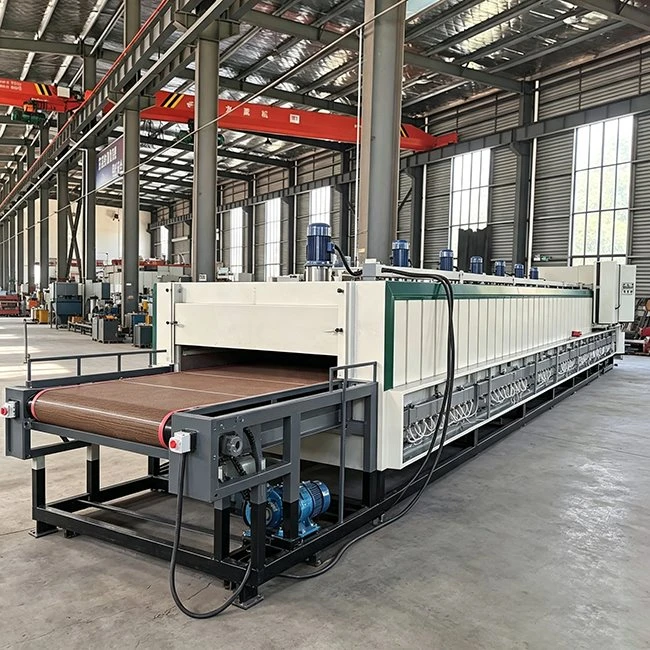
If you’re evaluating new industrial ovens and want to get accurate, on-site noise assessments tailored to your facility, or have questions about how our line compares to other options, reach out to our team to schedule a consultation. We can bring decibel meters to your space, walk you through our testing process, and talk through every factor that impacts noise levels, from oven size to maintenance routines, to make sure you choose an oven that works for your team and your bottom line.
Industrial Furnace References:
- Occupational Safety and Health Administration. Noise Exposure in Industrial Workplaces, 2022.
- American Industrial Hygiene Association. Industrial Equipment Noise Mitigation Guidelines, 2021.
- Industrial Oven Manufacturers Association. Performance and Acoustic Standards for Industrial Process Ovens, 2020.
- National Institute for Occupational Safety and Health. Noise Control in Manufacturing Settings, 2023.
Nanjing Ranran Tiancheng Drying Equipment Co., Ltd.
As one of the most professional industrial oven manufacturers and suppliers in China, our products have good reputation in the market. Please feel free to buy advanced industrial oven for sale here from our factory. All customized products are with high quality and competitive price.
Address: No. 5 Xinhua Road, Shangba Village, Longtan Street, Qixia District, Nanjing City
E-mail: rrtc@rrtcoven.com
WebSite: https://www.rrtcoven.com/
