As a supplier of resealable bag sealing tape, I get this question all the time—usually from small business owners packing perishable goods, food trucks looking for reliable packaging, or e-commerce brands testing their shipping materials. “Is your tape heat resistant?” It makes total sense to ask, too. Heat is one of the biggest enemies of adhesive tape: it can make it fail mid-transit, leave residue on packaging, or even cause bags to open accidentally when they’re stored near heaters, displayed in sunny windows, or go through shipping warehouses that get hot. I’ve spent years working with the chemistry of adhesives, so I’m not going to give you a vague yes or no here. Let’s break this down the way I explain it to our customers every day, starting with what “heat resistant” even means for our products. Resealable Bag Sealing Tape
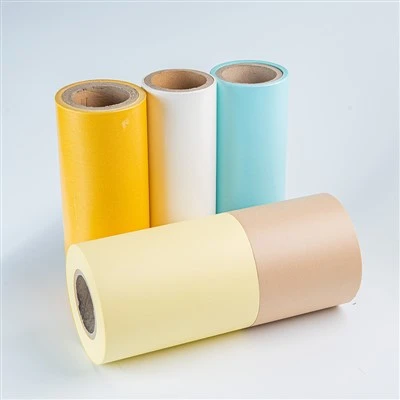
First, let’s define what our resealable bag sealing tape is made of because that’s where the heat performance starts. Most resealable bag sealing tape uses two core components: the backing material and the adhesive. The backing is usually a thin, flexible plastic—low-density polyethylene (LDPE) is the most common for standard use, but we also offer polypropylene (PP) for heavier-duty applications. The adhesive is pressure-sensitive adhesive (PSA), the same kind that sticks when you press it lightly, not the kind you have to heat to activate. That PSA is where the heat resistance factor plays the biggest role. Unlike industrial hot-melt adhesives that melt on command, our PSAs are formulated to maintain their bond across specific temperature ranges. That range is what determines how heat resistant the tape actually is.
Standard-grade resealable bag sealing tape, which we use for everyday packaging like retail poly bags, bread bags, or non-perishable goods, performs best in temperatures between 32°F (0°C) and 100°F (38°C). If a customer uses this tape and stores their packages in a garage that hits 110°F (43°C) during a summer heatwave, or leaves a bag sitting in a car dashboard (that can get up to 150°F/65°C quickly), the PSA will start to soften. When PSA softens, it loses its grip—you might notice the tape bulges, or the seal starts to peel at the edges, because the adhesive can’t hold to both the bag and the tape backing anymore. This is a common misunderstanding: people think “heat resistant” means it can handle blistering heat, but most standard PSAs are designed for everyday ambient temperatures, not extreme heat.
Now, we don’t stop at standard grade. One of the reasons our customers keep coming back is that we make heat-resistant versions for specific needs. Our high-temperature resealable bag sealing tape is formulated with a modified acrylic adhesive instead of the standard rubber-based PSA. Acrylic adhesives have a much higher glass transition temperature—meaning they don’t soften until much higher temperatures, usually around 160°F (71°C), and can even hold up short-term to 200°F (93°C) for a few hours. That’s the tape we recommend for customers packing baked goods that go into ovens for home delivery, or bags that will be stored in warehouses with poor ventilation in summer. I had a customer last year who runs a craft bakery; she told me her old tape would open during delivery when the packages sat on the van seat in summer. We switched her to our high-temperature tape, and she hasn’t had a complaint since. That’s the practical side of heat resistance—not just a number on a spec sheet, but solving a real problem.
But here’s the catch with heat resistance: it’s not just the tape’s own performance, it’s the surface you’re sealing it to. A lot of people forget that if you’re sealing a bag that’s already at a high temperature, or the bag itself has a low melting point, the tape’s adhesive has to stick to that material too. For example, LDPE bags (the thin, flexible ones used for produce or retail items) have a melting point around 220°F (104°C). If you’re sealing our standard tape to a LDPE bag that’s been in a warehouse at 110°F (43°C), the bag itself is soft, so the bond will be weaker than if you sealed it to a cool, rigid surface. That’s why we always ask customers to share where they’re using the tape and what type of bags they’re sealing, because that changes how we recommend heat resistance. A customer using PP bags, which have a higher melting point around 330°F (166°C), will get better heat performance from any tape than someone using thin LDPE. I’ve had too many customers order the wrong tape because they just looked at “heat resistant” on a website instead of matching it to their application.
Another common question: what about cold temperatures? Wait, no, the question is heat resistant, but it’s tied closely because temperature extremes go both ways. Some people think if a tape holds in heat it must hold in cold, but actually, cold can make adhesive brittle, while heat makes it soft. Our standard tape stays flexible down to 20°F (-7°C), so it works for winter shipping, but if it’s stored below that, the adhesive can crack. Our high-temperature acrylic tape actually holds up better in cold too, down to -40°F (-40°C), which is why it’s used for frozen food packaging as well. That’s a double benefit, but it means if someone only needs heat resistance, they don’t need to overspend on the high-grade acrylic if their use case only hits up to 100°F.
I should also address a common myth: some suppliers will label any tape “heat resistant” just because it’s not the absolute lowest grade, but there’s no universal standard for that term in packaging tape. That’s why as a supplier, we always include the temperature range on our product data sheets (PDS) so customers know exactly what they’re getting. If a sales rep can’t tell you the specific temperature the tape can handle, they’re probably not being honest. For example, our standard grade is labeled with a continuous use temperature of 100°F, while our heavy-duty heat-resistant grade is 160°F continuous. That kind of specificity is what separates a reliable product from one that fails when it matters.
Let me give you a real example from our line: we had a client who sells BBQ rubs in resealable bags. They were using a standard tape, and during the summer, their products would sit on store shelves that got up to 120°F (49°C) by mid-afternoon. The tape would peel off, the bags would open, and the rub would spill. They tried a competitor’s “heat resistant” tape, but it only held up to 110°F. We sent them a sample of our heavy-duty acrylic tape, and it worked perfectly. We later learned that the manufacturer of the competitor’s tape was using a lower-grade acrylic, so their “heat resistant” label was misleading. That’s why we test every batch of our tape ourselves in our small lab here—we put samples in temperature-controlled ovens for 72 hours, check the bond strength, make sure it doesn’t leave residue on the bag when you peel it off, and that it doesn’t crack. No third-party testing that’s outdated, no cutting corners on the adhesive formula.
Now, what about when heat can actually be a problem for resealable tape in a different way? Sometimes, people use heat guns or heat sealers on resealable tape, thinking that will make the seal stronger. That’s a mistake, especially with PSA tape. If you apply too much heat to the tape, you can melt the adhesive, which will make it stick too hard to itself—so when the customer tries to open the bag, the tape tears instead of peeling cleanly, or it leaves a sticky residue on the bag surface. The whole point of resealable tape is that it’s reusable, right? You want customers to be able to open the bag, use what they need, and seal it again. Too much heat ruins that. I always tell customers: don’t use heat on resealable tape. If you need a heat-sealable solution, that’s a different product, but our resealable tape is pressure-sensitive, so just pressing it firmly for 2-3 seconds is enough.
So to circle back to the original question: Is resealable bag sealing tape heat resistant? The answer is, it depends on which tape you choose, and how you’re using it. If you need tape for everyday use in temperatures under 100°F, our standard grade is heat resistant enough for 90% of applications. If you need to handle higher temperatures, from 100°F up to 160°F, our high-temperature acrylic grade is the right choice. If you have extreme heat exposure, like storing packages in a non-climate-controlled space over 160°F, we can even special-formulate a custom tape for that—we’ve done it for a few industrial clients who work with hot goods.
The key here is that heat resistance isn’t a one-size-fits-all feature. Too many customers pick a tape based solely on price, only to find out it fails when their packages get hot. As a supplier, my job isn’t just to sell you tape—it’s to make sure the tape works for your specific needs. If you’re not sure which grade is right for you, don’t guess. Look for a supplier that will ask you about your storage conditions, the type of bags you’re using, and where you’ll be shipping or storing your products. That’s how you avoid the headache of open bags, spilled products, and lost customers.
If you’re in the market for resealable bag sealing tape and want to make sure it’s heat resistant enough for your use case, we can provide free samples to test in your own conditions. Send us the details of your application, and we’ll recommend the right grade, or even adjust the formula if you have unique needs. Don’t settle for a tape that’s labeled “heat resistant” without knowing the temperature it can handle—reach out, and let’s work together to find the solution that keeps your packages sealed, no matter the temperature.
Release Film References:
- “Pressure-Sensitive Adhesives: Formulation, Technology, and Applications” by D. Satas, 2nd Edition, 2010.
- Packaging Institute of America, “Temperature Performance of Packaging Adhesives,” Technical Bulletin 124, 2018.
- “Plastics Materials and Processes: Properties and Applications” by J. A. Brydson, 5th Edition, 2013.
- ASTM International, “Standard Test Method for Peel Adhesion of Pressure-Sensitive Tapes,” D3330/D3330M-21, 2021.
- Food and Drug Administration, “Packaging Materials for Food: Adhesive and Resin Performance Guidelines,” 2019.
Jinrong New Materials Co., Ltd.
Jinrong New Materials Co., Ltd. is one of the most professional resealable bag sealing tape manufacturers and suppliers in China. With abundant experience, we are committed to providing high quality products made in China with competitive price. Please feel free to buy customized resealable bag sealing tape from our factory. Welcome to contact us for quotation and free sample.
Address: Guangde, Anhui Province Economic Development Zone Pengju Road 37
E-mail: lynn@sanlin-tech.cn
WebSite: https://www.jinrongliner.com/
