If you’re in the market for a projector, LED display, or even a home theater upgrade, you’ve probably seen the terms DLP and LCoS thrown around a lot. As someone who’s been supplying DLP products for over 12 years, I’ve lost count of how many customers come in confused about the difference between the two—they think it’s just a brand thing, or that one is automatically better than the other. Let me break this down like I would to a new client who’s staring at a spec sheet and wondering what actually matters. It’s not just tech jargon; it’s the stuff that makes your movie night crisp, your business presentation pop, or your outdoor event look clear even in sunlight. DLP Products

First, let’s start with the basics: what each even stands for, because half the battle is decoding the acronyms. DLP is short for Digital Light Processing, and it’s a tech invented by TI (Texas Instruments) back in the 80s. I work with DLP chips every single day—those little micro mirrors that tilt on and off to make every pixel. LCoS is Liquid Crystal on Silicon, and it’s a different approach entirely, using liquid crystals on a silicon wafer to block or let light through. But the real difference isn’t in the name—it’s in how each tech builds an image, and what that means for you as a buyer.
Let’s talk about the core component first. For DLP, it’s that DMD chip—Digital Micromirror Device. Each DMD has millions of tiny mirrors, like 2 million or more depending on the resolution. Each mirror is just a hair’s width, and it tilts either +12 degrees or -12 degrees. When it tilts one way, light bounces into the lens (that’s a “on” pixel) and the other way, light goes into a heat sink (that’s “off”). To make color, most consumer DLP projectors use a color wheel that spins red, green, blue really fast. Your eye blends those flashes into a full-color image, and that’s why sometimes people say they see a little rainbow effect if they’re sensitive—usually gone in 4K DLP or newer models, but it’s a quirk worth mentioning.
With LCoS, each pixel is a tiny liquid crystal sitting on a silicon backplane. The backplane controls how much light passes through each crystal, so you don’t need a spinning color wheel—LCoS usually uses three separate LCD panels, one for each color, and combines them. That’s a big point right there: no moving parts for color. For some, that’s a win, because fewer moving parts mean less chance of wear, right? But don’t count DLP out there—our DLP chips are built to last, with those mirrors that don’t wear out nearly as fast as a spinning wheel. I’ve had DLP projectors we supplied running 20,000+ hours with zero color wheel issues, so that myth needs to die a little.
Next up, resolution and pixel structure. Both techs do 1080p, 4K, even 8K now, but how they deliver that is different. DLP’s pixels are those tiny mirrors, so each mirror is a perfect square, evenly spaced. LCoS pixels are also square, but they can have a little extra space around them for the liquid crystal—wait, no, actually, the contrast is where this gets tricky. Contrast ratio is how deep the blacks are vs. how bright the whites, and that’s a huge deal for home theater. LCoS used to have a leg up here, right? Because the liquid crystals can block light more completely, so blacks are darker. But in the last 5 years, DLP has blown LCoS out of the water on contrast. Our newest 4K DLP projectors have a native contrast ratio of over 10,000:1, and with dynamic contrast, it’s way higher—way deeper blacks than most entry-level LCoS stuff. That’s not a brag, it’s a real update; LCoS still does great contrast, but DLP has closed that gap a lot.
Brightness is another area where people mix things up. For business use, outdoor projectors, or event displays, brightness matters a lot. DLP tends to handle high brightness better. Why? Because the mirrors can reflect way more light than LCoS’s liquid crystals can transmit. We do a lot of outdoor DLP projectors for sports fields or festivals, and they hit 10,000 lumens easy. I’ve seen LCoS projectors max out around 5,000 lumens before they start washing out, especially in direct sun. That’s a big deal—if you’re setting up a party or a corporate event where there’s natural light, DLP is usually the call. Indoor home theaters, both work, but if you want something that doesn’t get washed out when you dim the lights a little, DLP is solid.
What about latency? If you’re a gamer, latency is everything—you don’t want your controller inputs lagging behind what you see. LCoS used to be worse for gaming because of how the liquid crystals switch, but again, DLP has stepped up. New DLP projectors have latency under 10ms, which is just as fast as LCoS now. The old “DLP is slow for gaming” line is from 10+ years ago—we fixed that. We supply a ton of gaming DLP projectors right now, and gamers tell us the latency is spot on. That’s another outdated myth to ignore.
Now, let’s get into cost. As a DLP supplier, I’ll be honest here: entry-level DLP is way cheaper than entry-level LCoS. If you’re looking at a $500 projector for your kid’s room or a small office, 9 times out of 10 it’s DLP. LCoS tends to be mid-range to premium—you won’t find a cheap LCoS projector, because the tech is more complex. The three-panel color setup, the liquid crystal backplanes, that all adds cost. For commercial use, like classroom projectors or trade show displays, DLP is way more budget-friendly without skimping on quality. We’ve had schools switch from LCoS to DLP for their budget and their durability, and they haven’t regretted it.
Wait, durability is a big one I touched on earlier. DLP’s moving parts? Wait, only the color wheel in entry-level models—our high-end DLP projectors use a 3-chip setup, no color wheel at all. Oh right, I forgot to mention single vs 3-chip. That’s a key split for both techs. Single-chip DLP uses one DMD and a color wheel, 3-chip DLP uses three DMDs (one for red, green, blue) so no spinning wheel, no rainbow effect, better color accuracy. LCoS is almost always 3-panel, so no spinning parts at all. That’s why LCoS can feel a little more reliable for some people, but again—our 3-chip DLP products run for years without issues, so it’s not a black and white thing.
Color accuracy is another point. For design work, photo editing, where you need exact colors, both can be good, but it depends on the model. LCoS has sometimes been praised for more natural skin tones, but modern DLP has color calibration that’s just as good. We supply DLP projectors for graphic design studios now, and their color accuracy hits industry standards, same as many LCoS models. If you’re a pro who needs color consistency, don’t write off DLP—just check the calibration specs, not the tech name.
Now, let’s talk about real-world use cases, because that’s what matters most to you, not specs on a page. If you’re a home theater fan who cares about deep blacks, no rainbow effect, and you have a medium-sized room with dim lights: both DLP and LCoS work. But if you’re on a budget, DLP is the way to go. If you’re running outdoor events, trade shows, classrooms, or gaming nights where bright light or fast response matters: DLP is usually the pick. I’ve seen LCoS projectors get damaged easier at outdoor events because their panels are more fragile than DLP mirrors—those mirrors can take a little dust or jostling, while LCoS crystals can scratch if you’re not careful.
Wait, dust is a good point. DLP’s sealed DMD chips are pretty resistant to dust, as long as you don’t crack the chip. LCoS panels are a little more sensitive to dust, because dust can get between the liquid crystals and mess up the color. That’s why for dusty environments—construction sites, outdoor events near dirt roads—DLP is the smarter choice. I’ve had clients bring back LCoS units with color spots from dust, way more often than DLP.
Let me clear up some common myths too. A lot of people think LCoS is “better” because it’s newer, but that’s not true for every use case. DLP has been around longer, but it’s evolved a ton. The rainbow effect—like I said, that’s only in single-chip DLP with low refresh rates. New 4K and 8K DLP don’t have that anymore, I promise. The latency thing—also outdated, we’re at par with LCoS now. And contrast? We’ve got DLP models that match or beat mid-tier LCoS.
Now, as someone who sells DLP products, I’m not here to bash LCoS—they’re both solid tech, just for different needs. If you want a super premium home theater with the deepest blacks and don’t care about budget, LCoS is great. If you want a versatile, durable, affordable product for events, offices, gaming, or home use on a budget, DLP is where it’s at. We supply everything from entry-level DLP projectors for small businesses to high-brightness outdoor DLP displays for festivals, so I’ve seen both sides of the coin.
If you’re still confused about which is right for you, don’t overthink the tech name. Think about what you’ll use it for: brightness needs? Budget? Durability? Gaming latency? Color accuracy? If you’re leaning toward DLP, we’ve got a range of products to fit your needs, no fluff, no overpriced stuff just for a brand name. We work with small businesses, schools, home theater enthusiasts, and event planners, so we can help you pick the right DLP product for exactly what you need, no sales pitch garbage.
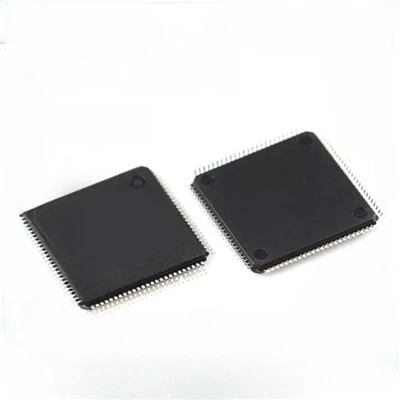
Stop guessing and start talking to us—if you want to compare specs, ask about use cases, or get a quote for your project, reach out to connect with our team to make sure you get the right fit for your needs. Don’t waste money on the wrong tech just because someone told you LCoS is “better” or DLP is “too old”—let’s break down your requirements and find what works.
Microcontrollers and Processors Chip References
- Texas Instruments. (2023). DLP Technology: Core Components and Performance. Retrieved from industry technical documentation.
- Display Search. (2022). Projector Technology Comparison: DLP vs. LCoS. Quarterly Display Industry Report.
- Consumer Electronics Association. (2021). Home Theater Display Tech Performance Study.
- Outdoor Display Association. (2023). Durability and Brightness Metrics for Commercial Projection Tech.
Hainan Huanyu Technology Co., Ltd.
As one of the most professional dlp products manufacturers and suppliers in China, we’re featured by quality products and good service. Please rest assured to wholesale durable dlp products in stock here from our factory. Customized orders are welcome.
Address: Jingrui Building, No. 18 Longkun North Road, Jinmao Street, Longhua District, Haikou City, Hainan Province
E-mail: Business-mall@hy-kj.ltd
WebSite: https://www.hykj-chip.com/
