If you’ve ever walked into a commercial kitchen, an office building, or a multi-story residential apartment and wondered why certain ducts feel different, or why some building codes demand specific wrapping around HVAC systems, you’re probably running into something called UL listed fire rated duct wrap. As a supplier of these products, I get asked this question at least a dozen times a day—usually from builders, facility managers, or even fellow contractors who’ve only heard the term in passing and aren’t sure what it actually does, or why it matters. Let me break this down like I would to a guy who’s just walked in off a jobsite, covered in drywall dust, and needs to know if what we’re selling is going to hold up when something goes wrong. Fire Rated Duct Wrap
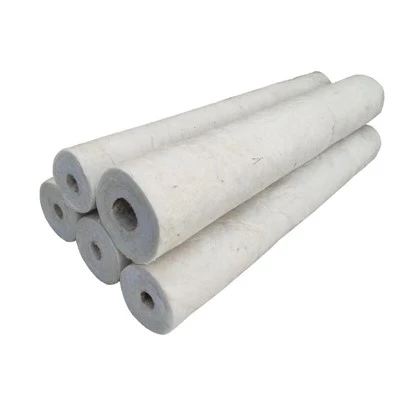
First, let’s start with what it isn’t. It’s not just any fluffy insulation you’d stuff in an attic to save a few bucks on energy bills. That stuff is usually fiberglass, maybe with a foil facing, and its whole job is to keep heated or cooled air from leaking out of the duct. Fire rated duct wrap? Its primary job isn’t energy efficiency (though it can help with that, too). Its entire purpose is to act as a barrier between a fire and the ductwork it’s wrapped around, slowing the spread of flames and smoke long enough for people to evacuate safely and for firefighters to get control of a blaze. That’s a huge difference, and it’s why it has that “UL listed” label slapped on it.
Wait, UL listed—what does that even mean, anyway? A lot of contractors see that stamp and assume it’s just a marketing buzzword, but let me set the record straight. UL (Underwriters Laboratories) is an independent, non-profit organization that tests all kinds of safety products, from toaster ovens to fire extinguishers, to make sure they actually do what they say they do. When a product is UL listed for fire rated duct wrap, that means it didn’t just pass a casual test in a lab— it went through a series of rigorous, standardized trials designed to mimic real fire conditions. For duct wrap, those tests measure two main things: how long it can resist flames from a nearby fire (this is the “fire rating” number, usually 1-hour, 2-hour, or sometimes 3-hour), and how well it prevents smoke from seeping through the gaps in the duct joints or the wrap itself.
Let me walk you through one of those tests, ‘cause it’s wild stuff. The lab will install a section of duct exactly like you’d see in a building—same size, same joints, same type of metal. Then they wrap it with whatever product they’re testing, leave gaps just like you would on a jobsite, and set a controlled fire at one end. They crank up the heat to 1,000 degrees Fahrenheit and keep it going for the full rated time. If, after, say, two hours, the other end of the duct doesn’t let flames or smoke escape through the wrap, and the temperature on the outer side of the wrap never climbs above a safe threshold (usually around 325 degrees, so it doesn’t ignite nearby materials), it gets that UL listed stamp. Skip this testing, and you’re just selling insulation that sounds good on a label—one tiny fire, and your duct wrap is gone, letting flames spread through the entire HVAC system in minutes.
Now, what is UL listed fire rated duct wrap made of? It’s not a single product, either—there are a few different materials that pass UL’s tests, and each has its own uses. The most common one I sell is mineral wool, sometimes called rock wool. It’s made from spinning molten rock into dense, fluffy fibers, and it’s naturally fire-resistant—rock melts at like 2,700 degrees, so you’re not gonna get it burning easily. We use a thin, fire-resistant aluminum foil facing on one side of our mineral wool wrap, and that’s not just for show—it’s to create a tighter seal around the duct, keep smoke from leaking through, and add a little extra protection against radiant heat.
There’s another type, too, sometimes made from fiberglass with a specialized ceramic coating. That one’s a little lighter than mineral wool, so it’s popular for smaller ducts or retrofits where you don’t want to add too much extra weight to the ceiling or wall cavity. But it’s important to note: not all fiberglass duct wrap is UL listed. Only the ones with that specific ceramic coating that passes the fire tests count. I’ve had guys come in here with a roll of cheap fiberglass wrap they bought at a big-box store, ask if it’s fire rated—nope, that’s for energy only, not for fire protection, and using it in a commercial building will get you a failed inspection faster than a missing smoke detector.
Now, let’s talk about where you actually need this stuff. I can’t tell you how many jobs I’ve walked onto where a contractor is wrapping a duct in a basement, thinking “it’s just a basement, no need for fire wrap.” That’s a mistake. Building codes (usually International Building Code, or IBC) require UL listed fire rated duct wrap in all HVAC systems that run through walls, floors, or ceilings that separate different fire-resistant areas of a building. Think a hotel hallway separating two guest rooms, an office building separating a storage closet from a office space, or an apartment building separating a unit from a shared hallway. Even the ductwork that runs through a stairwell—super important there, ‘cause stairwells are supposed to be safe evacuation routes, and a fire that spreads through the duct can block those routes in minutes.
I’ve seen the aftermath of a fire where a building used unrated duct wrap. It was a small office fire that started in a copy room, right next to a duct run. The fire department said the unrated wrap burned through in 12 minutes, and flames spread through the HVAC ductwork to three other floors before they even got the main fire under control. If they’d used UL listed 2-hour fire rated wrap, that duct would’ve held for twice as long—long enough for everyone to evacuate, and for firefighters to focus on the main fire instead of chasing it through the ducts. That’s not just code stuff; that’s life safety.
Another big question I get: “Can I install this myself?” I usually tell contractors—if you’re doing a small residential job, maybe you’re handy, but for commercial and multi-family buildings, no. Installing fire rated duct wrap isn’t just cutting it to size and taping it on. The UL test doesn’t just test the wrap itself—it tests the entire installation. If you leave a gap where two pieces meet, or use regular duct tape instead of fire rated tape, you just failed the entire system. Fire rated tape is a whole separate UL listed product too—cheap duct tape will melt at 200 degrees, fire rated tape has to stay intact up to 1,800 degrees. I’ve had guys try to use regular tape to save a buck, and when the inspector shows up, they have to rip all the wrap off and redo it. It ends up costing them more money and delays the job.
Wait, what about inspection? That’s a big one. Inspectors don’t just look for the UL label on the wrap—they check the installation, too. I always tell my customers to save the manufacturer’s UL test report that comes with every roll. Inspectors will ask for that, ‘cause it proves the product is actually the one that passed the test, not a knockoff. A lot of fly-by-night suppliers will sell a wrap that looks like UL listed, but when you send it to a test lab, it’s not. That’s a problem, ‘cause if there’s a fire, your insurance company will look to see if you used UL listed products, and if you didn’t, they might not cover the damage. I’ve had two clients in the last year have to redo their wrap ‘cause they bought cheap untested stuff, and that’s a headache no one needs.
Now, let’s talk about common myths. One I hear all the time: “My duct is metal, so it’s fire resistant, I don’t need wrap.” Yeah, metal duct is better than flexible duct, but metal can still warp at high temperatures. If you have a fire next to a metal duct wrapped in nothing, the metal can get hot enough to soften in 15 minutes, and then the duct collapses, letting fire spread through the entire HVAC system. The wrap insulates the metal, so it stays cool longer. The fire rated wrap I sell keeps the outer metal temperature below 300 degrees for the full 2-hour rating, so the duct stays intact even when there’s a nearby fire.
Another myth: “Fire rated duct wrap is too expensive.” Let’s do the math. A roll of UL listed mineral wool wrap costs about 20% more than regular fiberglass insulation, right? But if you skip it, and your building fails inspection, you might have to pay a $10,000 fine from the city, or worse, if there’s a fire, you’re looking at hundreds of thousands of dollars in damages, plus liability for injuries. I’ve seen one small apartment complex owner skip fire wrap on two duct runs, and when a small kitchen fire started in one unit, the flames spread through the ducts to four other units. The total damage was over $200,000, and his insurance didn’t pay ‘cause he used unrated products. That extra 20% cost would’ve saved him a fortune.
What about retrofits? A lot of older buildings don’t have fire rated duct wrap, and they need to upgrade. That’s a big market for us. You can install UL listed wrap on existing ducts without having to tear out ceilings or walls, which is way cheaper than replacing the entire duct system. I recently did a retrofit on a 50-year-old office building in downtown, they didn’t have fire wrap on any of their main ducts, and installing our 2-hour mineral wool wrap took half the time it would’ve taken to replace the ducts, and saved them over $50,000.
Now, let’s make sure you know what to look for when you’re buying. First, never buy a product that doesn’t have a clear UL listing number. Every UL listed product has a four or five-digit number, usually printed on the label and the roll. You can look it up on UL’s website to make sure it’s actually listed—if the number doesn’t come up, it’s a fake. Second, check the rating: 1-hour for small commercial or residential applications, 2-hour for high-rise or areas with heavy occupancy, 3-hour for stairwells or utility rooms that have specific code requirements. Third, make sure it’s compatible with your duct type—some wraps work with metal ducts, some are for flexible ducts, so don’t buy the wrong one.
At the end of the day, UL listed fire rated duct wrap is one of those building products that no one thinks about until there’s an emergency, and then you’re glad it’s there. It’s not just insulation—it’s a life safety product. I’ve been in this business for 12 years, and I’ve seen way too many jobs where the wrong product was used, and it almost went bad. That’s why I only sell UL listed products—‘cause I don’t want to be part of a system that cuts corners when people’s lives are on the line.

If you’re a builder, contractor, facility manager, or even a property owner who needs fire rated duct wrap for a new job, a retrofit, or just to make sure you’re up to code, reach out to us. We’ll answer any questions you have, help you pick the right rating and material for your project, and make sure you get the UL listed product you need to pass inspection and keep people safe. Don’t wait until you’re staring down an inspector or a potential fire risk—get the right wrap, the first time.
Glass Wool Insulation References
Underwriters Laboratories. (2022). Standard for Fire Tests of HVAC Duct Systems and Duct Connections. UL 181.
International Code Council. (2021). International Building Code Chapter 7: Fire and Smoke Protection Features.
National Fire Protection Association. (2020). NFPA 90A: Standard for the Installation of Air-Conditioning and Ventilating Systems.
Langfang Yafeng Energy-Saving Technology Co., Ltd.
As one of the most professional fire rated duct wrap manufacturers and suppliers in China, we have world-leading production equipment and strong manufacturing capabilities. Please feel free to buy high quality fire rated duct wrap for sale here from our factory. For price consultation, contact us.
Address: Langfang Xinyafeng, Liugezhuang Town, Dacheng County, Langfang City, Hebei Province
E-mail: yafengbaowen@gmail.com
WebSite: https://www.xyfinsulations.com/
