If you’ve ever worked in industries like oil and gas, chemical processing, water treatment, or even power generation, you’ve almost certainly crossed paths with a floating ball valve. As a floating ball valve supplier with over a decade in the game, I’ve seen how these valves are often the go-to choice for their simplicity, low cost, and reliable shutoff performance. But for all their upsides, floating ball valves aren’t a one-size-fits-all solution. Over the years, I’ve had countless conversations with plant engineers, maintenance managers, and even fellow suppliers about the scenarios where these valves fall short—some of which have led to costly downtime, component failures, and even safety risks. Today, I want to pull back the curtain on the disadvantages of floating ball valves, straight from the perspective of someone who sells them, troubleshoots their issues, and helps clients decide when to look for alternatives. Floating Ball Valve
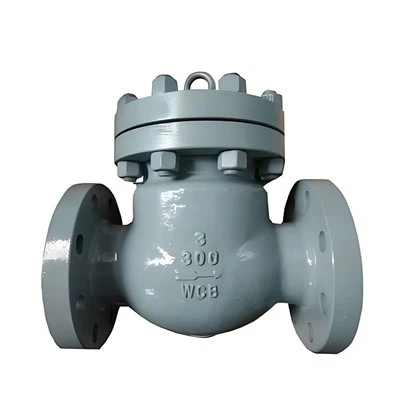
First, let’s start with a quick refresher for anyone who might be new to the technology, to set a common baseline. A floating ball valve gets its name from the hollow, machined metal ball inside the valve body that isn’t fixed to the stem. When you turn the actuator (or handwheel) 90 degrees, the ball rotates, aligning its bore with the pipe to let fluid flow, or rotating it perpendicular to the flow to stop it. The two seat rings, usually made of PTFE, nylon, or metal depending on the application, squeeze against the ball when closed to create a tight seal. The key design quirk here is that the ball “floats” against the seats, so the entire force of the pipeline pressure pushes the ball and the seats toward one side of the valve body. That quirk is what drives most of the disadvantages we see.
One of the most common complaints I hear from clients has to do with pressure and temperature limits. For small, low-pressure applications (think 150 psi or lower on Class 150 service), floating ball valves work perfectly. But crank up the pressure, or the temperature of the fluid flowing through the pipe, and suddenly the design starts to struggle. Let’s take high-pressure oil and gas pipelines, for example. When line pressure hits 600 psi (Class 600) or higher, the floating ball doesn’t just press gently against the seat rings—it slams into one side of the valve body with enormous force. That constant, unbalanced pressure can cause the seat rings to deform over time, or even extrude into the gap between the ball and the valve body. Extrusion is a big deal: once a seat deforms, the seal breaks, and you get internal leakage. For a gas pipeline, that means wasted product, environmental emissions, and potentially explosive hazards. For chemical plants handling corrosive or toxic fluids, that leakage can be a safety nightmare.
Temperature amplifies this problem even more. PTFE, the most common seat material for floating ball valves, has a maximum temperature rating of around 450 degrees Fahrenheit. If you’re handling superheated steam or a process fluid that hits 500 degrees, PTFE seats start to lose their structural integrity. They soften, compress, and can’t create a tight seal anymore. We’ve had clients come to us after trying to use a floating ball valve on a high-temperature water line, only to find the seat had melted slightly, causing massive leakage within a few months. Even metal-seated floating ball valves, which are built for higher temperatures, have their limits. They’re usually only rated for up to 800 degrees Fahrenheit, and at that temperature, the metal seats can gall (cold-weld) to the ball, making the valve impossible to operate. For applications where temperatures exceed 800 degrees, floating ball valves are essentially off the table—another technology is required.
Next, let’s talk about stem loading and seal wear, which ties back to that unbalanced pressure I mentioned earlier. The stem of a floating ball valve is designed to turn the ball, but all that force from the pipeline pressure pushing the ball to one side creates a huge axial load on the stem. That load isn’t just a minor inconvenience—it translates to extra friction on the stem seals, which are meant to prevent external leakage. Over time, that constant friction causes the stem seals to wear out much faster than they would in a trunnion-mounted ball valve (the other main type, where the ball is fixed to trunnions to balance pressure). We’ve seen floating ball valves in continuous service develop stem seal leaks in as little as two years, while trunnion-mounted valves of the same size and material last five to seven years. For plants that run 24/7, that means extra maintenance work, unscheduled shutdowns, and higher replacement costs. What’s more, the axial load on the stem can also lead to stem bending or even failure if the valve is operated incorrectly under high pressure. A plant operator trying to turn a valve that’s jammed due to high pressure might twist too hard, snap the stem, and lose control of the valve entirely. That’s a safety risk that can’t be overlooked.
Another disadvantage that often catches first-time users off guard is limited cycle life compared to other valve types. Floating ball valves are designed for on-off service, not for frequent cycling or throttling. If you’re turning the valve open and closed dozens of times a day, that’s fine for a floating ball valve—its life span might be 10,000 to 15,000 cycles, which is enough for most on-off applications. But if you’re using it to modulate flow, that’s a whole different story. Throttling (partially opening or closing the ball to control flow) causes the ball to rub against the seat rings constantly, creating wear and tear. We had a chemical plant client a few years ago who tried to use a 3-inch floating ball valve to regulate the flow of a corrosive acid to a reactor. After just three months, the seat rings were worn almost completely through, and the valve was leaking so badly they had to shut down production. Trunnion-mounted valves, by contrast, are often rated for thousands of throttling cycles, making them a far better choice for applications that require flow modulation. Even for on-off service, if you’re operating the valve more than 100 times a day, floating ball valves will need replacement much sooner than other options, adding up to higher long-term costs.
Let’s also not forget about line size limitations. Floating ball valves are almost always preferred for small to medium pipe sizes, ranging from ½ inch up to about 12 inches. Once you get beyond 12 inches, the design’s disadvantages start to multiply rapidly. Large-diameter pipes carry much higher flow volumes and pressure loads, so the force on the floating ball is enormous. A 16-inch floating ball valve can weigh hundreds of pounds, and the force required to open or close it is way too high for manual operation—you need a large, expensive actuator to move the ball. What’s more, the seal between the ball and the seats becomes much harder to maintain in large valves. The seat rings have to stretch to fit around the big ball, and any slight misalignment in the valve body can cause uneven pressure, leading to leakage. For pipe sizes larger than 12 inches, trunnion-mounted or gate valves are the standard choice, not floating ball valves. I’ve had clients try to cut costs by using a floating ball valve for a 14-inch water line, only to spend three times the initial cost on repairing leakage and replacing actuators within a year.
Another underdiscussed issue is pressure relief and dynamic line expansion. When a pipeline is pressurized, the pipe itself expands slightly, and the fluid inside can create pressure surges (water hammer or gas hammer) that add extra force to the valve. With a floating ball valve, that extra surge pressure can push the ball even harder against the seat, sometimes causing it to stick closed or open unexpectedly. In one case, a municipal water treatment plant had a 8-inch floating ball valve on a main supply line that experienced a water hammer event from a sudden pump shutdown. The ball was slammed so hard against the seat that it cracked the valve body, leading to a major flood that closed the plant for two days. Trunnion-mounted valves, because their ball is fixed and balanced, can absorb those surge forces without the same risk of cracking or sticking. We’ve also seen floating ball valves fail in low-pressure, high-vibration applications. The unbalanced ball can vibrate, causing it to move away from the seat slightly, leading to internal leakage. For applications where vibration is a constant factor (like near rotating machinery or in off-shore oil rigs), floating ball valves are much less reliable than trunnion-mounted designs.
It’s also important to address a common misconception: many users think floating ball valves are cheaper upfront, so they don’t consider the long-term costs. While a 2-inch floating ball valve might be 10 to 15 percent less expensive than a similar trunnion-mounted valve, the additional maintenance, repair, and replacement costs over the life of the valve add up quickly. I’ve calculated that for a plant operating 24/7, the total cost of ownership of a floating ball valve is about 30 percent higher than a trunnion-mounted valve over five years, due to more frequent seat and seal replacements, actuator upgrades, and shutdowns. For small applications, that difference is negligible, but for plants with hundreds of valves, it’s a significant expense.
Now, I want to be clear: this isn’t to say floating ball valves are bad. They’re still an excellent choice for low-pressure, small-to-medium on-off applications where cost is a top priority. But the key is knowing when they work and when they don’t. If you’re working in oil and gas at high pressure, chemical processing with corrosive or high-temperature fluids, large pipe sizes, or applications that require frequent throttling or cycling, a floating ball valve is probably not the right fit. At the end of the day, my job as a supplier isn’t just to sell you a product—it’s to help you find the right product for your needs, to avoid the headaches that come with choosing the wrong valve.
If you’re evaluating valves for a new project, replacing a failed valve, or just want to talk through your specific application challenges, reach out to our team to discuss your requirements and get a recommendation that fits your budget and operational needs. We’re here to help you avoid costly mistakes and keep your processes running smoothly.
Globe Valve References
- Miller, S. (2021). Valve Selection for Industrial Process Systems. Industrial Press.
- American Petroleum Institute (API). (2019). Standard 6D: Pipeline Valves. API Publishing Services.
- Water Environment Federation (WEF). (2020). Valves and Accessories for Water and Wastewater Systems. WEF Press.
- Roberson, J. (2018). Floating vs. Trunnion-Mounted Ball Valves: Performance and Cost Comparisons. Journal of Industrial Valve Engineering.
- National Fire Protection Association (NFPA). (2022). Standard 13: Fire Sprinkler Systems. NFPA.
Wuxi PYNOS Flow-tech Co., Ltd.
As one of the leading floating ball valve manufacturers and suppliers in China, we offer a wide range of products with superior quality. We warmly welcome you to buy high quality floating ball valve made in China here from our factory. We also accept customized orders.
Address: Sales Center: 7th Floor, No.19 Qingyuan RD, Wuxi City, Jiangsu Prov., China
E-mail: Info@pynosvalve.com
WebSite: https://www.pynosvalves.com/
