Hey there, let’s cut to the chase—you’ve probably worked with round steel pipes before, right? They’re everywhere: plumbing lines, scaffolding, basic structural supports. But if you’re tired of playing by “standard” rules, special shaped steel pipes are the game-changer you didn’t know you needed. I run a special shaped steel pipe supplier, so I see this every single day—guys come in confused about what these even are, or if they’re worth the extra step to spec, and I’m here to break it down like we’re grabbing a coffee after work, no jargon, no fluff. Special Shaped Steel Pipe
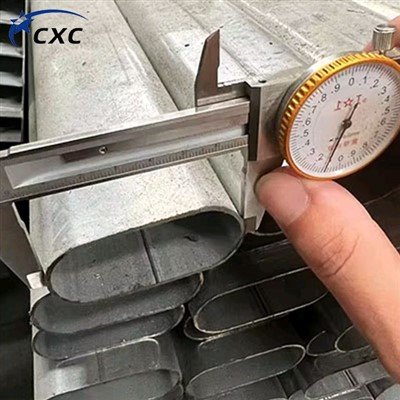
First off, what is a special shaped steel pipe, exactly? Let’s start with the basics: standard steel pipes are round, full stop. That’s their whole thing—they’re engineered to handle internal pressure (think water, gas) and external stress evenly because their symmetry distributes force around every angle. Special shaped ones? They’re any steel pipe that’s not a perfect circle. That’s it. Wait, yeah, that’s the straightforward answer, but there’s way more to it than just “not round.” We’re talking squares, rectangles, ovals, hexagonal profiles, even weird custom shapes like D-sections, U-channels, or those weirdly tapered ones for aerospace components.
Now, why would anyone go out of their way to use a non-round pipe? Let’s use real examples I see every week because that’s where this stuff clicks. A lot of structural engineers work on big commercial buildings—skyscrapers, stadiums, parking garages. If you use a square steel pipe as a support beam instead of a round one, it sits flush against the building’s facade. No more cutting awkward notches or wrapping material to make it look clean; the square’s straight edges line right up with the exterior panels. That saves labor costs on-site, which is huge these days when construction crews are short-handed. Then there’s the automotive and industrial machinery side—think trailer frames, conveyor belts, forklift masts. A rectangular pipe has more surface area for welding than a round one, so you get a way stronger joint without adding extra metal. I had a customer last month who builds custom food processing equipment—they needed oval pipes to fit through tight, sanitized gaps in their mixing systems; round ones would’ve caught on cleaning tools, and custom shaped worked perfectly.
Wait, let’s clear up a common mix-up: special shaped steel pipes aren’t just “bent or cut round pipes.” Nope. Standard pipes are manufactured by rolling a flat steel sheet into a circle, welding the seam, and sizing it. Special shaped ones? They’re formed either by cold-forming (squeezing hot steel into a mold that’s not round) or extrusion (pushing molten steel through a die that gives it your exact shape). Cold-formed is for big runs of standard special shapes—square, rectangle, hex—because it’s faster and cheaper. Extrusion is for custom, one-off shapes, like a tapered pipe for a wind turbine blade root, or a odd-shaped support for a museum art installation. That’s why we can’t just keep a bunch pre-made; we work with clients to tweak dimensions until it fits their project like a glove.
Now, let’s get real about the good (and minor) downsides, because I don’t sugarcoat this to my clients. The upside? Way more design flexibility. You don’t have to bend around the limitations of a round pipe. For example, solar mounting systems—special shaped pipes shaped like a trapezoid let you tilt solar panels at the exact optimal angle without wasting space, so you get more panels per square foot of land. That’s a big win for solar installers who are fighting for every acre. But the downside? Special shaped pipes do cost a bit more than standard round ones. The molds and tooling to make a custom shape aren’t cheap, and since they’re not mass-produced like round pipes, the per-unit price is higher. But here’s the kicker: that extra cost is almost always offset by savings on installation, material waste, and durability over the life of the project. I had a client who installed round pipes for a warehouse roof support a few years back—they kept having to reinforce them because the round shape couldn’t handle heavy snow loads on the flat roof. Last year they came to us with square special shaped pipes, and they haven’t had a single issue with stress cracks in a year of heavy snow. The initial extra cost paid for itself in less than 18 months.
Another thing most people don’t know: special shaped steel pipes aren’t all structural. We make a bunch for mechanical applications too. For example, hexagonal pipes for hydraulic cylinders—their six edges make it easy to grip and turn during installation, and the symmetry means the internal pressure is distributed evenly, so the cylinder lasts longer. Or D-shaped pipes for ship railings—they sit flat against the hand, so they’re way more comfortable to hold than a round pipe, and they’re still strong enough to handle rough seas. We even make small, thin-walled special shaped pipes for medical equipment—like wheelchairs and hospital beds, where weight is a big concern, and the custom shape lets us make the frame lighter without losing strength.
Now, let’s talk about what makes a good special shaped steel pipe, because not all suppliers are equal. First, it has to be made from the right steel. Most of ours are from carbon steel, stainless steel, or alloy steel—depends on the job. Stainless is for food processing or marine applications because it resists corrosion. Carbon is for structural stuff because it’s strong and cheap. Alloy is for high-stress jobs like oil and gas pipelines, where the pipe has to handle extreme temperatures and pressure. Second, the tolerance matters. A square pipe that’s off by a few millimeters won’t line up with your beam connection, and that causes delays on-site. We use precision machinery to make sure every shape is within ±0.5mm of the specified dimension, so you don’t have to waste time trimming or adjusting. Third, the surface finish—if it’s going to be visible, like building facade pipes, we grind and polish the edges so there’s no rough spots. If it’s going to be buried or inside a machine, we just do a standard mill finish to keep costs low.
I get it, though—if you’ve never worked with special shaped pipes, it’s hard to wrap your head around. You might be thinking, “Can’t I just modify a round pipe to fit?” Maybe, but that’s a lot more work. Modifying a round pipe means cutting off parts, welding on extra material, which weakens the pipe and adds steps. Special shaped pipes are engineered as a single piece, so they’re stronger, lighter, and cheaper in the long run. I had a customer last week who tried modifying round pipes for a custom trade show booth—they spent two extra days cutting and welding, and the booth collapsed during setup. They came to us for special shaped square pipes, and we had them on-site in a week, and the booth held up for the entire 10-day show. That’s the difference.
Now, let’s address the elephant in the room: are special shaped steel pipes only for big projects? Nope. We do small runs too—even a few dozen pipes for a backyard deck that needs a weirdly shaped support, or a custom bike frame for a racing team that needs an oval top tube. In fact, a lot of my best customers are small businesses or hobbyists who have a unique need, not just big construction firms. We don’t make you order 10,000 pieces; if you need 50, we can do that. That’s a big one—most big suppliers won’t touch small runs, but we specialize in that, too.
Wait, let’s make sure I’m not leaving anyone hanging. If you’re not sure if a special shaped pipe is right for you, here’s a quick checklist: Do you have a tight space where a round pipe won’t fit? Do you need a stronger weld joint without extra material? Do you want to cut down on installation time and waste? If you answered yes to any of those, it’s worth looking into. I’ve had clients come to us thinking they just needed a standard round pipe, and by the end, they’re saying they’ll never go back. One customer who builds custom RVs told me last month that switching to rectangular special shaped pipes cut his frame weight by 15%, which meant he could carry more cargo without increasing the size of the RV. That’s the kind of win I live for.
Now, let’s wrap this up. Special shaped steel pipes aren’t some fancy, overpriced luxury item—they’re a practical solution for when standard round pipes just don’t cut it. They’re shaped to fit your needs, not the other way around. They save you time, money, and hassle down the line. I’ve been in this game for 10 years, and I’ve seen every shape under the sun, from hexagons to custom profiles for museum exhibits. No two projects are the same, so no two pipe solutions should be the same either.

If you’re curious to see if special shaped steel pipes can work for your next project, shoot us a message to connect for a procurement chat. We’re here to answer questions, walk through specs, even tweak a design to fit exactly what you need. No hard sell, just straight talk about what works.
Zinc Aluminum Magnesium Steel Pipe References
ASTM A500/A500M – Standard Specification for Cold-Formed Welded and Seamless Carbon Steel Structural Tubing in Rounds and Shapes
EN 10210 – Hot Finished Structural Hollow Sections of Non-Alloy and Fine Grain Steels
American Iron and Steel Institute (AISI) – Steel Hollow Sections Design Manual
Wuxi Chengxingchuang Metal Products Co., Ltd.
As one of the most professional special shaped steel pipe manufacturers and suppliers in China, we’re featured by quality products and good price. Please rest assured to buy cheap special shaped steel pipe for sale here from our factory. Welcome to contact us for customized service.
Address: No.8-2, Zhoujia Lane, Liangxi District, Wuxi City, Jiangsu Province, China
E-mail: 13961862735@163.com
WebSite: https://www.cxcsteeltubes.com/
