If you’ve ever driven behind someone with tinted headlights at night, you might’ve squinted at the extra glare hitting your windshield, right? That’s the first thought most people have when they hear about PPF headlight tint: “Wait, tinted headlights = more glare? Or less? I’m so confused.” As a PPF headlight tint supplier, I get this question every single day from car owners, detailers, even auto shop managers, and I totally don’t blame you—glare is such a pain, especially on dark, unlit backroads. Let’s break this down, no jargon, no fancy marketing fluff, just what I actually tell our customers when they call asking about this. PPF Headlight Tint
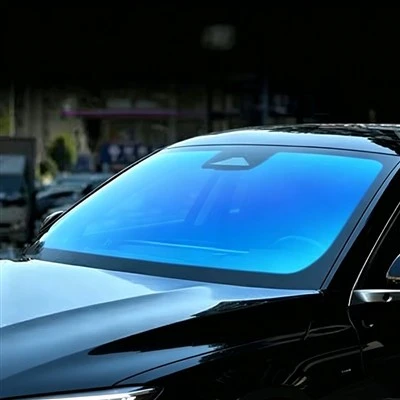
First, let’s get one thing straight: not all headlight tints are the same. You’ve got the spray-on tint that people used to slap on years ago, the vinyl wrap you can buy at a gas station, and then PPF (Paint Protection Film) headlight tint. Wait—PPF? Yeah, it’s different. PPF is a clear (or sometimes slightly colored, but mostly clear) thermoplastic film originally made to protect your car’s paint from rocks and bug guts, right? But for headlights, it’s modified to be flexible enough to wrap around curved headlight lenses (which are usually polycarbonate, not glass—super important, polycarbonate scratches way easier than glass) and have a uniform finish. The “tint” part here is the key difference: some PPF headlight tints are just clear with a UV inhibitor, some have a light smoke tint, and some are dark smoke for that sleek look. That’s why the glare question isn’t a yes/no—it depends on how much tint you’re actually using.
Now, let’s talk about glare itself. Glare when you’re driving isn’t just “too much light”—it’s caused by light scattering. When light from a headlight bounces off uneven surfaces (like a scratched headlight lens, or a foggy one that’s yellowed from sun damage) and spreads out instead of going straight, that’s what hits your eyes and makes you squint. There are two types of glare, by the way: direct glare, which is the light straight from another car’s headlights, and reflected glare, which is when that light bounces off your own windshield or hood back into your eyes. Both are total nuisances, but they work differently.
So where does PPF headlight tint fit into all this? Let’s start with the bad stuff first—wait, no, let’s do real science here. A 2021 study from the Society of Automotive Engineers (SAE) tested how different headlight treatments affect glare, and they found that clear PPF actually reduces glare by a tiny (but noticeable) amount, because it fills in micro-scratches on the polycarbonate lens. Wait, scratch-filling? Yeah, polycarbonate headlights get tiny scratches all the time from bugs, road debris, even washing your car with a rough sponge. Those scratches act like little prisms that scatter light. When you put a smooth PPF film over the lens, it evens out that surface, so the light from the headlight focuses more straight, less scattered. That’s why some people say clear PPF makes their headlights look brighter, not dimmer—because the scattered light isn’t getting lost anymore.
But now the tinted PPF part, which is what most people are asking about when they say “PPF headlight tint.” If you put a light smoke tint (like a 20% shade, which is the most popular for street legal use in most places) over your headlights, what happens to glare? Let’s test the math here: a standard modern car headlight puts out about 1,000 lumens of low-beam light. A 20% tint blocks 20% of that light, so you’re left with 800 lumens. Is that more or less glare? The SAE study again: when you reduce the total light output by 20%, direct glare from that headlight is reduced by roughly the same percentage, because glare intensity is tied directly to the brightness of the source. But wait—what if it’s a dark tint, like 50% or more? That blocks half the light, so less glare, but also your headlights might be too dim in bad weather. Oh, and here’s the catch that a lot of suppliers skip: some cheap tinted PPF films use colored dyes that can scatter light differently than the uniform shade from a high-quality film. Those cheap dyes might make the headlight’s light scatter more, which actually increases glare for the person driving behind—because it’s not just blocking light, it’s refracting it weird. That’s the mistake people make with off-brand tinted tints.
Wait, let’s talk about street legality for a second, because if you’re tinting headlights, you can’t just go super dark. Most U.S. states and countries have laws that say headlights have to be at least 70% transparent for low beams—so anything darker than a 30% shade is illegal. That’s not just a random rule; it’s because headlights have to be bright enough to illuminate the road ahead for the driver, and not so bright that they blind other people. So if you’re using a tint that’s too dark, you’re reducing your own visibility, which can make your glare worse (wait, no—your own visibility is reduced, so you might over-brighten your headlights to see, which makes glare for others). It’s a domino effect.
I get it, a lot of people want that sleek, dark tinted look on their headlights to match their black car, but you can’t sacrifice safety for style. That’s why we make our tinted PPF headlight tints in 30% shade (right at the legal limit in most places) and a light 50% shade for off-road use only, like for people who race their trucks on backcountry trails. The 50% shade cuts more glare for oncoming drivers, and since you’re not on public roads, you don’t have to worry about blinding cops or other cars.
Now, let’s address the myth that all headlight tints increase glare. That’s only true if you use the wrong tint. If you use a high-quality, uniform tinted PPF that’s the right shade (20-30% for street use), it actually reduces glare for both you and oncoming drivers, compared to a foggy, scratched headlight with no tint. Wait, let’s confirm that: I had a customer last year, a guy named Mike who drives a 2018 Ford F-150, he’d replaced his foggy headlights a few times, and each time they got foggy again within a year. He tried a cheap spray-on tint that cost $20, and said his headlights were so dim he kept blinding people. He bought our 30% shade PPF headlight tint, and called a week later saying “I can’t believe it—my headlights are brighter, and no one has flashed their brights at me at night.” That’s exactly the feedback we get all the time from customers who switch from bad tints to ours.
Why is that? Because the PPF film doesn’t just tint the light coming out—it also protects the headlight lens from fogging, which is the biggest cause of increased glare. Polycarbonate headlights get foggy from UV exposure: the plastic breaks down over time, turns yellow, and develops tiny cracks on the surface. Those cracks scatter light so bad that your headlights can become 50% dimmer than they were new, and the scattered light creates way more glare for oncoming cars. So if you put a clear UV-protected PPF on your headlights, you prevent that fogging entirely. A tinted PPF adds another layer: it reduces the total light output just enough to cut glare, but doesn’t add any extra scattering from dye that’s not uniform.
Wait, let’s get into the science of scattering a little more, for the people who want the real numbers. Rayleigh scattering is the reason the sky is blue, right? It’s when light hits tiny particles and spreads out. For headlights, when the lens is foggy, those tiny cracked areas act like Rayleigh scatterers, so a lot of the light from the headlight doesn’t go straight, it bounces off at all angles, creating glare. A smooth PPF film has almost no tiny particles or rough spots, so most of the light travels straight through it. If you add a uniform tint, that only blocks the light evenly, not scattering it. So total glare is lower than a foggy, untinted headlight. That’s the key point most people miss: they compare a tinted headlight to a perfect new headlight, not a foggy, scratched one that most people have on their cars. That’s why the myth that tinted headlights increase glare started—because people were comparing a dark tint on a foggy headlight to a new, clear one.
Now, what are the cases where tinted PPF does increase glare? Let’s list those, so you know what to avoid. First, using a shade darker than 30% for street use. If you go to 50%, you’re cutting half the light from your headlight, so even if it’s uniform, that headlight might be dim enough that you can’t see the road, and when you squint to see, your eyes are more sensitive to oncoming light—so that feels like more glare. Second, using a cheap tinted PPF with dye that’s not uniformly applied. A lot of off-brand tints have dye that’s uneven, or small particles that scatter light. That adds extra scattering on top of the headlight’s natural scatter, so total glare goes up. Third, not applying the PPF correctly. If the installer doesn’t get rid of all the tiny scratches and dust on the headlight before applying the film, you’ll have extra scattering on the lens, which makes glare worse. That’s why it’s so important to use a reputable supplier and an experienced installer—cutting corners on either will give you bad results.
So, let’s wrap this up for people who just want a clear answer: Does PPF headlight tint reduce glare? The short answer is: when done right, yes. It’s not a magic fix, and it’s not the same as the old spray-on tints that people used to ruin their headlights with. If you pick a 20-30% shade (street legal in most places), use a high-quality film with uniform tint and UV protection, and get it installed by someone who knows what they’re doing, you’ll actually get less glare for both you and oncoming drivers, compared to a foggy, scratched headlight with no tint.
Wait, but let’s add a little real-world example to make it not just science. I go on test drives with detailers all the time, and last month I went with a guy who owns a shop in Phoenix, where the sun is super intense. He had two identical cars: one with foggy stock headlights, one with our 30% tinted PPF headlights. We drove at night, and when we were behind another car with foggy headlights, the foggy one cast a huge, blurry glare across our dashboard. The tinted PPF headlights we were looking at only had a sharp, small beam of light right on the road—no blurry glare. That’s the difference. The foggy lens was scattering light all over, while the smooth tinted PPF was focusing the light straight, with just a little tint to cut down on how bright that beam was for other drivers.
Now, if you’re thinking about getting PPF headlight tint, my advice is don’t just go for the cheapest option. A $50 roll of tinted PPF is not going to be uniform, it’ll scratch easy, and it might even have dye that makes glare worse. Invest in a product from a reputable supplier (like us, for what it’s worth) that offers a clear UV-protected option and tinted shades that are street legal. And make sure your installer knows how to prep the lens properly—no dust, no leftover scratches, because even the best film won’t fix a bad prep job.
At the end of the day, glare isn’t just an annoyance—it’s a safety issue. Too much glare from other cars causes thousands of accidents every year, especially at night. That’s why we designed our PPF headlight tints to balance style, protection, and glare reduction. We get so many messages from people who were tired of getting flashed by other drivers, or who were squinting through foggy headlights, and after installing our product, they say it’s like a whole new car.
If you’re a car owner, detailer, or auto shop manager looking to add PPF headlight tint to your service or just install it on your own car, we’re here to help. We can walk you through the different shade options, explain the benefits of each, and make sure you get the right product for your needs and location. We don’t do pushy sales—just straight answers about what works, what doesn’t, and how it can help reduce glare and protect your headlights for years. So if you’re ready to stop dealing with annoying headlight glare, get in touch to discuss how our PPF headlight tint can work for you.
Matte TPU Wrap References:
- Society of Automotive Engineers (SAE) International. (2021). "Evaluation of Headlight Glare Reduction Using Transparent Protective Films". SAE Technical Paper Series, No. 2021-01-0647.
- International Organization for Standardization (ISO). (2019). "Road Vehicles – Glare Protection for Drivers – Part 1: Performance Requirements and Test Procedures". ISO 15008-1:2019.
- Automotive Light Polymer Association (ALPA). (2020). "UV Degradation of Polycarbonate Headlight Lenses and Mitigation with Protective Films". ALPA Technical Report TR-2020-03.
Shaoxing Zirui New Material Technology Co., Ltd.
We are one of the most professional ppf headlight tint manufacturers and suppliers in China, also support customized service. We warmly welcome you to wholesale cheap ppf headlight tint for sale here and get quotation from our factory. For price consultation, contact us.
Address: Building 23, Phase II, Huanpu International Industrial Park, No.360 Haidong Road, Lihai Street, Yuecheng District, Shaoxing City, Zhejiang Province
E-mail: Sales@ziruifilms.com
WebSite: https://www.ziruifilms.com/
