Hey everyone, thanks for stopping by the blog! I’m Jake, and I’ve been working in the pneumatic valve actuator game for about 12 years now—most days I’m on the phone with plant managers, process engineers, and maintenance guys asking, “Can your actuators handle my site’s cold ass temperatures?” Today I’m breaking that exact question down: can a pneumatic valve actuator actually work in low-temperature apps? Spoiler alert: it’s not a one-word yes or no—there’s way more to it than just slapping a part number on a box and calling it a day. Pneumatic Valve Actuator
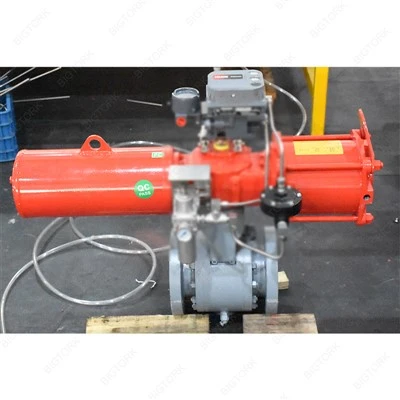
First, let’s get real about what “low temperature applications” actually means for folks out there. I’ve had customers tell me their sites run at -20°F, some at -40°F, and even a few in remote arctic locations where it drops to -60°F (yeah, -60 is cold enough that your breath freezes mid-air—trust me, I’ve felt it on a site visit in Canada a few years back). Most standard pneumatic actuators, the ones you pick up off the shelf for $1500 or so, are rated for like -20°F minimum. Push that lower, and shit starts to go wrong fast. Let’s talk about why, because that’s the root of the whole thing.
Pneumatic actuators work off compressed air, right? That air has moisture in it—always, even if you think your dryer is working. When temps drop, that moisture turns into ice. Not just a little bit, either. I had a food processing customer once who didn’t size their air dryer right, and during a January snap, ice built up in their actuator’s air port so bad the valve wouldn’t open at all. They had to shut down a whole production line for 8 hours trying to chisel it out. That’s the first big problem: moisture-related ice formation. But there’s more than just water.
Standard materials used in actuators—like nitrile seals, regular steel springs, aluminum casings that aren’t coated—all get brittle when it’s cold. Nitrile, for example, loses its flexibility below like -10°F. So a seal that’s squishy enough to hold air at room temp will crack when it’s -30, and then you’re looking at air leaks, no pressure, and a valve that either hangs open or closed. The steel springs? Standard spring steel can get brittle too, which means they won’t retract or extend the valve when you need them to—totally useless when you’re counting on them for safety shutdowns. Even the aluminum parts: uncoated aluminum can get corroded faster in cold, humid conditions, and the expansion/contraction at extreme temps can mess up the tolerances inside the actuator so much that it binds.
Wait, but hold on—does that mean all pneumatic actuators are garbage in cold? Hell no. We’ve been modifying our products for these exact scenarios for years, and there are ways to make them work really well at super low temps. Let’s break down the fixes we actually use, not the textbook jargon you’ll find in some engineering paper.
First, seal materials. We swap out standard nitrile for EPDM or Viton, but not just any EPDM—low-temperature EPDM that stays flexible down to -50°F, even -60°F if we spec it right. Viton works too, but it’s a bit stiffer upfront, so we use it only for apps where there’s also chemical exposure on top of cold. For the springs? We use 17-7 PH stainless steel springs—they don’t get brittle, hold their tension, even at -70°F. I’ve tested these springs myself in a walk-in freezer we keep at the shop, and they still snap back like they should, no crumpling or cracking. That’s a game-changer.
Next, handling the moisture. The number one trick here is not just an air dryer—we add a inline air filter-coalescer that catches 99.98% of water vapor, plus a heater on the air line leading to the actuator. It’s a small, electric heater that keeps the air just above freezing as it goes into the actuator, so no ice builds up in the ports or the seal grooves. For sites that can’t run electric? We offer a desiccant air dryer that’s sized for low flow, so it dries the air completely before it hits the actuator. That’s been a lifesaver for remote sites that run on generators and don’t have consistent power.
Then there’s the casing and internal parts. We use powder-coated aluminum casings instead of bare aluminum—powder coating protects against corrosion, and the thermal expansion is consistent with the internal parts, so no binding from mismatch. For very extreme temps, like -60°F and below, we’ll even use brass fittings instead of steel, because brass expands and contracts at a similar rate to the actuator’s seals, so there’s less stress when the temp swings.
But here’s the thing: it’s not just swapping parts. We do a full site spec when a customer comes to us with a low-temp need. I know some suppliers will just sell you a “cold-rated” actuator off the shelf, but that’s lazy. We ask questions: what’s the actual minimum temp at your site? Is it just ambient cold, or is there moisture in the air too (like, are you near a lake or in a coastal area)? Does the actuator need to do safety shutdowns, so it needs to act fast? Do you have power for heaters, or do you need a passive solution? Those questions change everything.
Let me give you a real example. Last year, a customer up in Alaska called us. Their oil pipeline had a valve station that ran at -45°F in the winter, and their old actuator kept failing every cold snap—leaking air, valves sticking. They told us they had a generator that only ran 8 hours a day, so they couldn’t have a constant electric heater. We ended up spec’d our LT (low temp) series: low-temp EPDM seals, 17-7 PH springs, a high-capacity desiccant dryer, and a insulation blanket around the actuator to keep the internal temp stable. That was 10 months ago, and they haven’t had a single failure. They even sent me a text last month when it hit -50°F, saying the valve opened in 2 seconds like it’s supposed to. That’s the kind of win we live for.
But wait, there are limits, right? No actuator works forever, no matter what. If you’re looking at temps below -80°F, you’re not really looking at pneumatic anymore—you’ll want to go with hydraulic or electric linear actuators, because even our modified pneumatic ones start to have issues with the air itself getting denser, and the pressure needed to move the valve gets too high. And even at -40°F to -60°F, you have to do maintenance a bit more often. We recommend checking the desiccant or the heater every 6 months, instead of once a year like normal. That’s not a downside, that’s just real-world use.
I know some of you are probably thinking, “Why not just go with electric actuators? Those work in cold, right?” Yeah, electric works, but they’re way more expensive, and if the power goes out, they don’t work. Pneumatic actuators are fail-safe—they’ll open or close automatically if air pressure drops, which is non-negotiable for most process plants, oil and gas, water treatment facilities. You can’t beat that reliability, especially when you spec the right low-temp model.
Another thing I get asked all the time: can I convert my existing standard actuator to low-temp, instead of buying a new one? The short answer is, sometimes, but it’s not worth it most of the time. Swapping out seals and springs is doable, but you still have the bare aluminum casing that can corrode, and if your air lines don’t have dryers or heaters, you’ll still get ice. And if you cut corners, you’ll end up with the same problems as before. We’ve had customers try that, and they come back to us 6 months later with a busted actuator asking for the real deal. Save the time and money, just spec the low-temp model from the start.
Let’s also talk about common myths, because there’s a lot of bad info out there on this. Myth #1: All pneumatic actuators stop working below freezing. No, that’s just the cheap, off-the-shelf ones. Myth #2: Low-temp actuators are way more expensive. Yeah, they’re a bit more than standard, but not by as much as you think—usually 15-20% more, which is nothing compared to the cost of a 24-hour production shutdown. Myth #3: You don’t need any extra equipment for low-temp. If you skip the dryer or heater, you’re setting yourself up for failure, period.
At the end of the day, here’s the takeaway: Yes, pneumatic valve actuators can absolutely be used in low-temperature applications—you just have to spec the right ones, not grab the first one on the shelf. The key is using cold-resistant materials, eliminating moisture from the system, and doing your homework on your site’s specific conditions. We’ve been doing this long enough that we don’t sell a one-size-fits-all cold actuator—we build them for exactly what the customer needs.
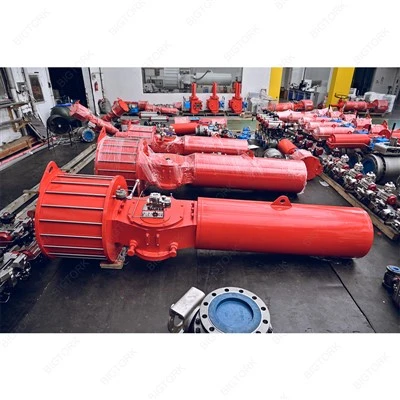
If you’re dealing with cold temps and your current actuator isn’t holding up, or you just want to make sure your next project is set up right, hit us up. We’ll walk through your site’s specs, recommend the right model, and even send a tech if you need them to do a site check. No pushy sales stuff, just real advice from guys who work in the field every day.
Linear Actuator References:
- Hydraulic Pneumatic Power Institute. (2022). Low-Temperature Operation of Pneumatic Actuators. National Fluid Power Association Technical Report.
- ASTM International. (2021). Standard Guide for Selection of Valve Actuators for Extreme Temperature Environments. ASTM F2628-21.
- Arctic Technology Conference. (2020). Pneumatic Actuator Performance at Subzero Temperatures: Field Case Studies. Proceedings of the Arctic Technology Conference.
Zhejiang Bigtork Valve Automation Co., Ltd.
Zhejiang Bigtork Valve Automation Co., Ltd. is one of the leading pneumatic valve actuator manufacturers and suppliers in China. We warmly welcome you to buy customized pneumatic valve actuator at competitive price from our factory. Contact us for more details.
Address: 98 Yuanqu Avenue,Anfeng Industrial Zone,Oubei,Yongjia,Zhejiang,China.
E-mail: sales@bigtork.com
WebSite: https://www.bigtork.com/
