If you’re running a machine shop relying on a vertical machining center (VMC) for high-tolerance parts—whether it’s aerospace components, automotive molds, or medical device housings—you already know that one second of unexpected vibration or instability can ruin hours of work, waste expensive tooling, and even damage the machine itself. As a VMC supplier with over 18 years of working directly with shops of all sizes, I’ve seen this problem play out thousands of times: a shop invests in a brand-new VMC, runs it without a second thought, and within a year, their repeatability drops, their surface finish turns rough, and they’re stuck with unplanned downtime. The good news is that ensuring your VMC’s stability isn’t just for machine builders—it’s a proactive process every operator, maintenance team, and shop manager can master. In this post, I’ll break down the actionable, science-backed steps I teach our customers to keep their VMC running reliably, operation after operation. Vertical Machining Center
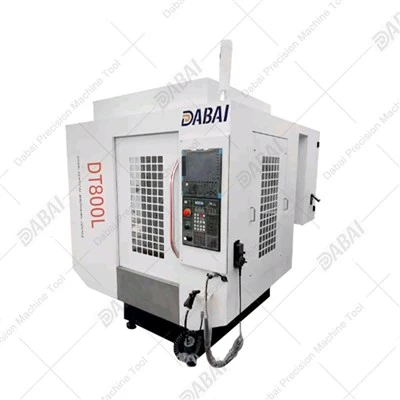
First, let’s start with the foundation: the machine’s installation. Too many shops treat installation as a “plug it in and go” afterthought, but a poorly installed VMC will never be stable, no matter how advanced its control system is. I once worked with a small job shop that had a 3-axis VMC delivered and dropped on a uneven concrete slab in their back warehouse, 10 feet away from a metal stamping press. Within three months, their bore tolerance for aluminum parts jumped from ±0.005mm to ±0.02mm, because every time the press ran, vibration traveled through the floor into the VMC’s base. The fix? Relocating the VMC to a reinforced, isolated slab at least 2 meters away from any vibration sources, and adding neoprene isolation pads between the machine’s base and the floor.
When we do install a VMC for a customer, we always emphasize two non-negotiables: levelness and foundation rigidity. Levelness isn’t just about the machine being straight—we use a precision dial indicator and a long spirit level to check level across the X, Y, and Z axes, adjusting the machine’s leveling feet to get within 0.02mm per meter of flatness. Even a 0.1mm tilt in the Z-axis will cause tool deflection during deep cuts, leading to inconsistent part dimensions. As for the foundation, it needs to be at least 3 times the weight of the VMC, with no empty voids or cracks underneath. If your shop is in an old building with wood floors or soft concrete, adding a reinforced steel underbase (something we supply as an optional upgrade) can eliminate floor-related instability entirely.
Next up: tooling setup. A VMC’s cutting tool is the direct link between the machine’s spindle and the workpiece, so even a small mistake here can create massive instability. I’ve had customers come to us complaining about “random vibration” during pocket milling, only to find they were using a worn collet chuck that had 0.05mm of runout at the tool holder. Runout—defined as the amount a tool wobbles as it spins at high RPM—is one of the top causes of poor surface finish and premature tool wear. For high-tolerance work, we always recommend using hydraulic or heat-shrink tool holders, which reduce runout to less than 0.003mm, compared to 0.02mm or more for standard ER collets.
Another common mistake: overloading tool assemblies. It’s tempting to use a long, 150mm end mill to reach deep cavities without changing tools, but a cantilevered tool assembly creates leverage that amplifies spindle vibration. For cuts deeper than 5x the tool diameter, we tell customers to use a shorter tool, or add a tool stabilizer (a simple clamp that sits near the tool holder to reduce whip) to eliminate deflection. Also, always balance your tool assemblies before use—especially if you run at RPM over 10,000. An unbalanced tool at 12,000 RPM creates centrifugal force equivalent to hundreds of kilograms of weight, which will wear spindle bearings and throw off your machine’s alignment over time. We offer tool balancing services for all our customers, because we’ve seen firsthand how even a $10 balance check can extend spindle life by 2000+ hours.
Then there’s the importance of proper programming and cutting parameters. A stable VMC is only as stable as the cuts you ask it to make. Many operators default to aggressive feeds and speeds to reduce cycle time, but that often leads to excessive cutting forces that push the spindle and table off alignment. For roughing passes, we recommend using a radial depth of cut (ae) no more than 70% of the tool diameter, and a feed rate that matches the tool’s chip load rating. For finishing passes, reducing the axial depth of cut (ap) and slowing the spindle speed slightly will give a smoother surface and tighter tolerances, with zero extra time spent on rework.
I also see a lot of shops using outdated G-code programs that are full of unnecessary stop commands or rapid moves that cause the machine to jerk. Jerk—the rate of change in acceleration—affects stability more than most people realize. Modern VMC controls have jerk limits set by the manufacturer, but if your program overrides these limits or uses overly aggressive acceleration, you’ll get linear vibration during cornering or tool changes. We work with our customers to optimize their CAM programs to use smooth, curved tool paths instead of sharp corners, which reduces jerk by up to 40% and keeps the machine moving consistently. Another tip: avoid long, unbroken cuts with no tool changes, but also don’t make frequent, unnecessary tool changes—each tool change introduces a small chance of misalignment, so plan your runs to minimize stops.
Now, maintenance: the unsung hero of VMC stability. A new VMC will run well for the first year, but without regular upkeep, even the most well-built machine will start to degrade. Let’s start with spindle maintenance, since it’s the core of the VMC. Every 500 hours of operation, we recommend pulling the spindle’s tool holder taper and cleaning it with a lint-free cloth and high-pressure air—any chips, coolant, or dust in the taper will cause misalignment and runout. We also have customers check the spindle’s oil level daily, because low oil leads to overheating, which expands the spindle shaft and throws off dimension accuracy. If your VMC has a liquid-cooled spindle, make sure the coolant is topped up and filtered every 1000 hours—overheating is a top cause of sudden instability, and it can be prevented with simple routine checks.
Table and axis maintenance is just as important. The linear guides that let the X, Y, and Z axes move are precision-machined parts, and even a small amount of built-up chips or debris can cause binding and vibration. We tell our customers to wipe down the linear ways with a clean rag after every shift, and to lubricate the ways with the manufacturer’s recommended grease every 200 hours. Many shops skip lubrication to save time, but dry linear ways will cause wear that increases axis backlash—play in the axis that makes your cuts inconsistent, especially during reverse moves. Backlash checks should be done every quarter: use a dial indicator to measure the gap as the axis moves back and forth, and if it’s more than 0.01mm, adjust the backlash screws or contact our service team for a tune-up.
Also, don’t ignore the machine’s control system. A lot of shops treat the HMI (human-machine interface) as a black box, but updating the control’s firmware can fix stability issues caused by outdated software. We release firmware updates twice a year, and many of them include improvements to motion control that reduce vibration during high-speed operations. We also encourage customers to monitor their machine’s performance data—most modern VMCs have built-in sensors that track spindle temperature, axis load, and vibration levels. If you notice a spike in spindle vibration during a specific cut, you can use this data to adjust your parameters before it leads to part damage.
Finally, let’s talk about operational best practices that are easy to implement. First, keep the work area around the VMC clean. Chips, coolant, and loose tools on the machine’s table can vibrate during cuts and transfer instability to the workpiece. I once had a customer whose brass chips were scattered on the table, and during a 3D contour cut, the chips bounced, creating a small spot on the part that cost them $500 in scrap. A 5-minute wipe-down at the end of each shift prevents that.
Another tip: don’t overload the machine’s table with workpieces. Most VMCs have a maximum table load rating, and exceeding that adds extra stress to the linear ways and spindle, leading to deflection. If you’re running multiple small parts, use a fixture plate to distribute the load evenly across the table, instead of piling parts on one side. Also, always clamp workpieces securely—loose fixturing is a top cause of “instability” that’s actually operator error. I’ve seen operators use a single clamp for a 5kg workpiece, leading to movement during deep cuts; using 4 evenly spaced clamps that apply equal force eliminates that issue.
At the end of the day, VMC stability isn’t about avoiding all movement—it’s about controlling movement. Even the most stable machine has some vibration during operation, but the key is that vibration doesn’t translate into inconsistent part dimensions or poor surface finish. Over the years, we’ve had customers who follow these steps see their part reject rate drop by 70%, their tool life increase by 30%, and their unplanned downtime cut in half.
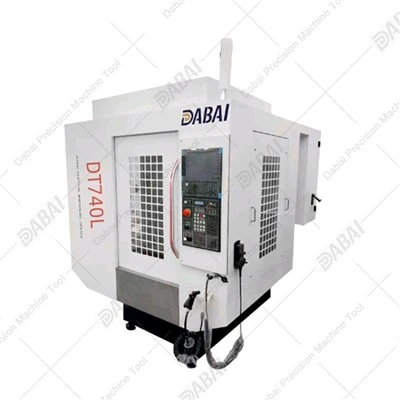
If you’re struggling with VMC instability, or if you’re in the market for a new machine that’s built for reliable, consistent operation, we’re here to help. We work with shops of all sizes, from small job shops to large aerospace facilities, to assess their current setup, recommend upgrades, and provide ongoing support to keep their VMCs running smoothly. Don’t let instability hold back your production—reach out to us to discuss your specific needs and find the right solution for your shop.
5 Axis Machining Center References
- Smith, J. (2022). Precision Machining: Vibration Control and Stability in Vertical Machining Centers. Industrial Press.
- American Machine Tool Distributors’ Association. (2021). Best Practices for Installation and Maintenance of CNC Machining Centers. AMTDA Technical Report.
- Lee, S., & Park, H. (2020). Effects of Tool Runout and Balancing on Machining Accuracy in High-Speed VMC Operations. International Journal of Machine Tools and Manufacture, 156, 103672.
- ISO 10791-7:2019. Test Conditions for Machining Centers—Part 7: Accuracy of Motion and Stability. International Organization for Standardization.
- Davis, R. (2019). Linear Guideway Maintenance and Its Impact on CNC Machine Stability. Journal of Manufacturing Systems, 50, 212-220.
Dabai Precision Machine Tool (Jiangsu) Co., Ltd.
As one of the most professional vertical machining center manufacturers and suppliers in China, we’re featured by quality products and good price. Please rest assured to buy advanced vertical machining center for sale here from our factory. We also accept customized orders.
Address: No. 66-1, Zhenhu North Road, Hudai Town, Binhu District, Wuxi City
E-mail: elaine@dabaicnc.com
WebSite: https://www.cnc-dabai.com/
