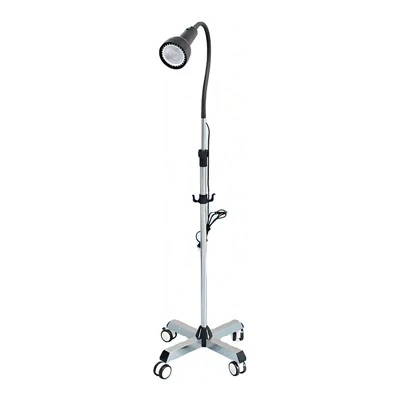
Surgical Lamp Hey there! If you’ve ever shopped for OR gear, you know one question’s always top of mind: how much do operating room trolleys even cost? As a guy who’s been in the OR trolley game for over a decade—worked with hospitals big and small, emergency clinics, even a few specialty surgery centers—this is the question I get asked at least twice a week by facility managers, OR directors, and even small clinic owners just starting out. Let’s break this down like we’re grabbing coffee after a long OR shift—no stuffy jargon, no confusing markup breakdowns, just real numbers and what actually drives those costs. First off, let’s cut to the chase: the price range isn’t a single line—it’s a spectrum, and where you land depends on three big things: what the trolley’s made for, what features it has, and how durable it needs to be. Most of the trolleys I supply fall between $800 and $12,000. Wait, that’s a huge gap, right? Let me explain why, because that’s the part no one tells you when they just Google “OR trolley prices.” Let’s start with the bottom end. Those are the workhorses—basic, no-frills trolleys for small clinics, urgent cares, or ORs that need extra storage for gowns, drapes, or basic instruments. These are usually lightweight aluminum or even high-grade plastic, no fancy electronics, just smooth-rolling wheels and a sturdy frame. I’ve got these going out the door for between $800 and $2,500. Why so cheap? No fancy coatings, no digital touchscreens, just the bare minimum. A lot of my clients here are urgent cares that don’t do complex surgeries—think minor procedures, wound care, small biopsies. They don’t need a trolley that can hold 50 lbs of sterile instruments and track expiry dates; they just need something that doesn’t wobble when a nurse’s hands are full. I recently sold a batch of 12 of these to a small family clinic in Ohio that was expanding their minor surgery wing—they paid around $1,100 each, and they told me it was half the cost of what a local medical supply company quoted them, with the same 5-year warranty. Now, the mid-range is where most hospitals and mid-sized surgical centers live—this is the sweet spot for most ORs. These trolleys start around $2,500 and go up to $7,000. What makes these worth it? Let’s talk upgrades: first, build quality. They’re usually stainless steel (way easier to sanitize than aluminum—critical for ORs, where infection control is non-negotiable), with welded frames so no crevices where gunk can build up. They have features like lockable drawers for controlled substances, which is a big HIPAA thing we don’t mess around with. Some have built-in electrical ports so you can plug in a suction machine or a small monitor without dragging a cord across the OR floor. I even sell ones with integrated IV pole mounts, so you don’t have to set that up separately pre-surgery. A lot of these mid-range trolleys are designed for specific uses too—like anesthesia trolleys, which need separate compartments for meds, or instrument trolleys that have adjustable shelves for different-sized tools. Last year, a hospital in Texas ordered 18 anesthesia trolleys in this range—they paid about $4,200 each, and the OR team loved that the drawers have soft-close mechanisms so they don’t clatter mid-procedure. Worth noting here: the mid-range is where you get warranty coverage that matters—most of these come with a 7-10 year warranty on the frame, and 2 years on moving parts like wheels or locks. That’s a big deal, because replacing trolley wheels mid-year is a nightmare for OR scheduling. Now the upper end—this is the stuff for big academic medical centers, trauma centers, or ORs that do complex, high-risk surgeries (like neurosurgery, cardiac, or transplant). These trolleys go from $7,000 all the way up to $12,000, and they’re basically medical grade mobile command centers. What makes them so pricey? Let’s list the extras: first, smart technology. A lot of these have built-in touchscreens that track instrument expiry dates, log inventory of sterile supplies, even send alerts when a drawer is left open (to prevent contamination). Some have integrated battery packs that last 8+ hours, so you don’t have to plug them in mid-surgery—game-changer for emergency ORs where power might flicker or space is tight. They have heavy-duty, antimicrobial coatings that kill bacteria on contact, which is a huge infection control win for high-risk ORs. Also, customization—you can get a trolley tailored exactly to your OR’s needs: modular compartments, specialized mounting for large imaging tools, even software that integrates with your hospital’s electronic health records (EHR) system so the OR team can pull up patient info without stepping away from the trolley during prep. I worked with a trauma center in New York City last year that ordered 10 of these high-end carts for their emergency ORs. They paid around $10,500 each, and the OR director told me it cut their pre-surgery prep time by 15% because everything they need is right there on the cart, no running back and forth for supplies. But here’s the thing I always tell clients: don’t let the price tag make you jump to conclusions. A $1,000 trolley for a small clinic is way better value than a $5,000 overkill trolley that has features you’ll never use, and you’d have to pay to ship it back if it doesn’t fit your space. That’s why I never send a price without first asking you a few questions: what kind of procedures are you doing? How many trolleys do you need? Do you need specialized features like anesthesia storage or EHR integration? Are you buying new or refurbished? Wait, refurbished trolleys—another big part of the price range I almost forgot. I sell a lot of pre-owned, certified OR trolleys too, and those fall between $500 and $3,500. The key here is that they’re fully refurbished: we take them apart, sanitize every crevice, replace any worn parts, test all the locks and wheels, and give them a 2-year warranty. A lot of small clinics or even startup surgical centers go this route to save money without sacrificing safety. I recently sold a certified refurbished anesthesia trolley to a new clinic in Florida for $1,800, and they said it was perfect for their first year while they got their budget sorted. Now, let’s talk about hidden costs that people don’t factor in—because that’s where the real “price” of a trolley hits, not just the upfront number. First, shipping: OR trolleys are bulky, so if you’re ordering custom ones from overseas, shipping can add 10-20% to the cost. A lot of local suppliers (like me, hi!) have faster shipping and no extra customs fees, which is a big plus. Then there’s maintenance: cheap, no-name trolleys might have replacement parts that cost as much as the trolley itself, whereas mid and high-end ones have affordable, readily available parts. And then there’s downtime: if a trolley breaks right before a surgery, you might have to rent a temporary one for $100+ a day, or delay procedures—costs that add up way more than the initial price difference. I had a client a few years ago who bought three super cheap trolleys from a random online supplier; two broke within 6 months, and they had to pay $3,000 in rental fees while waiting for replacements. That’s when they called me, and we swapped them for mid-range ones that lasted 5 years with no major issues. Another thing: compliance. OR trolleys have to meet FDA regulations (in the US, at least) for medical devices, and some cheap no-name ones don’t. If you get audited by a health department, you could get fined for using non-compliant equipment. All the trolleys I supply are FDA-cleared, so that’s one less thing you have to stress about. Now, let’s break down that range again to make it crystal clear, with real use cases so you know exactly where you fit: $500–$2,500: Basic, refurbished, or entry-level trolleys for small clinics, urgent cares, or minor procedure rooms. No fancy features, just reliable, easy to sanitize. $2,500–$7,000: Mid-range stainless steel trolleys for general hospitals, mid-sized surgical centers, anesthesia or instrument-specific use. Includes lockable compartments, built-in power, and solid warranties. $7,000–$12,000: High-end smart trolleys for trauma centers, academic medical centers, complex surgery suites. EHR integration, smart tracking, heavy-duty construction, long battery life. But here’s the most important part of all: the best price is the one that fits your needs. If you’re a small urgent care, you don’t need a $10k smart trolley—save your budget for other OR gear. If you’re a trauma center, skimping on a basic, unreliable trolley could lead to delays or safety issues. I always tell clients to weigh upfront cost against long-term value. A $4,000 mid-range trolley that lasts 10 years is a better deal than a $1,500 entry-level one that needs replacing every 3 years, right? I’ve seen it both ways, and the latter ends up costing way more in the long run. If you’re in the market for new or refurbished OR trolleys, and you want to skip the guesswork of comparing random online quotes, hit me up to chat about your specific needs. I’ll ask you about your facility size, procedure types, how many trolleys you need, and work with you to find something that fits your budget and your team’s needs. No pushy sales stuff, no hidden fees—just straight talk about what works. And that’s the deal with OR trolley pricing. It’s not about the cheapest number; it’s about matching the trolley to what you actually use it for, with safety and reliability front and center. If you’ve got questions or want to dive deeper into pricing for your space, reach out anytime. References: 1. FDA. (2023). Medical Device Safety Standards for Operating Room Equipment. U.S. Food and Drug Administration. 2. Association of periOperative Registered Nurses (AORN). (2022). Guidelines for Operating Room Equipment and Supply Management. AORN Journal. 3. Global Medical Trolley Market Report. (2024). Grand View Research. Operating Room Trolley
Eusokon Technology ( Shanghai ) Co., Ltd.
As one of the most professional operating room trolley manufacturers and suppliers in China, we offer a wide range of products with superior quality. Please feel free to wholesale advanced operating room trolley in stock here from our factory.
Address: No.2 building lane 89,Huguang east road Minhang area Shanghai China
E-mail: dorisyang@eusokon.com
WebSite: https://www.eusokon.com/
