If you’ve ever walked past a ceramic studio or a factory producing ceramic tiles, you might have seen giant kilns rumbling for hours, heating clay to temperatures high enough to turn it into durable, glossy material. As an induction heating machine supplier, I get asked all the time: can induction heating even work for ceramics, or is it just for metals? For years, a lot of people assumed induction heating was strictly for ferrous metals like steel or copper, since metals conduct electricity and interact with magnetic fields in a way that generates heat. But after 12 years in this business, testing dozens of setups for ceramic clients, I’m here to tell you: yes, induction heating can absolutely be used for ceramics—though it works a little differently than it does for metals, and there are some key details to get right. Induction Heating Machine
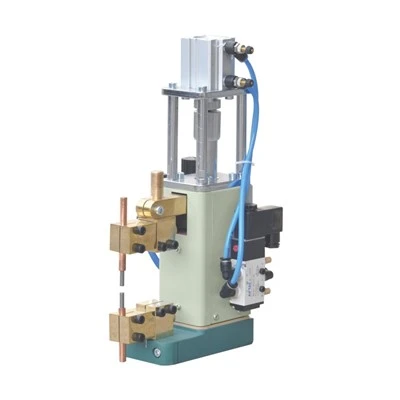
First, let’s break down how induction heating works, period. When you run an alternating current (AC) through a copper coil, it creates a rapidly fluctuating magnetic field around that coil. For a material that’s electrically conductive (like metal), that magnetic field induces eddy currents in the material. Those eddy currents meet electrical resistance in the metal, and that converts into heat right in the material itself—no external flame or hot surface needed. That’s why induction is so popular for metals: it’s fast, precise, and doesn’t waste energy heating the space around the part.
Ceramics, though, are different. Most common ceramics—clay, porcelain, alumina, even the tiles used on bathroom floors and walls—are poor electrical conductors at room temperature. That means at first glance, you wouldn’t think they’d react to an induction magnetic field. But here’s the thing: most ceramics change as they heat up. As their temperature rises, their electrical conductivity increases, and some even develop ferromagnetic properties at specific temperature thresholds. That’s the sweet spot for using induction on ceramics.
Let’s talk about the two main types of ceramics we work with most, because that changes how induction works for each. The first is traditional oxide ceramics, like alumina or zirconia. These are the ones used for high-temperature applications, like furnace components, spark plug insulators, or even the liners for jet engines. For these, we set up the induction coil to heat them to their Curie temperature—wait, Curie temperature is the point where a material loses its ferromagnetic properties, right? For many iron-based metals, that’s around 770°C (1420°F), but for some ceramics, especially certain ferrite ceramics, their Curie point is lower, around 150°C to 250°C. Once the ceramic hits that temperature, it becomes highly magnetic, which makes it react strongly to the induction coil’s magnetic field. That reaction creates eddy currents inside the ceramic itself, which heat it evenly and quickly.
The second type is non-ferrous ceramics, like silicon carbide or boron nitride. These don’t have a Curie point that falls into a range easy to reach with induction heating, so we have to add a conductive susceptor to the mix. A susceptor is just a small piece of a conductive material, like graphite or silicon carbide, that sits between the induction coil and the ceramic part. The induction coil heats the susceptor first—super fast, since it’s a metal or carbon-based conductor—and the susceptor then radiates that heat to the ceramic part. It’s indirect, but it’s way more efficient than using a conventional oven for small or medium batch runs of specialty ceramics.
I’ve seen clients test this in their own facilities, and the difference in speed is night and day. Take a customer who makes small ceramic components for medical devices—they used to use a muffle furnace that took 8 hours to heat a batch of 50 parts to 1200°C, with a 2-hour cool-down period after firing. With our induction heating setup, that same batch hits 1200°C in 45 minutes total, and cool-down only takes 90 minutes. That’s less time waiting, less energy wasted on heating the entire oven cavity, and less wear and tear on their equipment because they’re not running a giant furnace all day long.
But it’s not all perfect, and that’s why a lot of people still stick to kilns for ceramics. The biggest challenge is consistency across different ceramic materials. Not all ceramics react to induction the same way, and if you’re using a susceptor, you have to match the susceptor’s size and material to the ceramic’s shape. For example, a thin, flat ceramic tile needs a flat susceptor, while a cylindrical ceramic pipe needs a tube-shaped susceptor. If that doesn’t line up, you get hot spots on the ceramic—areas that get too hot, which can cause cracking, or areas that don’t reach the required temperature, leading to weak parts. That’s where our experience as a supplier comes in; we don’t just sell you a machine and send you on your way. We test a sample of your ceramic material with your part dimensions in our in-house lab, adjust the coil design and power output, and even help you pick the right susceptor material if you need one.
Another common question I get: is induction heating safe for ceramics, especially if we’re talking about high-temperature parts? Kilns use open flames or gas burners, which can release fumes, and they take a long time to cool, so you have to wait around them to avoid burns. Induction heating is all about the coil and the part itself—there’s no open flame, and the cavity of the heating unit stays relatively cool to the touch, so you can handle parts (with proper gloves, of course) right after the cycle ends, as long as the part itself has cooled down to a safe temperature. That’s a huge plus for small-batch production or custom ceramic work, where you’re firing parts one or two at a time and need to turn them around fast.
We also work with ceramic artists and small boutique studios, not just industrial manufacturers. A potter who makes custom porcelain mugs used to have to send their work out to a commercial kiln for firing, which took a week or more and cost them per batch. We set them up with a small tabletop induction induction heating machine, and now they can fire their mugs in 2 hours, right in their studio. They told us last month that their production time has tripled, and their defect rate for cracked mugs is down 18% because the heating is so even. That’s not just a win for them—it’s proof that induction works for ceramics in every size, from tiny custom parts to large industrial components.
Of course, there are limits. If you’re working with very large ceramic parts, like a 10-foot ceramic liner for a furnace, induction heating gets trickier. The magnetic field from a coil has a limited range, so you need a larger, more powerful coil, and you have to make sure the entire part is within the field to heat it evenly. For that kind of application, we work with clients to customize coils up to 20 feet in diameter, but it does require a larger upfront investment compared to standard kilns. For most small to medium operations, though, induction is a more cost-effective choice in the long run.
The energy savings are another big selling point. Induction heating is 70-85% energy efficient, compared to 50-60% for gas kilns and 30-40% for electric resistance kilns. That adds up over a year—one of our clients in the tile manufacturing industry told us they save around $12,000 a year on electricity and gas after switching their main firing line to induction. For small studios, that might mean the difference between breaking even on a new line of work and turning a profit.
Now, I know there’s a lot of misinformation out there online, so let’s clear up a common myth: induction heating doesn’t “electrocute” ceramics, even though it uses magnetic fields. The process is completely contained—there’s no electrical current running through the ceramic part itself, only induced eddy currents that convert to heat. As long as you follow the safety guidelines for operating induction equipment, which we provide with every machine, it’s just as safe as any other heating equipment in a workshop.
If you’re still on the fence, here’s a quick checklist to see if induction heating is right for your ceramic work: Do you fire small to medium batches? Do you need fast turnaround times? Are you tired of paying for external kiln services or dealing with long production cycles? If yes, then induction is definitely worth exploring. We don’t pressure clients to switch over overnight; we offer free lab testing for your specific material, so you can see exactly how our machines work with your ceramics before you make a purchase.
Whether you’re a ceramic artist looking to streamline your studio, a manufacturer producing industrial ceramic parts, or someone just curious about the technology behind induction heating, the answer is clear: induction heating can absolutely be used for ceramics, and it’s often a better, faster, more cost-effective alternative to traditional kilns for many applications.
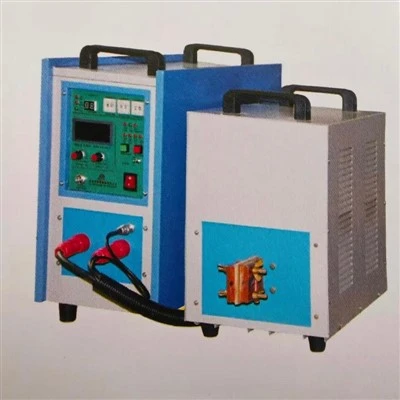
If you’d like to learn more about how induction heating could work for your ceramic production, get in touch with us to discuss your specific needs and request a custom consultation.
Induction Heating Machine References
- D. W. Richerson, Modern Ceramic Engineering: Properties, Processing, and Use in Design, 4th ed., CRC Press, 2019.
- V. Rudnev, D. Loveless, R. Cook, M. Black, Handbook of Induction Heating, 2nd ed., CRC Press, 2018.
- American Ceramic Society, Induction Heating for Ceramic Processing, 2021.
- J. H. De Hosson, “Induction Heating of Ceramics and Composites,” Journal of the European Ceramic Society, vol. 25, no. 15, pp. 3377–3385, 2005.
Dongguan Huineng Welding Equipment Co., Ltd.
We are one of the most experienced induction heating machine manufacturers and suppliers in China. With a professional production team, we offer a wide range of products with superior quality. Please feel free to buy customized induction heating machine at competitive price from our factory.
Address: 530 Guantai Road, Xitou Village, Houjie Town, Dongguan City, Guangdong Province
E-mail: fengshanggang75@126.com
WebSite: https://www.huinengwelder.com/
