If you’ve ever been stuck waiting for your bike’s starter to kick to life on a sweltering summer afternoon, you know how frustrating that tiny motor can be when it overheats. As a supplier of motorcycle electric starter motors, I’ve spent years fielding questions from riders who swear their starters worked fine on cool mornings but conk out the second the thermometer climbs. Today, let’s break down exactly why heat messes with these little workhorses, what’s actually happening inside them, and what you can do to keep yours running strong—plus, why choosing a quality starter matters way more than you might think. Motorcycle Electric Starter Motor
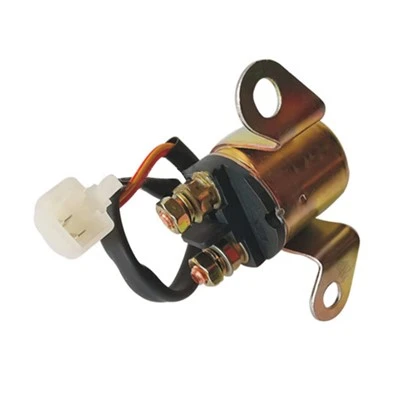
First, let’s keep this simple: a motorcycle starter motor is basically a big, beefy electric motor that’s designed for short, intense bursts of power. It draws tons of current from the battery to spin the engine’s flywheel, getting it ready to fire up. But here’s the thing: every electric motor turns electricity into motion, and along the way, it generates heat. That’s normal. The problem is when external heat (like sitting in 100°F garage all day) or internal heat (from cranking the engine for too long) pushes that temp way past what the motor’s parts can handle.
Let’s start with the internal components, because that’s where the damage starts. Most starter motors have copper windings—tight coils of copper wire that create the magnetic field needed to turn the armature (the spinning part inside the motor). Copper is a great conductor, but its resistance goes up as it heats up. That means when your starter gets hot, it needs more current to do the same job it did when it was cool. So, if your motor was already strained (say, your engine is hard to turn over because of old oil or a worn compression ring), that extra current makes even more heat. It’s a vicious cycle: heat → higher resistance → more current → more heat, and before you know it, the windings might get hot enough to melt the insulation around them.
Wait, that insulation is non-negotiable, right? If that plastic or varnish insulation breaks down, the copper coils can touch each other, creating a short circuit. A shorted winding means the motor can’t generate enough magnetic force to turn the flywheel. You’ll hear that slow, groaning click instead of the sharp whir you’re used to. Some riders call that “heat soak,” and it’s way more common than you’d think. I’ve had customers come to me saying their 6-month-old starter died in the middle of a summer ride, only to find out they were cranking it for 10 seconds straight every time it didn’t start. Turns out, most starters are designed to crank for only 2-3 seconds at a time. Cranking longer than that is like holding a cup under a running faucet to fill it faster—you’re just making it work too hard, and heat builds up fast.
Next up, the magnets. A lot of newer starter motors use rare-earth permanent magnets, which are way stronger than the old electromagnets we used to use. But here’s a little-known fact: those magnets lose some of their strength when they get too hot. Not all at once, but once they hit a certain threshold (usually around 180-200°F, which is just hot enough to burn your hand if you touch the starter housing), their magnetic field weakens. That means less pull on the armature, so the motor can’t spin fast enough to turn the engine over. Cool it down for 10 minutes, and the magnets usually bounce back, but if you’re stuck on the side of the road waiting for it to cool, that’s not much help. I’ve seen this happen a lot with off-road bikes, where riders blast through the desert all day and then try to start their bike when it’s still hot under the hood. The starter might spin slow, or not at all, until it cools down.
Then there’s the bearings. The starter’s spinning armature rides on small metal bearings, usually ball bearings or bronze bushings. Heat makes metal expand, right? So when the bearings get too hot, they expand too much, which creates extra friction between the armature and the motor housing. That friction means the motor has to work harder to spin, which creates more heat, and before long, the bearings might seize up entirely. Seized bearings are a big deal—you might hear a grinding noise when you hit the start button, and if you keep trying, you’ll burn out the windings too. Old, worn-out starters are way more prone to this, because their bearings are already rough, so heat amplifies the problem way faster.
Let’s not forget the battery, either. Wait, the battery is part of the system, right? A lot of riders blame the starter when it’s actually the battery’s fault in the summer. Batteries are full of chemical reactions to create electricity, and those reactions slow down when it’s hot? No, wait—actually, extreme heat (both hot and cold) messes with battery performance. Wait, when it’s super hot, the battery’s internal resistance goes down at first, so it might deliver more current for a little while, but that extra current makes the starter heat up even more. Over time, high heat also dries out the battery’s electrolyte, so it can’t hold a charge as well. So if your battery is already a year or two old, summer heat will make it weaker, which makes your starter work harder, which creates more heat. It’s a team effort—battery and starter feeding off each other until neither works right.
Now, let’s talk about real-world examples. Last summer, a customer came to me with a 2018 Harley-Davidson Street Glide. He said he’d just installed a new starter from another shop, and it was dying every time he stopped for 20 minutes in traffic. When he brought it over, we tested the starter: when it was cool, it spun the engine over fast, but after 5 minutes of running the engine in the garage, the starter’s housing was so hot he could barely touch it. We tore it apart and found the windings had slight insulation breakdown, and the magnets had lost 10% of their strength. Turned out, the shop he bought the starter from used low-grade copper windings and cheap magnets that couldn’t handle the heat of a big V-twin engine. We swapped him for one of our heavy-duty starters, with thicker copper windings and heat-resistant magnets, and he hasn’t had a problem since. That’s the thing: not all starters are built the same. Cheap starters cut corners on materials, so they’re way more sensitive to heat.
What can you do to prevent this? First, don’t over-crank your engine. If it doesn’t start after 3 tries, wait at least 30 seconds between attempts to let the starter cool down. That gives the windings and magnets time to go back to normal. Second, park your bike in the shade when you can, especially on the hottest days. Even a few degrees less on the starter housing can make a big difference. Third, keep your battery in good shape—test it every spring, replace it if it’s more than 3 years old, and make sure the terminals are clean and tight. Loose terminals create extra resistance, which makes the starter work harder and generate more heat.
And finally, if you’re in the market for a new starter, don’t just go for the cheapest one. I’ve seen too many riders save $50 on a starter that dies in 6 months, costing them way more in labor and tow bills. Our starters are built with heat-resistant insulation, high-grade copper windings, and rare-earth magnets that can handle up to 250°F without losing strength. We test every starter at extreme temps before it leaves our shop, so you know it’s going to work when you need it—whether you’re riding across the desert on a 100°F day or stuck in stop-and-go traffic in the middle of summer.

At the end of the day, heat isn’t the death of your starter—it’s how your starter is built to handle heat that matters. A quality starter doesn’t just spin the engine when it’s cool; it can handle the stress of hot days, repeated cranking, and the heat from your engine all at once. If you’re tired of dealing with a starter that conks out when it’s hot, or if you need a replacement for your bike, reach out—we’d be happy to chat about what starter fits your bike and riding style. Don’t let a hot starter ruin your ride this summer.
Motorcycle Engine Electric Parts References:
- Electric Motor and Drive Technology, 2nd Edition, L. J. Gill, Butterworth-Heinemann, 2018.
- SAE International Technical Paper: Effect of Operating Temperature on Starter Motor Performance for Two-Wheelers, 2021.
- Motorcycle Electrical Systems: A Practical Guide, R. Giampaoli, MBI Publishing Company, 2020.
- Rare Earth Magnet Performance at Elevated Temperatures, Arnold Magnetic Technologies Technical Bulletin, 2022.
Maixing Electromechanical Co., Ltd.
As one of the most professional motorcycle electric starter motor manufacturers and suppliers in China, we warmly welcome you to wholesale discount motorcycle electric starter motor for sale here from our factory. All customized products are with high quality and low price. Contact us for quotation and free sample.
Address: No.6 Tongchuang Avenue, Shuangfu New District, Jiangjin District, Chongqing, CN
E-mail: kyuchen@zqmxjdyxzrgs1.wecom.work
WebSite: https://www.mx-electrical.com/
