If you’ve ever sat down for a quick mahjong game, only to fumble with a tile because your plastic frame automatic mahjong table was running too slow—or miss the rhythm of a fast-paced match because it was spinning too fast, you know how frustrating that can be. As a supplier of plastic frame automatic mahjong tables, I’ve helped hundreds of customers troubleshoot speed adjustments, from small cafe owners running daily tournaments to family enthusiasts who want their table to match their play style. The good news? Adjusting the speed of your plastic frame table isn’t complicated, and it doesn’t require advanced technical skills. It’s a few simple steps that let you tailor the machine’s performance to your space, tile size, and how fast you like to play. Plastic Frame Automatic Mahjong Table
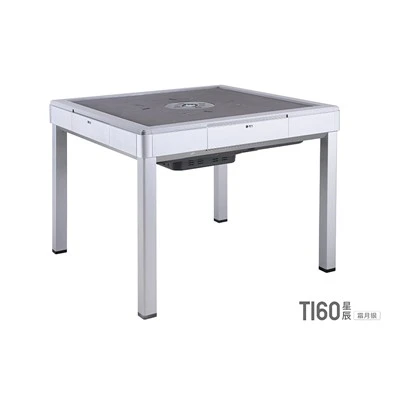
First, it helps to understand why plastic frame tables are different from other models. Unlike wooden or metal frame tables, plastic frame tables are lighter, often more affordable, and built with precision-molded plastic parts that don’t flex over time. That plastic construction means speed adjustments are slightly more sensitive—too much change, and you might jam tiles, while too little, and you’re stuck waiting 10 seconds for the next round. The core system that controls speed on these tables is the motor controller, usually a small circuit board hidden under the table’s playing surface. Most modern plastic frame tables use a variable resistor (a potentiometer) or a digital control panel to adjust motor output. Older models might have a manual dial, but the process is similar across the board.
Before you start, gather a few tools: a Phillips-head screwdriver, a small flathead screwdriver, and a flashlight. You’ll also want to clear a space around the table so you can access the underside without knocking over chairs or spilling drinks. If your table is plugged in, unplug it first—safety is non-negotiable here. You don’t want to risk a shock or damage to the electronics while working.
Start by removing the playing surface. On most plastic frame tables, the playing top is held on by four screws, one at each corner. Loosen them gently—don’t yank them out, because they’re often fitted with plastic anchors that can crack if you apply too much force. Once the screws are out, lift the playing top straight up. Set it aside on a soft surface, like a folded blanket, so you don’t scratch the felt or damage the tiles on it. Underneath, you’ll see the main compartment, where the motor and control board are housed. It might have a plastic cover that you’ll need to remove to access the speed adjustment part. That cover is usually held on by two small screws, so use your Phillips screwdriver to take those off.
Now, locate the speed adjustment component. On older plastic frame tables, this is a small, cylindrical dial (the potentiometer) marked with numbers, usually ranging from 1 to 10. On newer digital models, it’s a small LCD screen or a set of buttons labeled “Speed” with up and down arrows. Let’s cover both types, since I’ve sold a mix of both over the years.
For the manual dial models: This is where most of our customers start. The dial is typically labeled “Motor Speed” or “Spin Rate.” Each number corresponds to a percentage of the motor’s maximum output. For example, number 1 is slow (great for smaller tiles, like those used in standard Hong Kong mahjong), and number 10 is fast (best for larger tiles, like American mahjong, where the extra speed helps keep the round moving). To adjust it, turn the dial slowly clockwise to increase speed, counterclockwise to decrease. Start at the midpoint—number 5—and test it. Run a few test cycles: load the tiles into the table, close the compartment, and let it spin. Watch how the tiles move. If they’re jamming, bouncing too hard, or not settling into the racks, turn the dial down one number. If the table is taking longer than 15 seconds to complete a cycle (most plastic frame tables run a full cycle in 10 to 12 seconds for standard play), turn it up one. It’s tempting to crank it to 10, but plastic parts can’t handle the same stress as metal—running it at max speed for long periods will wear down the plastic gears faster, leading to jams later. I always tell customers to test in increments of one or two numbers to avoid over-adjusting.
For the digital control panel models: These are more common in tables we’ve shipped to commercial spaces, like game halls or cafes, where multiple people use the table. The control panel is usually mounted on the side of the table’s base, not under the playing surface (a design change we made a few years ago to make adjustments easier). To adjust speed here, press the “Speed” button. Most digital models will show a number from 1 to 9, or a percentage, on the screen. Press the up arrow to increase speed, down to decrease. The key here is to match the speed to the tile size. If your tiles are 38mm (the standard for Chinese mahjong), a speed of 60% to 70% works best. If you use 42mm tiles (popular in Southeast Asia), bump it up to 75% to 80%. A tip I give commercial clients: program a custom speed setting for different tile packs. Many digital tables let you save three or four presets, so you can switch between Hong Kong, Taiwanese, and American mahjong with the touch of a button. That saves time during events or tournaments.
Wait, there’s a common mistake a lot of first-timers make: adjusting the speed without checking the tension on the plastic belts. The motor drives the table’s mechanisms with two small plastic belts, and if those belts are too loose, the table will spin slowly no matter what the dial says. If you’ve turned the dial up to 8 or 9 and the table is still sluggish, check the belts. Under the motor compartment, you’ll see two thin, black plastic belts. They should have a little give—about half an inch when you press them. If they’re sagging too much, you can adjust the tension. Most plastic frame tables have small plastic screws next to the motor that adjust the pulley’s position. Tighten those screws a quarter-turn at a time, then run another test cycle. Don’t over-tighten, though—if the belts are too tight, they’ll stretch and break prematurely, which is a common repair for plastic frame tables. If the belts look worn, cracked, or shiny, you might need to replace them, but that’s a separate issue from speed adjustment.
Another thing to consider: the table’s environment. Plastic frame tables are sensitive to temperature and humidity, which can affect the speed. If you’re using the table in a cool, dry space (like a climate-controlled cafe), the plastic parts are stiffer, so you might need to set the speed one number higher than you would in a warm, humid home, where the plastic is a little more flexible. I’ve had customers in tropical countries tell me their tables run too fast during monsoon season, so we suggest turning the dial down two numbers to compensate for the extra moisture that softens the plastic gears. It’s a small adjustment, but it makes a big difference in performance.
Once you’ve found the right speed, test it with a full round. You don’t want to adjust it just once—run at least three test cycles, dealing tiles out and seeing how they land. On plastic frame tables, the tiles need to settle perfectly into the slots, so if the speed is too high, tiles will bounce out of place, and if it’s too low, they’ll stick halfway. If you’re playing with friends, ask them to give feedback—sometimes the best way to judge speed is how natural it feels when you’re grabbing your tiles.
If you’re still having trouble after adjusting, don’t hesitate to reach out. As a plastic frame automatic mahjong table supplier, I’ve helped customers with every kind of speed issue, from tables that won’t spin at all to ones that are too fast and jamming tiles. We stock all the replacement parts for plastic frame tables, from potentiometers to belts, and we can walk you through step-by-step troubleshooting if you run into a problem. Whether you’re a home user looking to customize your table for family game nights, or a business owner wanting to set up multiple tables for a mahjong league, we’re here to help.
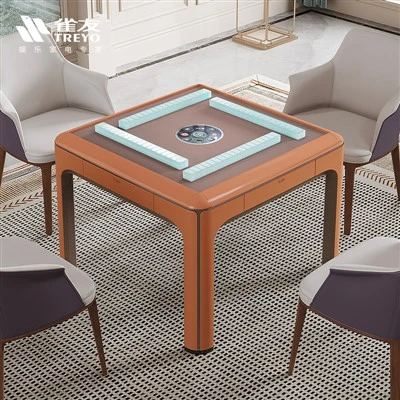
Adjusting the speed of your plastic frame automatic mahjong table doesn’t have to be a complicated task. With a few simple steps, you can tailor the machine’s performance to your play style, tile size, and environment, making every game more enjoyable. Remember to work safely, test in small increments, and keep an eye on the plastic belts to avoid long-term wear. If you’re ready to upgrade or troubleshoot your table, feel free to get in touch to discuss your needs and find the best solution for you.
Wooden Frame Automatic Mahjong Table References
Automatic Mahjong Table Operation and Maintenance Guide, Mahjong Tech Solutions
Plastic Frame Machinery Design for Consumer Electronics, Industrial Plastic Engineering Journal
Troubleshooting Tips for Home Gaming Devices, Home Entertainment Tech Magazine
Matsuoka Technology (Zhejiang) Co., Ltd.
Matsuoka Technology (Zhejiang) Co., Ltd. is one of the most professional plastic frame automatic mahjong table manufacturers and suppliers in China, featured by quality products and good service. Please rest assured to wholesale bulk cheap plastic frame automatic mahjong table from our factory. Welcome to view our website for more company information.
Address: No.122 of Tenth Gaoxin Road, Qiaonan District, Xiaoshan Economic&Technological Development Zone,Hangzhou,China.
E-mail: niuhua@treyo.net
WebSite: https://www.treyo-mahjongtables.com/
