As an aquatic feed composite bags supplier, I get this question all the time from clients: “Do these bags actually keep feed fresh for as long as we need it once they’re filled?” It’s not a random question—for anyone in aquaculture, a feed’s shelf life directly impacts stock rotation, production costs, and even the health of the fish, shrimp, or other livestock you’re raising. Over the 12 years I’ve worked in packaging solutions for aquafeed, I’ve seen first-hand how a bag’s design, materials, and how it’s filled can make the difference between a bag of feed that stays viable for 6 months and one that goes rancid in 2. Let’s break this down, not just as a supplier, but as someone who’s walked the floor of feed mills, sat in on storage warehouse tours, and listened to farmers talk about their biggest storage headaches. Aquatic Feed Composite Bags
First, let’s start with why aquatic feed is so prone to spoilage in the first place. Unlike dry livestock feed, aquafeed—especially floating pellets for tilapia or shrimp feed that has higher fat content to support rapid growth—has a much higher oil and moisture profile. Those oils are critical for nutrition, but they’re also a magnet for oxidation: when fat molecules react with oxygen, they break down into free radicals, turning feed stale, losing nutritional value, and even creating compounds that are harmful to aquatic life. Then there’s moisture: even a small amount of excess moisture (just 1-2% over standard) can lead to mold growth, insect infestations, or the germination of ingredients like grains in the feed. For a feed mill, the goal is to produce feed with moisture levels around 10-12% and fat content between 8-18% depending on the species, but the only way to lock those levels in is with a bag that acts as a proper barrier. That’s where composite bags come in, but not all composite bags are created equal.
A lot of people hear “composite bag” and think it’s just a layer of plastic, but our aquatic feed composite bags are multi-layered structures engineered specifically for this use case. Let’s go into the layers, because each one serves a purpose for shelf life. The outermost layer is usually polypropylene (PP) woven fabric—it’s durable, puncture-resistant, so when feed is loaded into trucks or stacked in warehouses, the bag doesn’t tear open. If it tears, that’s a direct path for oxygen and moisture to get in. Next, we add a layer of polyethylene (PE) film for strength, but the key layer is the middle barrier: that’s either aluminum foil, metallized PET (polyethylene terephthalate), or a high-barrier EVOH (ethylene vinyl alcohol) film. Here’s the science: aluminum foil is the best oxygen and moisture barrier, almost 100% impermeable, but it adds cost. Metallized PET is a more affordable option for farmers who store feed in cooler, drier climates, while EVOH is flexible and works well for bags that need to be sealed tightly. What this means for shelf life is that a properly layered composite bag will reduce oxygen transmission rate (OTR) to less than 10 cc per m² per day at 23°C and 0% humidity—way lower than a single-layer plastic bag, which can have an OTR of hundreds of cc. Lower OTR means less oxidation, so the fat in the feed stays intact longer. Moisture vapor transmission rate (MVTR) is equally important: our bags have MVTR as low as 0.5 g per m² per day, which keeps external moisture out even if the warehouse has high humidity (common in coastal regions, where a lot of aquaculture operations are based).
But wait—this is only half the story. Even the best bag in the world won’t give a long shelf life if the filling process is wrong. I’ve seen feed mills cut corners here, and it’s almost always a waste of good packaging. Let’s talk about filling best practices we recommend to all our clients, because they directly impact how long the feed lasts. First, vacuum sealing? Wait, no—for bulk aquatic feed, most mills use automated filling, but a lot don’t do a “purge” step. When you’re filling a bag, the air that gets trapped inside is oxygen-rich, which is exactly what causes spoilage. That’s why we work with our clients to suggest adding a nitrogen purge during filling: after the feed is loaded into the bag, a burst of nitrogen displaces the oxygen, and then the bag is heat-sealed tightly. Nitrogen is inert, so it doesn’t react with the feed, and it lowers the OTR even more. We did a test last year with a shrimp feed mill in Thailand: half the bags were filled with standard air, half with nitrogen-purged composite bags. After 3 months of storage in a warehouse with 80% humidity, the air-filled bags had 12% higher oxidation levels, and the feed’s nutritional value (measured by crude fat) had dropped 8%. The nitrogen-purged bags? Crude fat levels were almost unchanged, and oxidation was only 1%. That’s a huge difference, and it’s entirely tied to the filling process.
Another filling mistake we see: leaving “headspace” in the bag. Headspace is the empty space at the top after filling, which is more trapped oxygen. We advise our clients to fill bags to 95% capacity, so there’s only a small gap at the top before sealing. That reduces the amount of oxygen left inside. Also, heat sealing is non-negotiable—no manual, loose closures. A lot of small-scale farmers use twist ties or staples, which create tiny gaps for moisture and oxygen to seep in. Our composite bags are designed with a heat-sealable inner layer, so the seal is airtight if done correctly. I remember working with a fish farm in Ecuador a few years ago; they were using generic bags and losing 20% of their feed to spoilage every 2 months. We switched them to our high-barrier EVOH composite bags, walked their team through proper nitrogen purging and heat sealing, and after 6 months, their spoilage rate dropped to less than 3%. That’s not just a numbers game—for a farm that uses 500 tons of feed a year, that’s $15,000 back in their pocket.
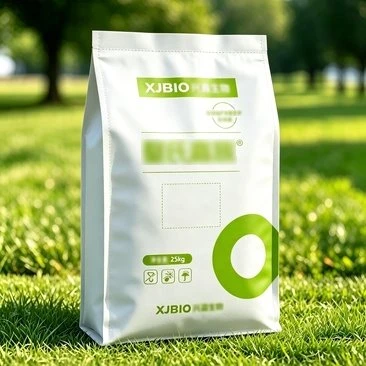
Now, let’s talk about real-world shelf life, because this isn’t just lab numbers. We’ve tracked hundreds of our aquatic feed composite bags in use across 12 countries, from temperate regions in the US to tropical zones in Indonesia. For a standard 25kg bag of tilapia feed (12% fat, 11% moisture), properly filled with nitrogen purging and heat-sealed, the shelf life is 6-8 months when stored in a cool, dry warehouse (15-25°C, less than 60% humidity). If stored in warmer, more humid conditions (28-32°C, 70%+ humidity), it drops to 4-5 months, which is still way longer than the 1-2 months most generic bags can offer. For shrimp feed, which has higher fat (16-18%), the shelf life is a little shorter: 4-6 months in ideal storage, 2-3 months in harsh conditions. But even that is double what you get with regular polypropylene bags.
Wait, but what about when feed is stored in temporary conditions? A lot of aquaculture operations don’t have climate-controlled warehouses—they store feed in open sheds or on concrete floors. Can composite bags handle that? Yes, but with a caveat. Our bags have a UV-stabilized outer layer, so they can handle 2-3 weeks of direct sunlight without degrading, but prolonged exposure will break down the plastic layers, reducing barrier properties. Also, stacking: when you stack 50kg bags on top of each other, the bottom bags can get compressed, which might slightly reduce the barrier if the layers are squished. That’s why we recommend using our heavy-duty composite bags for stacking more than 10 high—they’re reinforced to maintain shape and barrier integrity even under weight.
I’ve also heard the question: “Can I use these bags for feed that’s already sitting in silos?” The short answer is, it’s better to fill the bags as soon as possible after milling. Feed starts spoiling the second it leaves the extruder (the machine that makes the pellets), because that’s when oxidation begins. The ideal timeline is to mill, cool, fill, and seal within 24 hours. If you store feed in a silo for more than a week, even the best bag can’t reverse the initial oxidation that’s already happened. That’s a tip we always share with new clients—don’t wait to pack, because the clock starts ticking the moment the feed is produced.
Now, let’s talk about common misconceptions. A lot of farmers think “shelf life” just means how long the bag doesn’t break, but it’s actually about feed quality and safety. If feed spoils, it doesn’t just go to waste—feeding it to aquatic life can lead to stunted growth, increased disease, or even death. That’s why investing in the right composite bag isn’t just a packaging cost, it’s an investment in your farm’s productivity. We’ve had clients come to us after losing thousands of dollars because their feed went bad, and switching to our bags helped them avoid that in future seasons.
Another thing: sustainability, which is a big topic right now. A few years ago, a client asked us if composite bags were recyclable, because they were tired of single-use plastic waste. We worked with our manufacturers to develop our aquatic feed composite bags with a mono-material option—all layers are PE-based, so they can be recycled in standard plastic recycling streams, instead of multi-material bags that are hard to process. That’s a bonus for farmers who want to reduce their environmental footprint, and it doesn’t compromise shelf life—our mono-material high-barrier bags have the same OTR and MVTR as the traditional aluminum foil ones.
At the end of the day, the answer to “Do aquatic feed composite bags have a long shelf life when filled?” is: yes, if you pair high-quality, multi-layered composite bags with proper filling practices. It’s not just the bag itself; it’s how you use it. I’ve seen it work for large commercial feed mills with 100,000 ton annual production, and small family farms with 50 ton operations. The key is choosing a bag that’s designed specifically for aquatic feed, not a generic bag meant for grain or fertilizer. Generic bags don’t have the barrier properties to keep oxygen and moisture out, so even if you seal them perfectly, the feed will spoil fast.
If you’re a feed mill, farm manager, or aquaculture professional looking to cut down on feed spoilage and extend your product’s shelf life, we’re here to walk you through the right bag for your needs. We can test your current filling process, recommend the best composite bag layers for your climate and feed type, and even provide training for your team on proper sealing and storage. Don’t let bad packaging be the reason you lose feed or hurt your livestock. Reach out to us to discuss your requirements, and let’s find a solution that works for your operation.
Livestock Feed Bags References
- Aquafeed Spoilage Mechanisms and Prevention Strategies, Journal of Aquatic Food Product Technology, 2021
- Barrier Properties of Multi-Layered Composite Packaging for Agricultural Products, Packaging Technology and Science, 2019
- Best Practices for Aquatic Feed Packaging and Storage, World Aquaculture Society Technical Bulletin, 2020
- Nitrogen Purging Impact on Dry Feed Shelf Life, Food Packaging and Shelf Life, 2022
Zhejiang Xifeng Packaging Co., Ltd.
We are one of the most experienced aquatic feed composite bags manufacturers and suppliers in China. With a professional production team, we offer a wide range of products with superior quality. Please feel free to buy bulk aquatic feed composite bags at competitive price from our factory. We also accept customized orders.
Address: Xiaojiang Town, Pingyang County, Wenzhou City, Zhejiang Province, China
E-mail: zjxifeng@126.com
WebSite: https://www.xifengpackaging.com/
