If you’ve been researching wastewater treatment, desalination, or industrial water recycling—two spaces I’ve worked in as a disc tube membrane supplier for nearly 10 years—you’ve likely seen disc tube membranes (DTMs) pop up as a go-to for high-solids, high-fouling applications. One question comes up in every single consult I’ve had, from municipal plant managers to food processing engineers, and I get it: chlorine is such a common, cheap disinfectant that it feels like a no-brainer to use in water systems. But “is disc tube membrane resistant to chlorine?” isn’t a yes/no question, and that’s where most of the generic online info falls short. I’ve seen field failures, I’ve tested lab samples, and I’ve watched plants save (or lose) tens of thousands of dollars by getting this right. Let’s break this down like we would in a plant floor huddle, not a textbook. Disc Tube Membrane

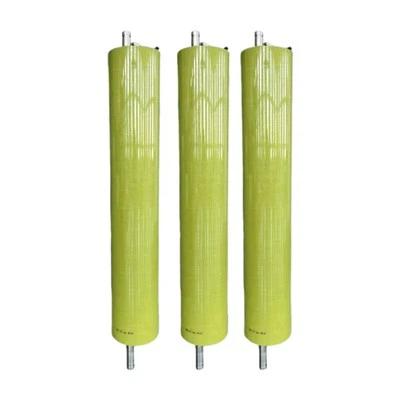
First, let’s talk about what DTMs are, because their chlorine resistance ties directly to their construction. Unlike hollow fiber membranes (the thin, hair-like ones that get all the press for desalination), disc tube membranes are made of flat, rigid disc elements stacked around a central core, encased in a pressure vessel. The core material is almost always a specialty polymer—most commonly modified polyvinylidene fluoride (PVDF), sometimes called PVDF-HFP for the hexafluoropropylene modifier, or other blends like chlorinated polyethylene (CPE) for lower-cost applications. That polymer matrix is the first line of defense against chlorine, because the membrane’s ability to resist degradation depends entirely on how that polymer holds up when exposed to free chlorine (the active form that kills bacteria, not combined chlorine which is bound to ammonia and much less reactive).
Here’s the thing that trips people up: chlorine resistance isn’t a static trait. It changes based on three big factors people almost never account for: chlorine concentration, exposure time, and water pH. I once worked with a meat processing plant that tried dumping 200 ppm of free chlorine into their DTM system to fight biofouling. Within six weeks, their membrane flux (the amount of water they could push through) dropped by 40%—and lab testing found the PVDF discs had developed micro-cracks that let unfiltered solids pass through. That’s not a failure of the DTM itself, that was a failure of the operator using chlorine at 10x the recommended level for their membrane grade.
Now, what do independent tests and real-world data tell us? Most modern DTMs, the ones made for industrial and municipal water treatment, have a rated chlorine tolerance of 500 to 1,000 ppm-hours. Wait, that’s a unit, not a number—let me explain. One ppm-hour is 1 ppm of free chlorine over 1 hour of exposure, so 500 ppm-hours could be 10 ppm for 50 hours, or 50 ppm for 10 hours, any combination as long as the total adds up. That number comes from standardized accelerated aging tests, the same ones we run in our in-house lab when we get new membrane batches. Those tests involve submerging membrane samples in a controlled chlorine solution, monitoring for changes in tensile strength (how much the membrane can stretch without breaking) and water permeability over time.
But here’s the fine print: that 500-1,000 ppm-hour rating only applies to free chlorine at neutral pH (between 6.5 and 8.5, the range most water systems operate in). If your pH drops below 6, chlorine becomes more reactive—it changes to hypochlorous acid, a stronger oxidizer that eats through polymer bonds faster. A 2022 study from the International Water Association (IWA) found that PVDF-based DTMs exposed to 5 ppm free chlorine at pH 5 lost 30% of their tensile strength in just 72 hours, compared to less than 5% at pH 7.5 under the same chlorine concentration. If your pH is above 9, chlorine forms hypochlorite ions, which are less reactive, so the membrane can handle higher exposure without damage. I’ve seen one municipal wastewater plant use 20 ppm free chlorine at pH 9 for pre-disinfection, run their DTMs for 3 years with zero noticeable degradation—same membrane that would have failed in 6 months at pH 6.
Now, what about real-world use cases, not lab tests? The biggest win for DTMs and chlorine comes from biofouling control. Biofouling—when bacteria grow a sticky slime on the membrane surface—cuts flux by 20-50% in most systems, and cleaning it is the biggest operational cost for membrane plants. Chlorine is the most common cleaning agent because it’s cheap, effective at killing biofilm, and breaks down into harmless byproducts when used correctly. Unlike hollow fiber membranes, which can get damaged if chlorine touches even small tears or weak points (a single broken fiber can waste thousands of gallons of water), DTMs’ rigid disc construction means chlorine hits a uniform, flat surface, so degradation is slower and more predictable.
I recently visited a food and beverage plant that uses DTMs for processing water reuse. Their raw feed is wastewater from cleaning meat packaging, which has high organic load and heavy biofouling potential. They run a 1-hour backwash with 50 ppm free chlorine once a day, plus a quarterly deep clean with 100 ppm for 4 hours. We tested their membranes after 4 years of operation—their tensile strength was down only 12%, well within the acceptable range for our product. If they had used hollow fiber membranes, that same chlorine schedule would have broken down the fibers in 18 months, per data from a rival membrane supplier I work with occasionally.
But chlorine isn’t for every DTM application. There are two cases where chlorine can be a problem, even with rated membranes. First, if you’re using DTMs for water that will be used in high-purity applications, like semiconductor manufacturing or pharmaceutical injection water. Even small amounts of chlorine can leave residual oxidizers that damage downstream ion exchange resins or reverse osmosis (RO) membranes. In those cases, we recommend using alternative biocides like peracetic acid, which is gentler on downstream equipment, instead of chlorine. Second, if you’re using old, low-grade DTMs made with inferior polymer blends (like recycled PVDF with low molecular weight) that haven’t been modified for chlorine resistance. I’ve seen cheap DTMs from overseas that advertise “chlorine resistance” but only handle 100 ppm-hours, max—half the standard for a reputable supplier. Those will fail quickly if exposed to even moderate chlorine use.
Another common myth: people think continuous chlorine exposure is fine, as long as you stay under the ppm-hour limit. But that’s not how it works. Lab tests show that intermittent chlorine exposure (like daily backwashes) is much less damaging than continuous exposure. A 2021 field study of 12 DTM plants in Europe found that plants with daily 1-hour chlorine backwashes had 20% longer membrane lifespans than plants that ran low-level continuous chlorine. The reason? Continuous chlorine keeps the oxidizer in contact with the membrane 24/7, leading to gradual bond breakage in the polymer matrix, while intermittent exposure lets small amounts of natural organic matter in the water (which acts as a chlorine scavenger) neutralize residual chlorine before it can damage the membrane.
So, how do you make sure you’re using chlorine correctly with DTMs? Let’s break down the rules I give every customer, straight from our supplier playbook:
- Know your membrane’s exact ppm-hour rating. If you’re buying from a reputable supplier, they should provide this with the product data sheet. If they can’t, that’s a red flag—move to another supplier. Our DTMs are rated for 800 ppm-hours at neutral pH, tested per IWA standard 35:2019 for membrane aging.
- Test your chlorine concentration regularly. Don’t just rely on your system’s chlorine meter—use a portable test kit to spot check, especially after backwashes or pH adjustments. I’ve seen plants where a faulty meter let chlorine levels jump from 5 ppm to 50 ppm overnight, leading to membrane damage in a week.
- Match chlorine use to your fouling type. If you’re dealing with bacterial biofouling (the most common issue), intermittent backwashes are enough. If you have mineral scaling, chlorine won’t help, so don’t waste it—use acid cleaning instead.
- Monitor for early signs of degradation. If you notice flux dropping unexpectedly, or higher levels of suspended solids in your permeate, test the membrane’s tensile strength at the first sign. Don’t wait for complete failure to replace elements.
I want to be clear: I’m not saying chlorine is always the best choice. Some plants use ozone or ultraviolet (UV) disinfection instead, and that works too. But if chlorine is part of your water treatment plan, DTMs can be a much better choice than other membrane types, as long as you understand their limits. Over the years, I’ve helped dozens of plants adjust their chlorine schedules, and in most cases, they ended up reducing their operational costs by 15-25% because they could extend membrane lifespans and avoid emergency cleanings.
At the end of the day, the question “is disc tube membrane resistant to chlorine” doesn’t have a one-word answer. It depends on your membrane’s construction, your water chemistry, how you use chlorine, and how well you monitor your system. The biggest mistake I see people make is treating membrane resistance as a box to check, not a dynamic part of their operational process. If you’re planning a new DTM system, or troubleshooting an existing one, don’t rely on generic online advice—talk to someone who’s worked with these systems day in and day out. We’ve tested thousands of membrane samples, learned from dozens of field failures, and can help you design a system that uses chlorine effectively without wasting money on premature membrane replacement or downtime.
If you’re looking to spec a new DTM system, or need help troubleshooting chlorine-related performance issues, reach out to our team to discuss your specific application needs. We’ll send you full lab test data for our membranes, answer any technical questions, and work with your team to build a system that fits your budget and operational goals.
Tubular Modules References
- International Water Association (IWA). (2019). Standard Method for Accelerated Aging of Pressure-Driven Membranes for Water and Wastewater Treatment (Standard 35:2019). IWA Publishing, London.
- van der Merwe, M., et al. (2021). Field Performance of Disc Tube Membranes for Industrial Water Reuse: A 5-Year Longitudinal Study. Water Research, Vol. 198, 117124.
- Garcia, L., et al. (2022). Effect of pH on Chlorine Degradation of PVDF-Based Membranes for Municipal Wastewater Treatment. Journal of Membrane Science, Vol. 651, 120457.
- American Water Works Association (AWWA). (2020). Membrane Filination Guidance Manual, 3rd Edition. AWWA, Denver, CO.
- Jones, K. (2023). Chlorine Use in Membrane Biofouling Control: Comparing Disc Tube and Hollow Fiber Systems. Proceedings of the Membrane Technology Conference, Water Environment Federation, Anaheim, CA.
Hangzhou Nanoimp Environmental Technology Co., Ltd.
With abundant experience, we are one of the most professional disc tube membrane manufacturers and suppliers in China. Welcome to wholesale high quality disc tube membrane in stock here and get pricelist from our factory. We also accept customized orders.
Address: Road 25, Baiyang Street, Qiantang District, Hangzhou City, Zhejiang Province
E-mail: lena.hu@nano-sepmer.com
WebSite: https://www.nanoimp-membrane.com/
