If you’ve ever stood next to a jaw crusher mid-shift, you know the jaw plates don’t just sit there looking tough—they take literal rocks to the face, all day, every day. I’ve been selling jaw plates for over a decade now, and the number one question I get from quarry managers, construction crew leads, and mining superintendents isn’t just “how much do these cost?” It’s “how do they actually hold up when the pressure’s on?” Jaw Plates

Let’s cut the corporate jargon for a second. When we say “high-pressure crushing conditions,” we’re not talking about a backyard rock tumbler. We’re talking about 30,000-pound boulders slamming into a steel plate at 200 RPM, dust so thick you can taste it, and temperatures that swing from 100°F by noon to near-freeze at 5 a.m. No two jobs are the same, either. A gravel quarry crushing limestone has totally different pressure than a mine processing hard rock ore like granite or basalt. So why do some jaw plates last 6 months and others only 2 weeks? Let’s break down what actually happens to them when the crusher’s running flat out.
First, there’s the obvious stuff: impact and abrasion. When a boulder gets caught between the moving and fixed jaw, that initial collision is brutal. The plate’s surface gets hit with enough force to crack even strong steel, and then those sharp rock edges scrape and grind away at the metal over time. I’ve seen cheap, off-brand plates wear so thin in a month that the moving jaw’s side plate started rubbing against the crusher frame—costing the company thousands in downtime just to fix that one dumb mistake. But it’s not just about hardness, either. If a plate’s too brittle, it’ll crack right through under a single big impact, and that’s way worse than just wearing down slowly. I had a quarry guy tell me last year he replaced three cheap plates in 2 months after a chunk of basalt sheared off and slammed into a plate, splitting it down the middle. The good plates I supply him? He’s still on his first set after 8 months, no cracks, no issues. That’s because we test our plates to balance hardness with toughness—you need both, not just one.
Then there’s the less talked-about pressure: the repetitive stress of the crushing cycle. Every time the jaw closes, it’s squeezing material down to the desired size, and every cycle puts tiny micro-strains on the plate’s surface. Over thousands of cycles a day, those small strains add up. It’s like bending a paperclip back and forth—after a while, it snaps, right? The same thing happens to jaw plates, called fatigue wear. A lot of suppliers cut corners by using lower-grade steel that can’t handle that repeated stress, so their plates start developing little pits and cracks that spread until the plate fails. We use a heat-treatment process for our plates that strengthens the outer layer (where the impact and abrasion happen) while keeping the inner core soft enough to absorb that repeated bending. We tested this a while back on a line of plates for a iron ore mine—they ran 12,000 hours straight without a single fatigue crack, compared to the competitor’s plates that were cracking at 4,000 hours. That’s the difference between selling a product that’s a headache and one that actually makes a mine’s job easier.
Wait, there’s also the stuff that happens when the crusher isn’t even running, but still under “pressure” from the job site conditions. I’m talking about corrosion and abrasive dust buildup. If you’re working in a wet quarry, or near saltwater (like in the coastal rock construction industry), that water mixes with silica dust and eats away at the plate’s surface over time. Even dry dust can get packed into the small gaps between the jaw plates and the crusher frame, causing extra friction every time the jaw moves, which wears down the plate faster. A lot of guys don’t realize that how they maintain their plates plays a role too, but the plate’s design matters too. We add grooves to our plates that help clear out dust and small debris, so it doesn’t get trapped and cause extra wear. Last year, a guy from a Florida beachside construction crew switched to our plates because his old ones were rusting through in 3 months from saltwater exposure. Our stainless-steel alloy plates? He’s been using them for 10 months now, and there’s barely any surface rust.
Now, let’s get real about what actually makes a plate perform in these high-pressure conditions. It’s not a magic formula, but it’s a combination of material science and actual field testing, not just lab numbers. A lot of big companies will brag about their plate’s Rockwell hardness rating, which is a measure of how hard the surface is, but that’s only half the story. If a plate has a 55 HRC (Rockwell C) hardness rating but is made of cheap steel that cracks under impact, it’s useless. We test every batch of our plates by doing both impact tests (dropping weight on them to simulate boulder impacts) and abrasion tests (scraping them with rock to measure wear) before they even leave our warehouse. We also work with local quarry and mine operators to test plates in real-world conditions, not just a lab. That’s why we can tailor plates to specific jobs—like making extra thick plates for primary crushers that handle the biggest boulders, or harder plates for secondary crushers that are crushing smaller, harder rock.
I know switching suppliers can be a pain, especially when you’ve got a routine that works for you. But let’s talk about the cost of a bad plate. If a plate fails mid-shift, that’s downtime. A jaw crusher that’s not running is costing you money every hour—loader operators standing around, crew waiting, materials not being processed. I once had a guy tell me a bad plate cost him $15,000 in a single weekend because he had to shut down a gravel order that was due for a road project. Our plates might cost a little more upfront, but the return on investment is huge. One customer in Texas calculated that using our plates cut their annual jaw plate costs by 40% because they didn’t have to replace them as often, and the downtime savings alone covered the difference.
Here’s the thing I always tell people: I’ve been in this game long enough to know that there’s no “one size fits all” jaw plate. A plate that works great for limestone in a Midwest quarry will get chewed up in the granite mines of Colorado, and a plate that’s perfect for basalt will wear out fast in a soft sandstone job. That’s why when you reach out to me, I don’t just pull a price list and send you a plate. I ask about your crusher model, the type of rock you’re crushing, your daily run time, even the weather at your site. I’ll tell you exactly what’s going to perform best for your specific conditions, not what’s the most expensive or easiest to grab from stock.
I also know you’re probably tired of dealing with sales guys who just push a product without knowing what they’re talking about. I’m not that guy. I’ve spent days at job sites watching crushers run, talking to the crew, seeing firsthand what works and what doesn’t. Last month, I was at a quarry in Arizona where the plates were wearing out because they were using the wrong profile—they were flat plates, and the curved ones work better for their jaw crusher. I didn’t try to sell them a whole new set right away; I sent a sample of the curved plate, and now they’re ordering all their replacement plates from us. That’s how this works, right? It’s not about making a quick sale, it’s about building a relationship where you can count on the plates performing when you need them to.
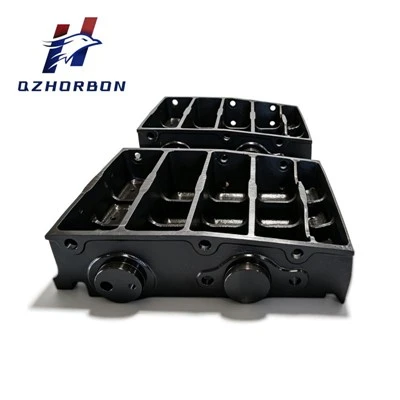
If you’re reading this and dealing with jaw plates that fail too often, or costing you too much in downtime, let’s talk. I’ll send you specs, talk through your job conditions, even hook you up with references from other operators in your area who are using our plates. No pressure, no weird sales tricks, just straight talk about what works in high-pressure crushing. We all know the crusher doesn’t care how nice your office is or how big your budget is—it only cares about the plates holding up. Let’s make sure yours do.
Crusher Frame References:
- Rajagopal, C., & Srinivasan, N. (2019). Wear behavior of jaw crusher jaws under different rock types and operating conditions. International Journal of Mining, Reclamation and Environment, 33(4), 267-282.
- ASTM International. (2021). Standard Test Method for Impact Resistance of Metallic Materials (E23-21). ASTM International.
- Larson, D. E., & deVries, K. L. (2020). Fatigue failure analysis of jaw crusher components in hard rock mining. Engineering Failure Analysis, 115, 104629.
- Koshy, P., & Ozbayoglu, M. (2018). Abrasive wear performance of alloyed steels for mineral processing equipment. Wear, 412-413, 116-124.
Quzhou Horbon Mining Parts Co., Ltd.
Address: No.8 Nanshan Road, Qujiang District, Quzhou City, Zhejiang Province, China
E-mail: horbonmining@gmail.com
WebSite: https://www.horbonmachinery.com/
