If you work in aerospace, automotive, marine, or even consumer goods, chances are high you’ve held or seen a part made with composite materials—think carbon fiber, fiberglass, or a hybrid blend. But have you ever stopped to wonder how that perfect, lightweight, high-strength part comes into being? That’s where the composite mold master pattern comes in, and as someone who’s been supplying these for over a decade, I can tell you it’s way more than just a “template.” Composite Mold
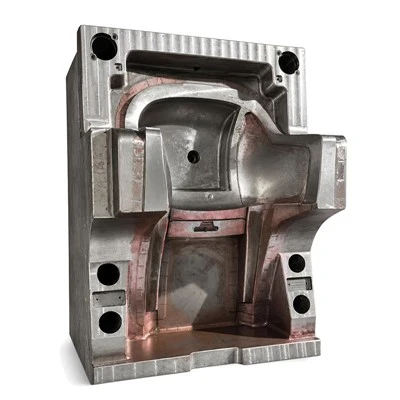
Let’s break it down plain and simple: a composite mold master pattern is the first, fully finished, precision version of the part you want to produce. It’s the gold standard, the exact blueprint turned into a physical object that every subsequent part will copy from. Unlike a rough prototype that gets tossed after testing, this master pattern is built to last—because we use it to make the actual molds that will produce hundreds, thousands, even tens of thousands of composite parts.
A lot of folks mix this up with prototypes or model parts, so let’s clarify right away. Prototypes are for figuring out if your design works—if the shape is right, if it fits with other components, if the strength meets specs. A master pattern? That’s the production-ready version, with every tiny detail locked in: the tight radii, the smooth surface finish, the exact dimensions that your parts need to match. If your prototype has a scratch or a slight warpage, the master pattern doesn’t—because any flaw here gets copied to every mold and every part that comes after. That’s why precision is non-negotiable here.
Let’s talk about how we actually build one, because it’s not just 3D printing a part (though some people try that, and it bites them later). First step: the customer sends a CAD file—their 3D design of the part. But CAD is digital, so we have to translate that into something physical that’s accurate within thousandths of an inch. Most of our large patterns—say, a boat hull or an aerospace wing component—start with a CNC milled tooling board. That’s a solid, stable material (we use high-density polyurethane foam or tooling-grade fiberglass composite, depending on the size and application) that doesn’t expand or contract like cheap foam, even when the temperature changes in our shop. We load the CAD file into the mill, and it carves the rough shape first, then does a finish pass to get all the edges and curves perfect.
For smaller, complex parts—like a drone propeller or a medical device component—we might start with a 3D printed pattern, but not just any consumer-grade printer. We use industrial stereolithography (SLA) or selective laser sintering (SLS) printers with high-temperature resins that can handle the sanding and polishing we do next. Once the rough shape is milled or printed, the next step is the handwork that makes it a master pattern. No machine can smooth a surface down to a mirror finish, or fix tiny inconsistencies in curves, like a skilled technician with sandpaper and a vacuum to catch all the dust. We might do multiple sanding passes with different grits, then buff, then inspect with a coordinate measuring machine (CMM) to make sure every single dimension matches the CAD file. If you get this step wrong, your mold will have a rough surface, or parts will be off by enough to cause assembly issues later.
Then there’s the tooling coat. This is a thin, tough, chemical-resistant layer we add to the surface of the master pattern. Because when we use the pattern to make a mold (usually a composite mold too, since that’s what we specialize in), the mold material (which is resin and fibers, just like the parts) needs to slide off the master easily, and it can’t damage the pattern. We use either a high-temperature epoxy gel coat or a nickel vapor deposition for super high-volume parts, but gel coat is more common for most applications. If the tooling coat has a pinhole or a scratch, that’s going to show up as a bubble or a dent in every mold, and every part coming from that mold. So we spend hours inspecting the pattern under bright lights, checking every angle for flaws, before we even touch it to mold material.
Now, why does this matter to you, the person ordering composite parts? Let’s say you’re an automotive engineer trying to make a new carbon fiber car hood. If your master pattern is off by even 0.02 inches, the hood won’t fit over the frame of the car. If the surface isn’t smooth, the final part will have a rough finish that requires extra sanding and painting, adding cost and time. If the pattern isn’t durable, it’ll get damaged when we’re making the mold, and you’ll have to re-do everything. That’s why we don’t cut corners on master patterns—every one we make is designed for the specific life cycle you need. A master pattern for a low-volume, custom aerospace part needs to last only 50 or so mold pulls, so we build it with a mid-grade tooling material. One for a high-volume consumer product, like a bicycle frame that will have 10,000 parts, needs to last 1000+ pulls, so we use a denser, heat-treated tooling material that doesn’t warp.
Wait, let’s bust another myth: master patterns aren’t just for one-of-a-kind parts. Even if you’re making a thousand identical parts, you need a single master pattern to ensure every part is the same. If you change the pattern even a little halfway through, you’ll have two different part designs that can’t be assembled together. That’s the consistency piece—one master, one standard, no surprises.
I’ve seen a lot of shops skip the master pattern step to save money. They’ll take a prototype, make a mold from it, and wonder why parts have inconsistencies. Or the prototype gets damaged during mold making, so the first 50 parts are garbage. That’s a mistake. The master pattern is your investment in quality. It’s the foundation that every part rests on. As our company’s been doing this for years, we’ve learned that spending extra time and care on the master pattern saves our customers tons of money in the long run—no reworks, no delayed production, no parts that don’t fit.
Let’s also talk about common applications for composite mold master patterns, because it helps put this in perspective. In marine, a master pattern is used to make hulls, decks, even interior components like seats. In aerospace, it’s for wing sections, interior panels, and satellite parts. In automotive, it’s for body panels, battery enclosures for electric cars, and even steering wheels. In consumer goods, it’s for surfboards, tennis rackets, and even snowboard bindings. Every single one of these starts with that precision master pattern.
What’s the difference between a composite mold master pattern and a standard mold? Let’s keep it clear: the master pattern is the male or female version of the part, used to make the mold. The mold is the tool that the composite material is laid into to make the final part. So the master is the original, the mold is the copy made from the master. We’re a composite mold supplier, but our core service is building the master patterns that our molds are based on—because a mold is only as good as the master pattern it’s made from.
Another thing we run into a lot: customers ask us if they can just send a 3D printed part as the master pattern. It might work for a small, low-volume part, but most of the time, no. Consumer 3D printers use low-grade resins that soften when exposed to the heat of composite molding (which can be 150°F or higher for epoxy parts). They also have layer lines that show up on the final part surface, unless you do a ton of sanding. Industrial 3D printers are better, but CNC machining still gives you higher precision and consistency for most applications. We can work with your existing 3D printed prototype if you have one, but we’ll always recommend upgrading it to a proper tooling master pattern for production.
Now, let’s talk about quality control—we don’t just make a master pattern and send it out. We do a full inspection with a CMM, which is a machine that touches hundreds of points on the part to make sure every dimension is within 0.005 inches of the CAD file. We also do a fit check with a sample mold (we’ll make a small test mold from the pattern to pull a test part) to make sure everything lines up. If there’s even a tiny flaw, we go back and fix it before it leaves our shop. No exceptions.
So why would you work with our team for your composite mold master patterns? Because we don’t just build parts—we’ve done this for hundreds of customers across industries, so we know the ins and outs of what each application needs. We can adjust the material and process based on your volume, your part size, your surface finish requirements, and your budget. Whether you need a small custom medical part or a large boat hull pattern, we’ve got the expertise to get it right the first time.
If you’re tired of inconsistent parts, reworks, or delays because your master pattern wasn’t up to snuff, we can help. We’ll walk you through the process: you send your CAD file, we discuss your volume and timeline, we build the master pattern to your exact specs, inspect it thoroughly, and deliver it ready for you to use to make your molds. No jargon, no hidden fees, just honest work and a product that’s built to last.
Ready to talk through your project and get a quote? We’re here to help you figure out the best way to get the master pattern you need, no matter how big or small the job is. Reach out to us to chat through your requirements, and we’ll make sure you get the right product for your application.
SMC Or BMC Mold References:
- Griffin, D. (2021). Composite Tooling Technology: Master Patterns, Molds, and Production. Society of Plastics Engineers.
- Smith, J. A. (2019). Precision Fabrication of Composite Master Patterns for Aerospace Applications. Journal of Composite Materials, 53(12), 1645-1662.
- American Society of Mechanical Engineers. (2020). Standard for Composite Tooling and Master Pattern Qualification. ASME International.
- Brown, K. L. (2018). Low-Volume vs. High-Volume Composite Master Pattern Design Considerations. Composites Manufacturing Magazine, 29(4), 32-37.
Taizhou Lingyue Mold and Plastic Co., Ltd.
Taizhou Lingyue Mold and Plastic Co., Ltd. is one of the most professional composite mold manufacturers and suppliers in China, also supports customized service. If you’re going to buy advanced composite mold made in China, welcome to get quotation from our factory. Quality products and low price are available.
Address: NO.18, Shangxian Road, North Industrial Zone, Huangyan, Taizhou City, Zhejiang, China
E-mail: ly@lingyuemold.com
WebSite: https://www.lingyuemold.com/
