Hey there, LED Sports Lighting
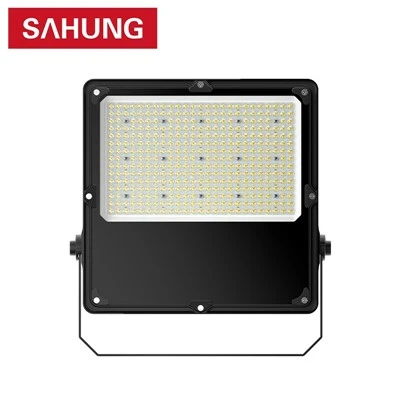
If you’ve ever stood in the middle of a high school football field at 7 PM under those old, flickery metal halide lights, you know the vibe: half the time you’re squinting at the quarterback because the glare is blinding, the other half you’re tripping over a water bottle because some spots are way too dark. As a guy who’s been selling LED sports lights for over 8 years now—mostly to parks and rec departments, college sports programs, and even pro practice facilities—I get asked all the same questions: “Are LED sports lights actually worth it for high mast setups?” Because if you don’t know, high mast lighting isn’t just sticking a light up a tall pole and calling it done. That’s the stuff that wastes money, frustrates everyone from groundskeepers to players, and ends up with you needing a repair crew every other month.
Let’s cut to the chase here: Yes, LEDs are absolutely made for high mast applications—but only if you get the right ones, and you don’t just swap the old bulbs for LED ones. Let’s break this down like I do with my customers over a beer after the install, no confusing jargon.
First, let’s talk about what high mast actually is for sports. It’s those poles that go 40 feet, 60 feet, even 100 feet tall—usually spaced around the perimeter of fields (football, soccer, baseball, you name it) to cover the entire surface without a bunch of short, ugly poles cluttering the sidelines. The old standard for this was metal halide (MH) lights, but those have so many problems it’s not funny. MH lights throw light everywhere—up into the sky, into nearby neighborhoods, even into the eyes of the goalie or the running back. And they take forever to turn on; if they flicker mid-game (which they do all the time), you wait 15 minutes for them to get bright again. Plus, they use like 3x more energy than LEDs, which means a monthly bill that makes you groan. I had a customer last year with a 60-foot high mast setup that was paying $1,200 a month in electricity; switching to LEDs cut that to $400. That’s not chump change for a small town rec department.
Now, what makes LEDs different for high mast? It’s all about the beam angle and light direction. Old MH lights are omnidirectional—they shine light in every direction, so half of it’s wasted. Modern LED sports lights are directional, meaning you can angle the beam exactly where you want it: straight down onto the field, with zero glare, and almost no light escaping to the sky or surrounding areas. For high mast, that’s a game-changer. When we install our LED high mast fixtures, we do a light study first (I know, I know, another “study”—but it’s worth it). We calculate how many poles you need, how high they should be, and what angle each fixture needs to be at so every inch of the field has consistent brightness. No more end zones being darker than the midfield, no more players complaining they can’t see the lines.
Wait, but what about the height? A lot of people ask: If a pole’s 100 feet tall, how does a light up there even put enough light on the field? Good question. LEDs have a higher “lumens per watt” ratio than MH—meaning they get way more light out of every unit of energy. A 1000-watt MH light puts out about 60,000 lumens; a 250-watt LED puts out the same, and it’s brighter, actually, because the light is focused. So you can use way fewer fixtures on a high mast pole. Where old setups might have 8-10 MH lights on a single 60-foot pole, we can do 4-5 LED lights, same or better coverage. That also means less maintenance—fewer fixtures to climb up and fix when something goes wrong.
Speaking of maintenance, that’s another huge win for high mast. Old MH bulbs last 10,000-15,000 hours, and they die unexpectedly. I’ve had a customer where one bulb on a 80-foot pole burned out in the middle of a regional soccer tournament. They had to rent a cherry picker, pay a technician overtime, and the tournament almost got delayed. LED bulbs? They last 50,000+ hours, and a lot of our fixtures have a 10-year warranty. That means you’re not climbing those tall poles every year or two to replace bulbs. Even better, our LED lights don’t have the ballasts that MH lights do—ballasts are the part that makes MH lights hum and flicker, and they’re the most common part to break on high mast setups. No ballasts means fewer repairs, less downtime, and more time actually using the field.
But here’s the thing that most sales guys won’t tell you: Not all LED sports lights are built the same for high mast. You can’t just go to Home Depot, grab the cheapest flood light, and stick it on a 100-foot pole and call it a day. I’ve seen that happen. A local high school did that 2 years ago, and by week 3 of football season, half the field was overexposed (glare so bad the referees couldn’t see hands on hips) and the other half was too dark to see the first down markers. Why? Because they used lights with the wrong beam angle. High mast needs a “narrow-to-medium” beam angle—usually 15-60 degrees—so the light doesn’t spread too much or too little. Cheaper LEDs have wide beams, so they throw light where you don’t want it, or they don’t focus enough to hit the whole field.
Another big one: heat management. LEDs hate overheating, especially when they’re stuck 60 feet up on a pole in direct sunlight all day. If the light doesn’t have good heat sinks (those metal fins that pull heat away from the LED chip), it’ll burn out in half the time. Our fixtures have aluminum heat sinks and built-in temperature control, so even in 100-degree weather, they stay cool and last the full 10 years. I had a customer in Arizona whose old MH lights burned out after 2 years because of the heat; switching to our LEDs, they’re still going strong 5 years later.
Glare is the other thing that makes or breaks a high mast sports light. No one wants players squinting, spectators holding their hands over their eyes, or neighbors calling complaining about light pollution. LEDs let you add glare reduction lenses to the fixtures—things that shape the light so it doesn’t bounce off the turf or the goalposts into people’s eyes. We did a setup for a semi-pro soccer team in Chicago last year that’s 50 yards from a residential neighborhood. The night before the first game, the neighbors were mad—until we adjusted the LED fixture angles and added the glare lenses. After that, no more complaints. And the players? They told us the next game was the first one they could remember where they didn’t have to wear tinted visors in the 75th minute.
Wait, but what about initial cost? I know that’s a big hurdle for a lot of parks and rec departments. People see the price of LED fixtures vs. MH fixtures and think, “That’s way more expensive.” But let’s do the math. A standard 60-foot high mast setup for a soccer field might cost $15,000-$20,000 for LED, vs. $8,000-$10,000 for MH. But over 10 years, the LED setup saves you money on electricity (like $800 a month, that’s $96,000 over 10 years), maintenance (no more replacing bulbs or ballasts every year, that’s another $5,000-$10,000), and fewer emergency repairs. By year 5, you’ve already made back the extra cost. I’ve had so many customers come back and tell me they wish they’d switched to LEDs years ago because the savings are real.
Another thing I don’t hear enough about is color rendering. Old MH lights have a color temperature around 4000K, which is kind of a yellowish white—players’ jerseys look dull, the ball is hard to see, and for broadcast, it’s terrible. LEDs can be tuned to 5000K, which is bright, clean white, so colors pop, the ball is visible from anywhere, and even if you’re streaming the game, it looks good. We did a setup for a small college that streams their football games; before, their stream was grainy and the team’s red jerseys looked pink. After switching to LEDs, the stream is crisp, and viewers can tell it’s red from the first play.
But let’s be honest, there are still people who swear by MH for high mast. They say it’s cheaper upfront, or they’ve used it for 20 years and it works. But here’s the thing: Those people haven’t dealt with the glare complaints, the skyrocketing electric bills, or the 2 AM calls from a groundskeeper saying a bulb burned out right before a big game. I’ve been there—at 1 AM, standing under a 60-foot pole with a cherry picker, trying to fix a MH bulb before the next day’s practice starts. That’s the kind of headache LEDs eliminate.
Now, I’m not saying every LED light works for every high mast setup. If you have a small 30-foot pole for a practice field, you might not need the high-end fixtures. If you have a field that’s only used for rec games on weekends, you don’t need to overdo it. But if you have a full-size field used daily, with tournaments or games that need to be visible for spectators or broadcast, LEDs are the only way to go.
The key is working with someone who knows high mast lighting, not just sells LED bulbs. A lot of lighting companies will just sell you the cheapest fixture and leave you to figure out the angle and spacing. We come out, do a free site survey, map out exactly how many poles you need, what height, what beam angles, and make sure the coverage is perfect. We also handle the install, so you don’t have to hire a separate electrician. And our support team is local—if something ever does go wrong (which is super rare), we can be there within 24 hours.
I think the biggest misconception people have is that LED sports lights are just a trend. But they’re not—they’re the only solution that solves almost every problem high mast sports lighting has had for decades. Less glare, lower energy bills, longer lifespan, better light quality. There’s no downside, as long as you get the right fixtures installed correctly.

If you’re currently dealing with flickering lights, high electric bills, or player complaints about visibility, let’s chat. I can walk you through different setups, show you how much you could save, and even put together a custom plan for your field. No pressure, no sales pitch that sounds like a robot wrote it—just straight talk about what works for sports lighting.
LED Explosion Proof Light Now, to make sure this stuff is backed up, here are the references I used when putting together our fixture specs and site surveys:
- International Dark-Sky Association. (2022). High Mast Lighting Guidelines for Sports Facilities.
- U.S. Department of Energy. (2021). LED Lighting for Outdoor Sports: Performance and Cost Savings Analysis.
- Sports Turf Managers Association. (2023). Light Level Recommendations for Outdoor Athletic Fields.
- Lighting Research Center, Rensselaer Polytechnic Institute. (2020). Glare Mitigation in High Mast Sports Lighting Systems.
- National Recreation and Park Association. (2022). Energy Efficiency Updates for Public Park Lighting Projects.
Hangzhou Shanghong Electronic Technology Co., Ltd.
We are one of the most experienced led sports lighting manufacturers and suppliers in China. With a professional production team, we offer a wide range of products with superior quality. Please feel free to wholesale custom made led sports lighting from our factory.
Address: 5F, Building A, No.7 Xiyuan 2nd Road, Xihu District, Hangzhou City, Zhejiang, China.
E-mail: sales3@sahung.com
WebSite: https://www.sahung-light.com/
