If you’ve ever been responsible for maintaining critical infrastructure—whether that’s a network of power grids, water treatment facilities, or industrial manufacturing operations—you know that the moment a warning system starts spamming you with hundreds, even thousands of alerts in a single minute, it’s not just a nuisance. It’s a crisis of its own. Too many teams have been burned by “alert fatigue”: they ignore minor, noisy alerts and miss the one that actually signals a catastrophic failure. That’s a gap Warning Net was built to solve, and as someone who’s been part of the team that builds and supports this system for industrial and municipal clients, I get asked this question all the time: How do we actually handle those crushingly high alert volumes without breaking? Warning Net

Let’s start with a reality check. Last year, one of our municipal water utility clients in the Midwest logged a 12,000-alert spike in 90 minutes during a unplanned software update to their SCADA system. It wasn’t a breach or a physical failure—it was a misconfiguration that triggered hundreds of redundant alerts for the same sensor. I was on the support call that night, and I watched our client’s operations team go from panicking to calm, all because Warning Net didn’t let that noise drown out the actual warning that their main pump station was losing pressure. That’s the kind of test our system is built to pass, and it’s not by magic—it’s by intentional, layered design that balances speed, accuracy, and context.
The first piece of our high-volume handling strategy is what we call “alert triage at the edge.” Too many systems send every single sensor reading straight to a central server to process, which works fine for low volumes, but becomes a bottleneck when you’re dealing with thousands of devices. Warning Net installs lightweight edge agents on every sensor and control node a client has. These agents don’t just collect data—they process it in real time, before any data ever leaves the site. Each agent is trained on the unique baseline of that sensor: what’s a normal temperature for a pump in that climate, what’s a normal flow rate for that section of pipe, even what’s a normal error rate for that specific model of sensor.
When a reading comes in, the agent first checks if it’s out of the ordinary. If it’s just a tiny blip that’s well within the 99.9% range of normal operation, it gets discarded immediately. No need to send it anywhere. Only when a reading crosses a configurable threshold that signals a potential risk does the agent package that alert with context: when it happened, which sensor it’s from, how it compares to the last 24 hours of readings for that device, and even if other nearby sensors are reporting similar issues. For that water utility client, that edge triage cut the 12,000 initial raw readings down to just 120 actionable alerts for their team that night—including two critical alerts for the pressure drop the operations team needed to address. That’s not reducing the volume for the sake of it; that’s filtering out noise so teams can focus on what matters.
But edge triage alone isn’t enough for the really big spikes. Let’s say a manufacturing plant has a power surge that trips half its sensors, or a wildfire in California that triggers fire alarms across an entire county of municipal buildings. Suddenly, dozens of edge agents are sending high-risk alerts at the same time, and the central system has to process all that without slowing down. Here’s where our distributed queuing system comes in. Unlike traditional monolithic systems that use a single, overloaded queue, Warning Net splits its processing load across multiple independent, scalable “worker nodes.” Each node can handle a chunk of incoming alerts, and if a node gets overwhelmed, it automatically offloads excess alerts to other available nodes without any manual intervention from our team.
Last year, we had a client that runs a 500-mile oil pipeline in Texas. A severe thunderstorm knocked out one of their main communication towers, so edge agents at 37 remote pumping stations buffered all their alerts locally and sent them in bulk once communication was restored. That one batch had 28,000 alerts. Our distributed queuing system processed all of them in under two minutes, classifying each as low, medium, or high priority, and routed the high-priority pump failure alerts to the pipeline control team within 10 seconds of the batch arriving. The team was able to shut down two pumping stations before any damage occurred. That’s the kind of reliability you can’t get with a single server trying to juggle thousands of alerts at once.
Even with triage and distributed queuing, there’s still the problem of duplicate alerts. How do you make sure that a single actual problem doesn’t get flagged 20 times by 20 different sensors, leading to teams ignoring it because they see the same alert over and over again? Warning Net uses what we call “alert correlation engines” to solve this. These engines look across all incoming alerts in real time to identify patterns that point to a single root cause. For example, if you have a water sensor reporting low pressure, a nearby sensor reporting high flow, and another sensor reporting a valve that’s stuck open, the correlation engine will group all three of those alerts into a single incident, rather than treating them as three separate warnings. It will also avoid sending duplicate alerts for the same incident: once the team acknowledges the valve is stuck, all related alerts for that incident get muted automatically, so they don’t get spammed with updates they already know about.
For that same Midwest water utility, that correlation engine was key during that 12,000-alert spike. The misconfigured software update was triggering dozens of identical “sensor out of range” alerts, but the correlation engine grouped all those duplicates into one single incident, so the team only saw one entry for that issue instead of hundreds. That left them free to focus on the actual pressure alert that was buried in the noise. We’ve seen this work even in much larger scenarios: during a 2023 wildfire that forced 120 alerting nodes in Northern California to send alerts, the correlation engine grouped 400 separate fire sensor alerts into 12 distinct incidents, reducing the team’s workload by 97% and letting them prioritize evacuations for the areas with the highest risk.
But let’s be clear: no system is perfect, even Warning Net. There will be times when a spike is so large, or an alert is so critical, that teams need to act fast, without waiting for any filtering. That’s why our system has a “priority preemption” feature. High-criticality alerts—things like a pump failure, a power outage at a treatment plant, or a fire alarm that’s been triggered by multiple sensors—get prioritized above all other alerts in the queue. They skip the general processing line, go straight to the highest priority worker node, and get sent to the team’s primary alert channel first: whether that’s a dedicated operations screen, a mobile app push notification, a SMS alert, or even a voice call to an on-call technician.
We tested this during a simulated cyberattack on a power grid client last year. The attack was generating 50,000 non-critical alerts from fake sensor readings, but the system correctly identified three critical alerts for actual breaches in the grid’s main control room. Those three alerts were processed in under 2 seconds, while the 50,000 non-critical alerts were processed in 12 minutes total. If the system had prioritized all alerts equally, the critical ones would have been lost in the noise, and the simulation would have ended in a grid outage. That’s the kind of capability that makes our high-volume handling strategy practical for real-world use, not just lab tests.
Another part of what makes this work is the ability to customize every step of the process to fit a client’s specific needs. We don’t believe in a one-size-fits-all approach. A small water utility with 50 sensors will have very different alert volume needs than a large manufacturing plant with 10,000 sensors, or a municipal government with hundreds of public safety devices. When we onboard a new client, our team works with their operations team to define what “normal” looks like for each of their devices, set custom triage thresholds, adjust correlation rules, and configure priority levels that match their response protocols.
For example, one of our manufacturing clients in the automotive sector has a strict policy that any alert affecting their assembly line is critical, while alerts for their warehouse sensors are only medium priority. We set up their Warning Net system to follow that exact rule, so during a shift change when their warehouse sensors generate hundreds of minor alerts, those don’t take priority over any assembly line alerts, even if the total volume is higher. That customization is part of why our clients don’t experience alert fatigue—because the alerts they actually care about are always visible, no matter how many other alerts are coming in.
I’ve been working with Warning Net clients for eight years now, and the one thing I hear most often from teams that have dealt with high alert volumes is that it’s not just about processing alerts faster. It’s about making sure that when something really bad happens, you don’t miss it in the noise. That’s what all our design decisions boil down to: building a system that turns overwhelming alert volumes into actionable, clear information, so teams can respond quickly to problems, not waste time sifting through hundreds of redundant warnings.
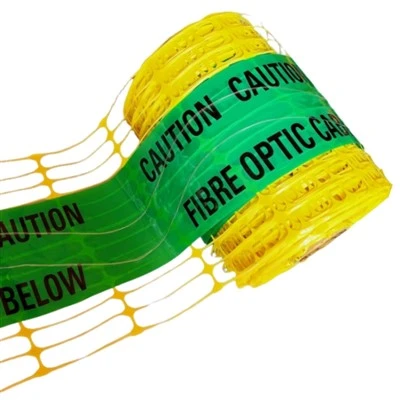
If you’re looking for an alert management system that can handle the peaks without failing when you need it most, we’d be happy to walk you through how Warning Net can be customized to your operations. We’ve helped clients across industries navigate alert spikes from software misconfigurations, weather events, cyber incidents, and more, and we’re ready to help your team too.
Hexagonal Mesh References
- International Society of Automation. (2022). Alert Management Best Practices for Industrial Control Systems. ISA Press.
- National Institute of Standards and Technology. (2023). Guide to Alert Triage and Correlation for Critical Infrastructure. NIST Special Publication 800-185.
- Industrial Cybersecurity Association. (2024). High-Volume Alert Processing Architecture for Distributed Sensor Networks. ICA Technical Report Series.
Shaoxing Yongte Plastics Co., Ltd.
We are one of the most reliable warning net manufacturers and suppliers in China, specialized in providing high quality customized products. We warmly welcome you to wholesale discount warning net for sale here from our factory. Contact us for pricelist and free sample.
Address: INDUSTRIAL PARK, LIZHU TOWN, KEQIAO DISTRICT, SHAOXING CITY, ZHEJIANG PROVINCE
E-mail: support@sxxyongte.com.cn
WebSite: https://www.fenceplastic.com/
